

The standard "BMW PR 231 Sealing system for doors and lids," developed by BMW, a multinational vehicle manufacturer headquartered in Germany, is an integral binding component of the requirements specification. This standard is used under the following conditions:
Depending on the current concept and the findings in the development procedure, these tests may also require additional tests to be agreed upon with the BMW testing department.
Specification values are defined in the requirements specification. If no information is available in the requirements specification, substitute values can be defined by consultation with the relevant department, or the substitute values specified in this test specification can be used.
The tests to be carried out as part of the initial sampling inspection must be agreed upon with the responsible BMW quality departments.
Unless otherwise specified, all tests must be performed on completed components. In principle, all tests should be performed on measured test pieces corresponding to the current version of the relevant project phase. Any deviations must be agreed upon with the responsible BMW department.
All tests must be performed in the assembled position unless a different position is explicitly stated or permitted.
In the demanding world of automotive manufacturing, where precision meets durability, BMW's in-house standards serve as the gold standard for innovation and reliability. Among these, the BMW PR 231 standard stands out as a critical testing protocol that ensures vehicle components withstand the harshest environmental influences.
The BMW PR 231 standard is a comprehensive test specification focused primarily on door sealing systems. Developed as part of BMW's broader product requirements framework, the standard includes rigorous procedures to evaluate the performance of door seals, weatherstripping, and related components under simulated, extreme conditions. These tests are essential to prevent issues such as water ingress, noise infiltration, and structural deterioration that could compromise occupant safety and comfort.
The BMW PR 231 standard is not a one-size-fits-all checklist. It is a modular standard with subsections tailored to specific climates and stress factors. For example:
These modes reflect BMW's global perspective: vehicles must withstand the full spectrum of international driving realities, not just European winters. The BMW PR 231 standard integrates with related protocols such as BMW PR 102 (interior air permeability) and BMW PR 226 (front cover panels) to create a holistic durability ecosystem.
Door seals may seem ordinary, but their failure can lead to major problems. A damaged seal allows rainwater to seep into electronics and cause corrosion in wiring harnesses or control modules. It reduces the quiet cabin experience by increasing road noise and, in extreme cases, can lead to structural weaknesses during collisions. The BMW PR 231 standard addresses these issues by mandating the following criteria:
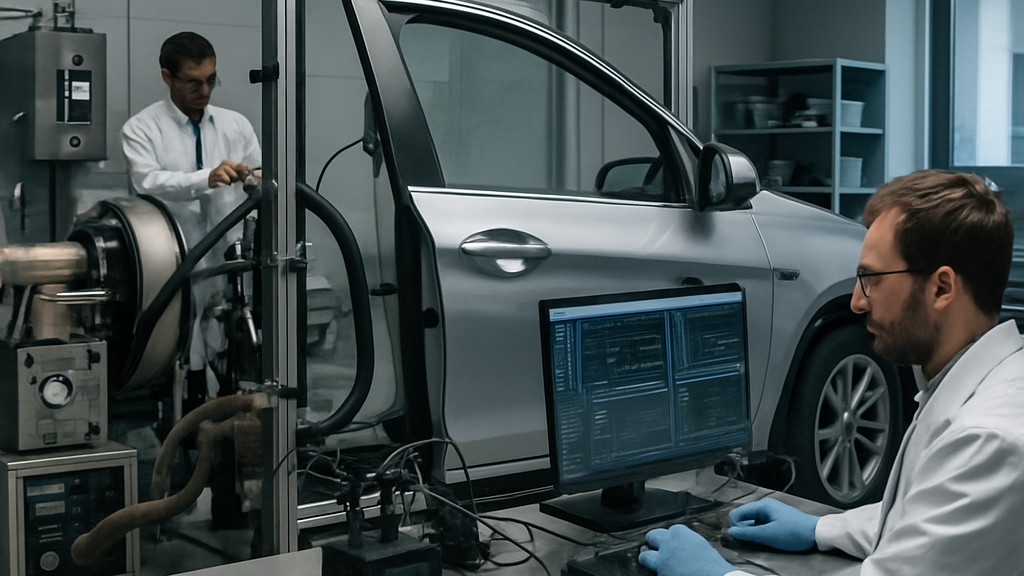
Sophisticated labs perform these tests in controlled chambers that mimic real-world chaos. Failure rates are low, but when problems arise, they lead to redesigns that are reflected in production lines.
In short, the BMW PR 231 standard is essential for ensuring vehicle reliability, safety, and customer satisfaction, as it determines the durability and performance of door sealing systems in harsh environmental conditions. Because,
Failure to comply with the BMW PR 231 standard may lead to decreased vehicle performance, increased maintenance costs and damage to the brand's reputation.
Our organization, with its competent and experienced team, has been understanding the needs of its customers for years, providing them with the advanced testing services they need, and assisting them in the establishment, implementation, and improvement of management systems. In this context, we also provide testing services in accordance with the "BMW PR 231 Sealing System for Doors and Lids" standard.
To get an appointment, to get more detailed information or to request an evaluation, you can ask us to fill in our form and reach you.

