ES-X60210 Plastic Parts - For Interior Trim
The “ES-X60210 Plastic Parts - For Interior Trim” standard, developed by Mitsubishi Motors, describes the performance requirements for plastic interior parts used in vehicle production.
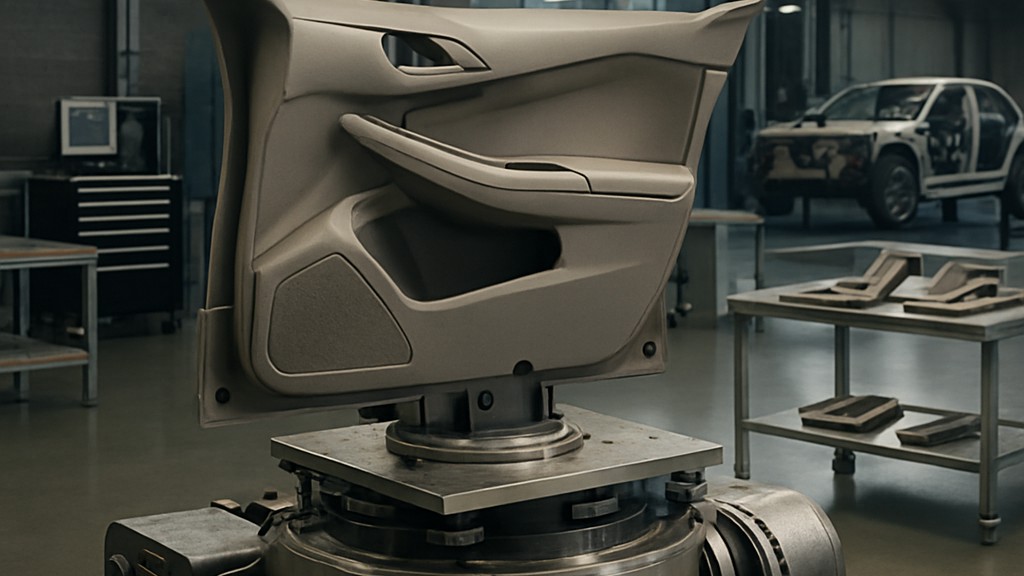
The general requirements in this standard are determined as follows:
- The color tone should conform to the color standard under bright natural light.
- The surface of the parts must be free from defects, irregular color, burn marks, dirt or excessive welding, flow marks, craters, or adhesion. The sample must be evaluated according to the limit sample agreed upon between the persons involved.
- Polyamide parts should be prepared in accordance with the table titled "Thermal cycling conditions" given in standard ES-X83239. An example of an intended material is PA6, PA66, or a polymer alloy containing PA6 or PA66 and their reinforced grade.
Molded plastic parts, subject to detailed requirements, must be tested using the method specified in this standard and must meet the requirements shown in the table titled "Detailed Requirements." In the case of colored plastic parts of the same material, color, and texture, the light resistance, chemical resistance, abrasion resistance, scratch resistance, fogging properties, and antistatic properties test report may be applied to other parts being evaluated.
The detailed requirements in this standard are specified as follows:
- Thermal cycling resistance:
- Evaluation during cycle testing:
- There should be no significant change in color, discoloration, deformation, cracks, tears, adhesion, gap at the mating surface and hardness.
- No loosening of fasteners or caulking.
- There should be no deformation that causes functional deterioration and defective appearance in the internal components and related parts.
- Evaluation after cycle testing:
- There should be no significant change in color, color change, deformation, cracks, tears, adhesion, gap on the mating surface and hardness.
- There should be no loosening or caulking in the connection elements.
- There should be no deformation that causes functional deterioration and defective appearance in the internal components and related parts.
- The allowable displacement of each measuring point should not exceed plus/minus 5 mm.
- Thermal shock resistance:
- There should be no visible color change, discoloration, deformation, cracks, tears, adhesion, gaps on the mating surface, and no significant change in hardness.
- There should be no loosening or caulking in the connection elements.
- There should be no deformation that causes functional deterioration and defective appearance of internal components and related parts.
- The allowable displacement of each measuring point should not exceed plus/minus 5 mm.
- Heat aging resistance:
- Evaluation during cycle testing:
- There should be no significant change in color, discoloration, deformation, cracks, tears, adhesion, gaps in the mating surface and hardness.
- There should be no loosening or caulking in the connection elements.
- There should be no deformation that causes functional deterioration and defective appearance in the internal components and related parts.
- Evaluation after cycle testing:
- There should be no significant change in color, discoloration, deformation, cracks, tears, adhesion, gap at the mating surface and hardness.
- There should be no loosening or caulking in the connection elements.
- There should be no deformation that causes functional deterioration and defective appearance of internal components and related parts.
- The allowable displacement of each measuring point should not exceed plus/minus 5 mm.
- Moisture resistance: There should be no visible change in color, discoloration, deformation, cracks, tears, adhesion or change in hardness.
- Hydrolysis resistance: The following parts use polycarbonate and polyester or their polymer alloy materials:
- Colorful resin molded parts
- Base material layer of painted, hydrographic printing and similar secondary processing parts
An increase in MFR of up to a maximum of 90 percent is permitted.
- Light resistance:
- There should be no visible change in color, discoloration, cracks or adhesion.
- There must be 3 or more shades of gray.
- Vibration resistance: There should be no cracks, deformations or loose fasteners and pastes that may damage the internal parts.
- Chemical resistance:
- There should be no visible change in color, discoloration, cracks or bubbles.
- There must be 3 or more shades of gray.
- Abrasion resistance: Three or more of the criteria must be met.
- Scratch resistance:
- Method A: Soft material, painted parts. 3 or more criteria must be met.
- Method B: Colored resin molded parts. 1,5 or less (ΔL).
- Method C:
- Dark resin molded parts (L 30,0 or less).
- Dark colored painted parts (L 30,0 or less).
- To easily find parts scratch mark. 0,0 or more (ΔL).
- Parts other than those specified above. 0,3 or more (ΔL).
- Method D: Colored resin molded parts. Four or more criteria.
- Impact resistance: There should be no defects such as fractures, tears and deformations that significantly affect the appearance.
This standard also specifies detailed requirements for the following features:
- Fogging properties
- Antistatic property
- Abrasion and scratch resistance
All test values specified in this standard are based on parts conditioned in a controlled atmosphere of 23°C plus/minus 2°C and 50 percent relative humidity plus/minus 5 percent. If the atmosphere does not remain at the specified condition, the temperature and humidity must be reported.
The test pieces should be exposed for more than 24 hours under the laboratory condition specified above before testing.
Test samples should be produced under the same conditions as the production process. However, the lightfastness and chemical resistance of secondary processing parts such as plating, vacuum metallization, hot stamping, and painting should be evaluated according to the specifications for each surface treatment.
The main test methods defined in this standard are:
- General situation
- Sample type
- Thermal cycling resistance
- Heat aging resistance
- moisture resistance
- Light resistance
- Vibration resistance
- Chemical resistance
- Wear resistance
- Scratch resistance
- Impact resistance
- Fogging properties
- Antistatic property
- Abrasion and scratch resistance
Our organization, which has been supporting businesses across all sectors for years through a wide range of testing, measurement, analysis, and evaluation activities, has a strong team of employees who closely follow global developments in science and technology and are constantly improving themselves. In this context, we also provide testing services to businesses in accordance with the "ES-X60210 Plastic Parts - For Interior Upholstery" standard.



