

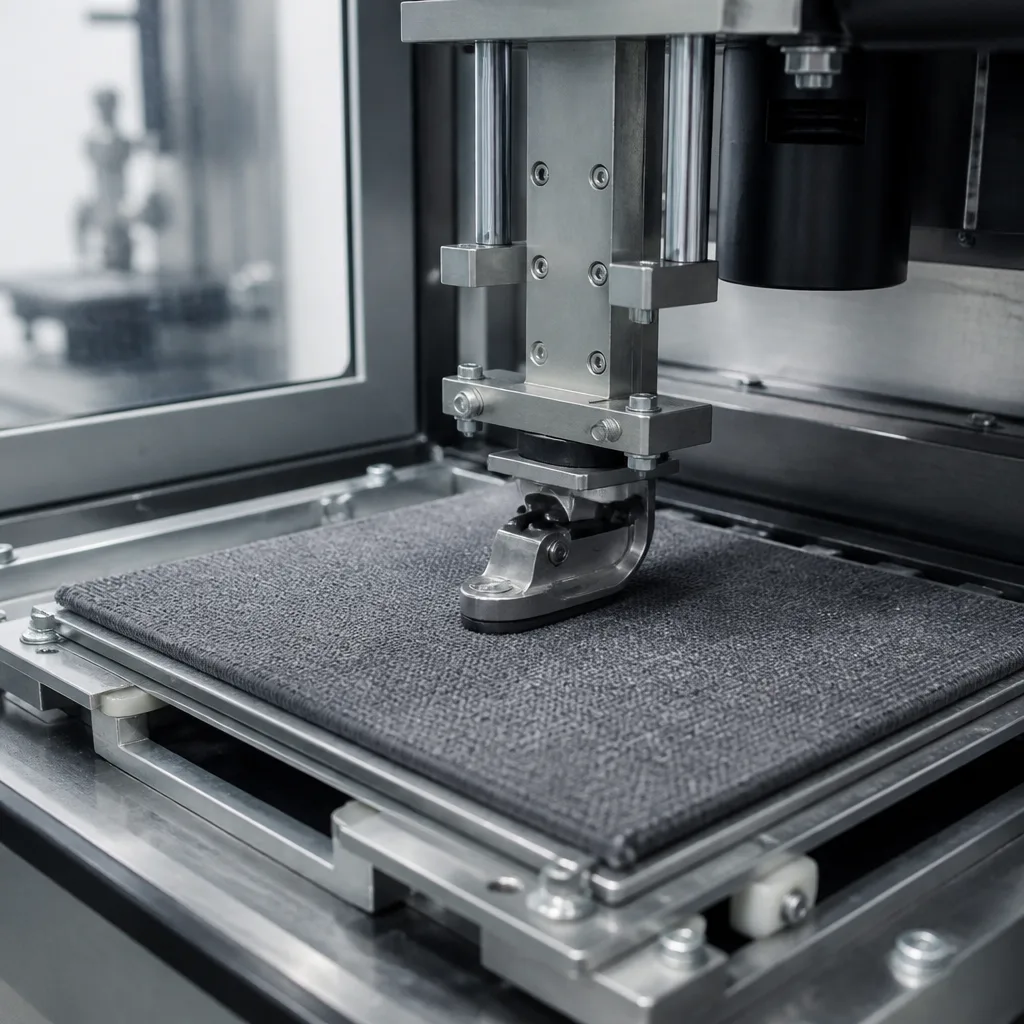
The “Daimler PB VWL 301 Metal Heel Abrasion Test” standard, developed by the Daimler-Benz automotive company, defines an automotive interior durability testing method developed within the framework of Mercedes-Benz Group engineering standards. This method evaluates how resistant vehicle interior materials are to abrasion caused by repeated contact with hard or metal shoe heels. This standard is primarily used for carpets, upholstery, trim materials, and textile surfaces in passenger and commercial vehicles.
Modern vehicle interiors are subjected to constant mechanical wear and tear from passengers entering and exiting the vehicle. The Daimler PB VWL 301 standard was created to simulate long-term, real-world wear conditions and to verify that interior materials maintain the following:
This test is particularly important for premium vehicles, where visible wear on carpets or upholstery can negatively impact customer perception. In the industry, this standard is specifically referred to as the metal-heeled shoe wear test.
This procedure simulates the repeated movement of metal shoe heels across a material surface under controlled laboratory conditions. The material sample is subjected to cycles of friction and pressure to reproduce wear similar to that experienced over years of passenger use.
Typical evaluation criteria include:
The severity of the damage is then compared against Daimler's acceptance thresholds.
The Daimler PB VWL 301 standard generally applies to the following materials:
This standard is often used in conjunction with related Daimler durability procedures, such as PB VWL 323, which assesses air abrasion resistance.
Wear testing plays a major role in automotive quality assurance because internal components must withstand years of wear and tear.
This standard also supports the following:
The Daimler PB VWL 301 standard belongs to a broader family of Daimler material and durability standards used in the automotive industry. Related standards include:
Test laboratories and automotive suppliers use the Daimler PB VWL 301 standard in the following situations:
This standard is particularly important in premium automotive segments where internal durability is critical, such as commercial trucks, buses, and high-mileage fleet vehicles.
The Daimler PB VWL 301 standard is necessary because automotive interior materials are subjected to continuous mechanical wear during normal vehicle use. This standard provides a controlled method to assess whether materials can withstand repeated wear from intense pressure from hard footwear, particularly shoe heels. Without standardized testing, manufacturers struggle to ensure consistent durability, appearance, and quality across vehicles and suppliers. This standard is considered important for the following reasons:
Areas such as carpets, mats, and subfloor surfaces are particularly sensitive. This standard allows engineers to predict long-term wear before a vehicle reaches the customer by recreating these stresses under laboratory conditions.
For premium automotive brands like the Mercedes-Benz Group, interior quality significantly impacts customer perception. This standard helps identify substandard materials before mass production.
A standardized method ensures that materials meet the same durability expectations regardless of the supplier's location.
Therefore, the standard contributes to long-term product reliability and lifecycle performance.
Manufacturers can improve material performance by using measurable wear results instead of subjective evaluations.
In short, the Daimler PB VWL 301 standard is a specialized automotive wear resistance test focused on evaluating how interior materials withstand repeated contact with metal heels and similar mechanical wear. This is part of Daimler’s broader quality engineering system and helps ensure automotive interiors remain durable, visually appealing, and functional throughout their long service life.
For many years, our organization, with its competent and experienced team, has been understanding the needs of its clients, providing the advanced testing services they require, and assisting them in the establishment, implementation, and improvement of management systems. Within this framework, we also provide testing services compliant with the Daimler PB VWL 301 standard.
To get an appointment, to get more detailed information or to request an evaluation, you can ask us to fill in our form and reach you.

