SES N 3306 Insulation Materials
Developed by Suzuki Motor Corporation under the supplementary SES N standards (examples), the “SES N 3306 Insulation Materials” standard is a specification used in the automotive industry to define requirements, test methods, and performance criteria for insulation materials used in vehicles.
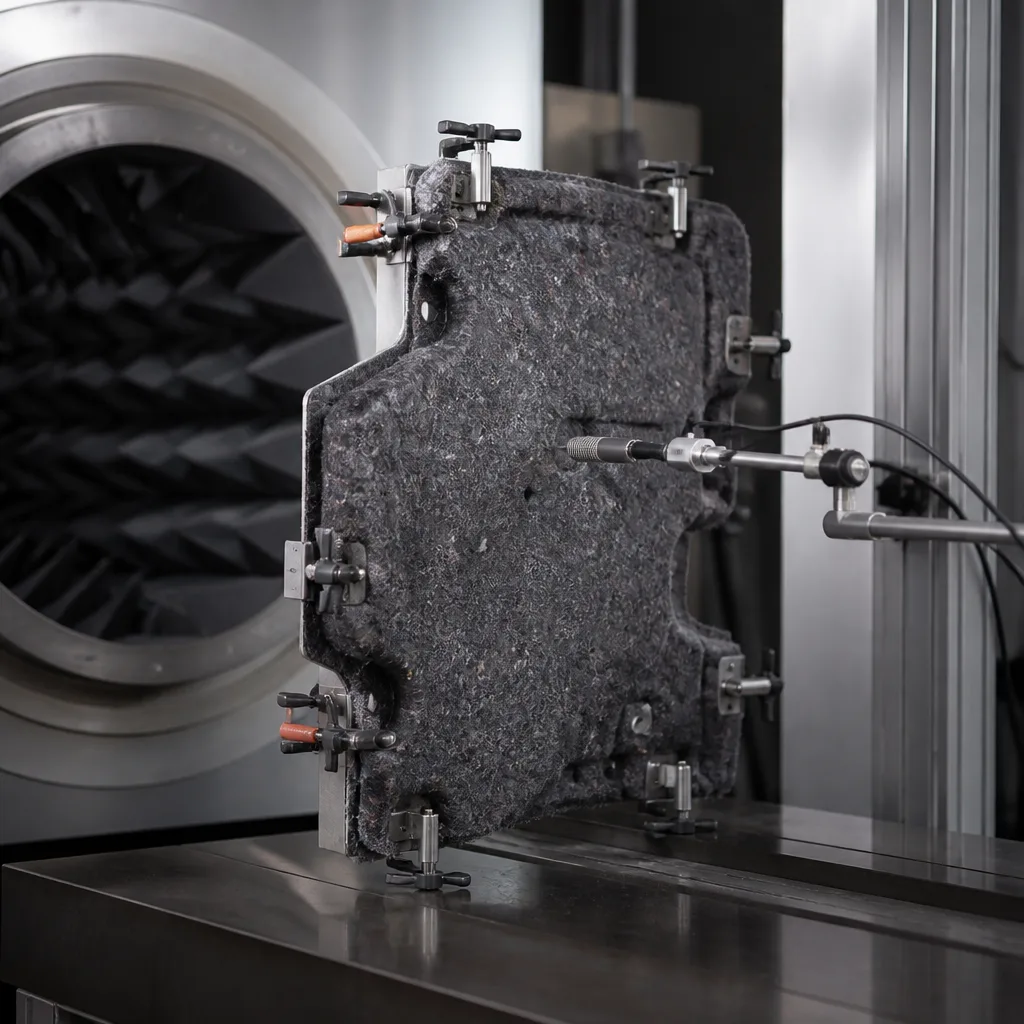
Insulation materials are used to reduce heat transfer, noise, and vibration inside a vehicle. They improve both passenger comfort and vehicle efficiency.
In the automotive industry, insulation materials are not used randomly; they are strategically integrated and designed into different parts of the vehicle to control heat, noise, and vibration. In practice, insulation materials are used as follows:
- Thermal insulation (heat management): Placed between heat sources (engine, exhaust, battery) and sensitive areas. Applied as a lining, shield, or wrap. Typical applications include:
- Engine hood liners
- Fire wall (between engine and cabin)
- Exhaust system heat shields
- Electric vehicle battery thermal protection
The goal is this:
- To protect passengers from the heat.
- To prevent components from overheating.
- Increasing HVAC efficiency (reducing the need for cooling)
Acoustic insulation (noise reduction): Installed as absorbers or barriers to block or absorb sound waves. Typical applications include:
- Acoustic support floor carpets
- Door panels
- Ceiling linings
- Instrument panel insulation behind the instrument panel
The goal is this:
- To reduce engine noise.
- Minimizing road/tire noise
- Improving cabin noise (NVH performance)
Vibration damping (NVH control): Damping plates or pads are bonded directly to metal surfaces. Typical applications include:
- Floor panels
- Luggage area
- Doors and side panels
The goal is this:
- To reduce vibrations caused by the engine and the road.
- To prevent clicking noises.
- Improving driving comfort
Integration into components: Insulation materials typically include the following:
- Laminated (foam, foil and fabric)
- Molded (instrument panel insulators, engine covers)
- Attached using adhesives or clips.
For example, a bonnet liner might include the following:
- Foam (sound absorption)
- Aluminum foil (heat reflective)
- Textile surface (aesthetics and durability)
Security and compliance usage:
- Flame-retardant insulation is used to meet fire safety standards.
- Low-emission materials ensure good cabin air quality (VOC control).
The selection process in the industry: Engineers select insulation materials based on the following criteria:
- Temperature exposure (e.g., 150 degrees near the engine versus 60 degrees indoors)
- Noise frequency range (low frequency vs high frequency)
- Weight targets (lightweight materials preferred)
- Cost and manufacturability
- Compliance with standards such as SES N 3306
Insulation materials are used to balance comfort, safety, and efficiency in the following ways:
- By controlling heat flow
- By reducing noise
- By minimizing vibration
The main types of insulation materials are:
- Thermal insulation: Limits heat flow (engine heat, exhaust heat, solar load)
- Acoustic insulation: Reduces noise (engine, road, wind)
- Vibration damping: Minimizes structure-induced vibrations.
Typical materials covered by the SES N 3306 standard include:
- Foam materials (polyurethane, polyethylene, rubber foam)
- Fiber-based mats (glass fiber, polyester fiber)
- Multilayer composites (foam, foil and textile)
- Bitumen or elastomer-based sheets
The basic requirements in the SES N 3306 standard are defined as follows:
- Thermal performance:
- heat resistance
- Thermal conductivity
- Stability at high/low temperatures.
- Acoustic performance:
- Sound absorption coefficient
- Noise reduction capability
- Mechanical properties:
- Compressive strength
- Flexibility
- Thickness tolerance
- Environmental resistance:
- Aging (heat, humidity, UV)
- Chemical resistance (oil, fuel, cleaners)
- Flammability:
- Compliance with fire safety requirements (e.g., combustion rate limits)
- Odor and emissions:
- Low volatile organic compounds (VOCs)
- Suitable cabin air quality.
The tests defined in the SES N 3306 standard are as follows:
- Thermal aging test
- Thermal insulation/conductivity test
- Sound absorption test (impedance tube or echo chamber)
- Compression permanent deformation test
- Flammability test (horizontal/vertical combustion)
- VOC / fogging test
Applications of insulation materials include:
- Engine compartment (heat shields, hood liners)
- Floor and fire wall insulation
- Door panels and trim
- Ceiling linings
- HVAC system ducts
- Luggage area
The SES N 3306 standard is necessary because insulation directly affects the comfort, safety, durability, and efficiency of a vehicle; otherwise, the results would be inconsistent and risky. This standard is considered important in the automotive industry for the following reasons:
- It ensures passenger comfort (NVH and temperature): The cabin can be too hot or too cold without specific requirements. Also, noise levels can vary between vehicles. This standard provides the following:
- Consistent thermal insulation performance.
- Reliable noise reduction (NVH)
- It guarantees safety (fire and heat protection): Insulating materials are often located near the engine, exhaust system, and electrical components. Without proper standards, the materials could ignite or melt, or the heat could damage nearby parts. This standard ensures:
- Flammability compatibility
- High temperature resistance
- It checks material quality and durability: Vehicles operate in harsh conditions: high/low temperatures, humidity, and chemicals (oil, fuel). Without this standard, materials can quickly degrade or performance can decrease over time. This standard requires:
- Aging tests
- Chemical resistance
- Long-term performance verification
- It supports vehicle performance and efficiency: Good insulation reduces the need for HVAC, which means better fuel economy or electric vehicle range. Or it protects components, which means fewer breakdowns. This standard ensures that materials contribute to:
- Energy efficiency
- System reliability
In short, the SES N 3306 standard is required to ensure that insulation materials are safe, durable, consistent, comfortable, and environmentally friendly.
For many years, our organization, with its competent and experienced team, has been understanding the needs of its clients, providing the advanced testing services they require, and assisting them in the establishment, implementation, and improvement of management systems. Within this framework, we also provide testing services compliant with the SES N 3306 standard.



