

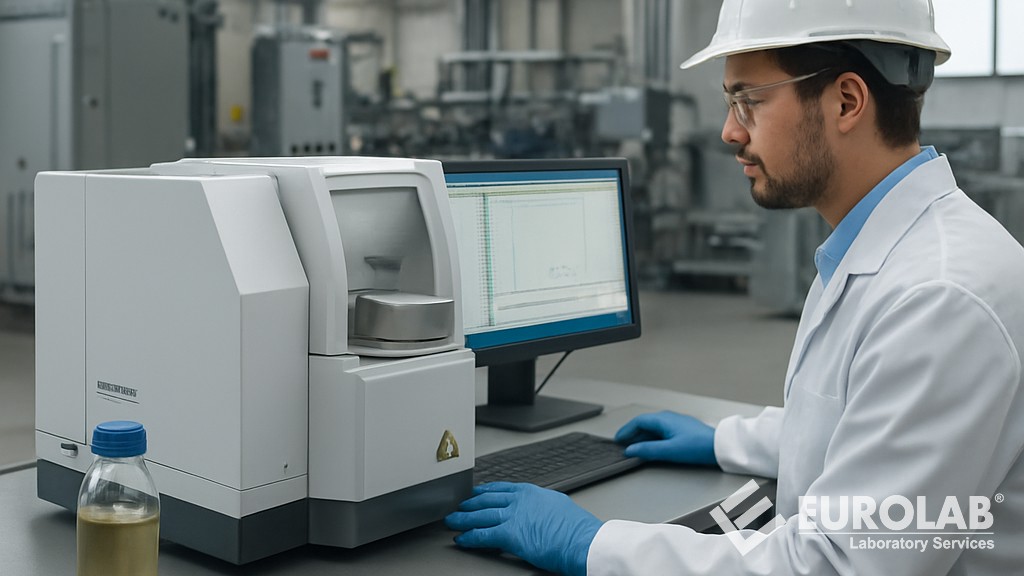
The standard “EN ISO 20884 Petroleum products - Determination of sulfur content of automotive fuels - Wavelength dispersive X-ray fluorescence spectrometry”, which is based on a European standard and later published by the International Organization for Standardization (ISO), describes a wavelength dispersive X-ray fluorescence (WDXRF) test method for determining the sulfur content of liquid, homogeneous automotive fuels with a maximum oxygen content of 3,7 percent (m/m) and varying between 5 mg/kg and 500 mg/kg. This standard covers the following:
Products with higher oxygen content, such as pure fatty acid methyl esters used as biodiesel, exhibit significant matrix effects, but pure FAME can also be analyzed when the relevant procedures are followed. Other products can also be analyzed using this test method, but precision data for products other than those specified have not been established in this standard. Sulfur contents higher than 500 mg/kg can be determined after sample dilution, but precision has not been established for diluted samples.
In principle, the sample to be analyzed is exposed to the primary radiation of an X-ray tube in a sample cell. The counting rates of X-ray fluorescence and, if necessary, the counting rates of background radiation are measured. The sulfur content of the sample is determined from a defined calibration curve for the respective measurement range.
Unless otherwise specified, samples should be taken according to the procedures described in ISO 3170 or ISO 3171 standards.
The EN ISO 20884 standard is considered a revolution in sulfur analysis in automotive fuels.
In pursuit of cleaner air and more efficient engines, the global oil industry is increasingly focusing on reducing harmful emissions from vehicles. A major pollutant, sulfur dioxide, results from the combustion of sulfur-containing fuels and significantly contributes to acid rain, respiratory problems, and the degradation of catalytic converters in modern engines. To combat this, ISO 20884 and similar international standards have emerged as critical tools for ensuring compliance with stringent environmental regulations. This standard offers a precise method for measuring sulfur levels in fuels, helping refineries, manufacturers, and regulators protect quality and safety. The EN ISO 20884 standard is one that supports the transition to ultra-low sulfur diesel and other cleaner fuel varieties.
Sulfur in automotive fuels such as gasoline and diesel originates from crude oil and can persist throughout refining processes. High sulfur levels not only harm the environment but also contaminate exhaust aftertreatment systems like selective catalytic reduction and diesel particulate filters, which are necessary to meet emission standards such as Euro 6 or EPA Tier 3.
Traditional wet chemistry methods for sulfur detection, such as acid digestion, are labor-intensive and prone to error. This is where wavelength dispersive X-ray fluorescence (WDXRF) spectrometry comes in. It's a non-destructive and rapid technique that excites fuel samples with X-rays and measures the emitted fluorescence to determine the elemental composition. The EN ISO 20884 standard standardizes this method, guaranteeing reproducibility in laboratories worldwide. This standard targets liquid, homogenous automotive fuels with sulfur concentrations ranging from 5 mg/kg (parts per million or ppm) to 500 mg/kg. This range encompasses everything from older, high-sulfur fuels to modern ultra-low sulfur specifications, where limits typically fall below 10 ppm in regions such as the European Union and the United States.
The EN ISO 20884 standard essentially utilizes WDXRF technology to isolate the characteristic X-ray emissions of sulfur at specific wavelengths. The basic steps of this method are as follows:
This method (WDXRF) offers superior resolution, making it ideal for trace detection. The entire analysis takes less than 5 minutes per sample, enabling highly efficient testing in refineries and quality control laboratories.
In short, the EN ISO 20884 standard is indispensable in the petroleum supply chain. By providing a reliable and efficient tool for measuring sulfur content in automotive fuels, this standard not only ensures compliance with legal regulations but also paves the way for more environmentally friendly transportation.
For many years, our organization, with its competent and experienced staff, has been understanding the needs of its clients, providing the advanced testing services they require, and assisting in the establishment, implementation, and improvement of management systems. Within this framework, we also provide testing services to businesses in accordance with the "EN ISO 20884 Petroleum products - Determination of sulfur content in automotive fuels - Wavelength dispersive X-ray fluorescence spectrometry" standard.
To get an appointment, to get more detailed information or to request an evaluation, you can ask us to fill in our form and reach you.

