

The standard "Volvo STD 5714-105 Phosphate coatings - Determination of coating mass per unit area - Gravimetric methods" developed by the Volvo Car Company describes gravimetric methods for determining the coating mass per unit area of phosphate coatings on iron, steel, electro-zinc-coated sheet, hot-dip galvanized sheet, aluminum sheet and galvannealed sheet. These methods are applicable only to phosphate coatings that do not contain any additional coatings such as oil, water or solvent-based polymers or waxes.
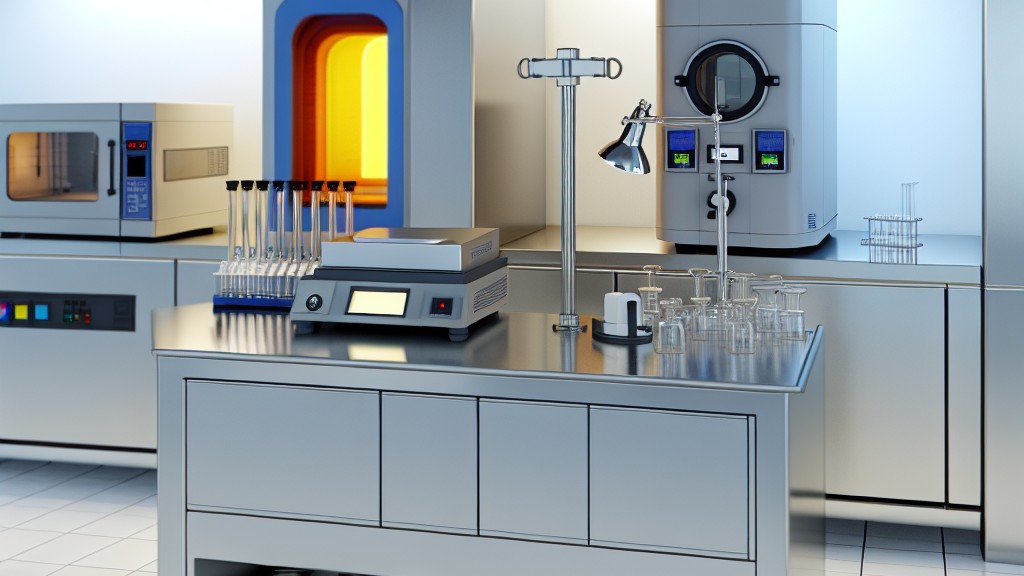
In addition to ordinary laboratory equipment, the following equipment is used in these tests:
The maximum mass of the test piece shall be 200 g and the total surface area shall be large enough to provide sufficient mass loss to test with sufficient reliability compliance with the requirements of the relevant material or product specification. To obtain sufficient accuracy in determination, the total surface area shall conform to the table given in the standard. In general, to achieve an accuracy of 5 percent, the surface area of the test piece shall be measured to an accuracy of 1 percent.
For the preparation of solutions use only reagents of recognized analytical quality and only distilled water or water of equivalent purity. If a sufficient number of test portions are available, each determination is carried out in duplicate or, better yet, in triplicate.
The reagent used in manganese phosphate coatings is an aqueous solution containing 50 g of chromium (VI) oxide per litre. In carrying out the test, the test piece (area A) is dried and weighed to the nearest 0,1 mg on an analytical balance. The test piece is then immersed in the reagent held at 75 degrees plus/minus 5 degrees for 15 minutes. The test piece is immediately rinsed in clean running water and then in distilled water, dried rapidly and weighed again. This process is repeated until a reasonably constant mass is obtained. Fresh reagent is used for each test piece.
The reagent used in zinc phosphate coatings (reagent for iron, steel, zinc-coated sheet and galvanized sheet) is an aqueous solution containing 50 g sodium hydroxide, 50 g sodium gluconate and 4 g triethanolamine per litre. The reagent for aluminium sheet is 65 percent nitric acid by mass.
The test piece (area A) is dried in an oven at 75-80 degrees for about 10 minutes, then placed in a desiccator until cool. Weighed to the nearest 0,1 mg on an analytical balance. The test piece is immersed in the reagent as follows:
For example, the test piece is held in motion using tongs. The test piece is immediately rinsed in distilled water and then with ethanol. The test piece is wiped with a soft cloth to remove all residue of the phosphate coating. It is rapidly dried in an oven at 75-80 degrees for approximately 10 minutes, and after the test piece has cooled, it is weighed again. The reagent should be replenished when used for a 2 m² area of phosphate-coated test pieces or after a maximum of one week of use. Only one set of reagent solutions should be used for one type of test piece, i.e., separate reagent solutions should be used for iron, steel, zinc-coated sheet metal, and galvanized sheet metal.
The reagent used in iron phosphate coatings is an aqueous solution containing 50 g of chromium (VI) oxide per litre. The test piece (area A) is dried and weighed to the nearest 0,1 mg on an analytical balance. The test piece is then immersed in the reagent held at 75° plus/minus 5° for 15 minutes. The test piece is immediately rinsed in clean running water and then in distilled water, dried rapidly and weighed again. The procedure is repeated until a reasonably constant mass is obtained. Fresh reagent is used for each test piece.
Mass per unit surface area is expressed in grams per square meter and is calculated based on the formula given in the standard. If the measurements were taken two or three times, the averages are reported in the report.
Among the numerous testing, measurement, analysis and evaluation studies that our organization has carried out for businesses in various sectors, our organization also provides testing services defined in the standard “Volvo STD 5714-105 Phosphate coatings - Determination of coating mass per unit area - Gravimetric methods” with its trained and expert staff and advanced technological equipment.
To get an appointment, to get more detailed information or to request an evaluation, you can ask us to fill in our form and reach you.

