Thickness Measurement of Ford FLTM BI 117-01 Paint Films - Eddy Current Method
The “Ford FLTM BI 117-01 Paint Film Thickness Measurement - Eddy Current Method” standard, developed by Ford Motor Company (Ford), describes a test method that defines the procedures, equipment, and evaluation criteria for measuring the thickness of paint (coating) films on metal surfaces. This method is widely used in automotive engineering to ensure coating quality, durability, and corrosion protection performance.
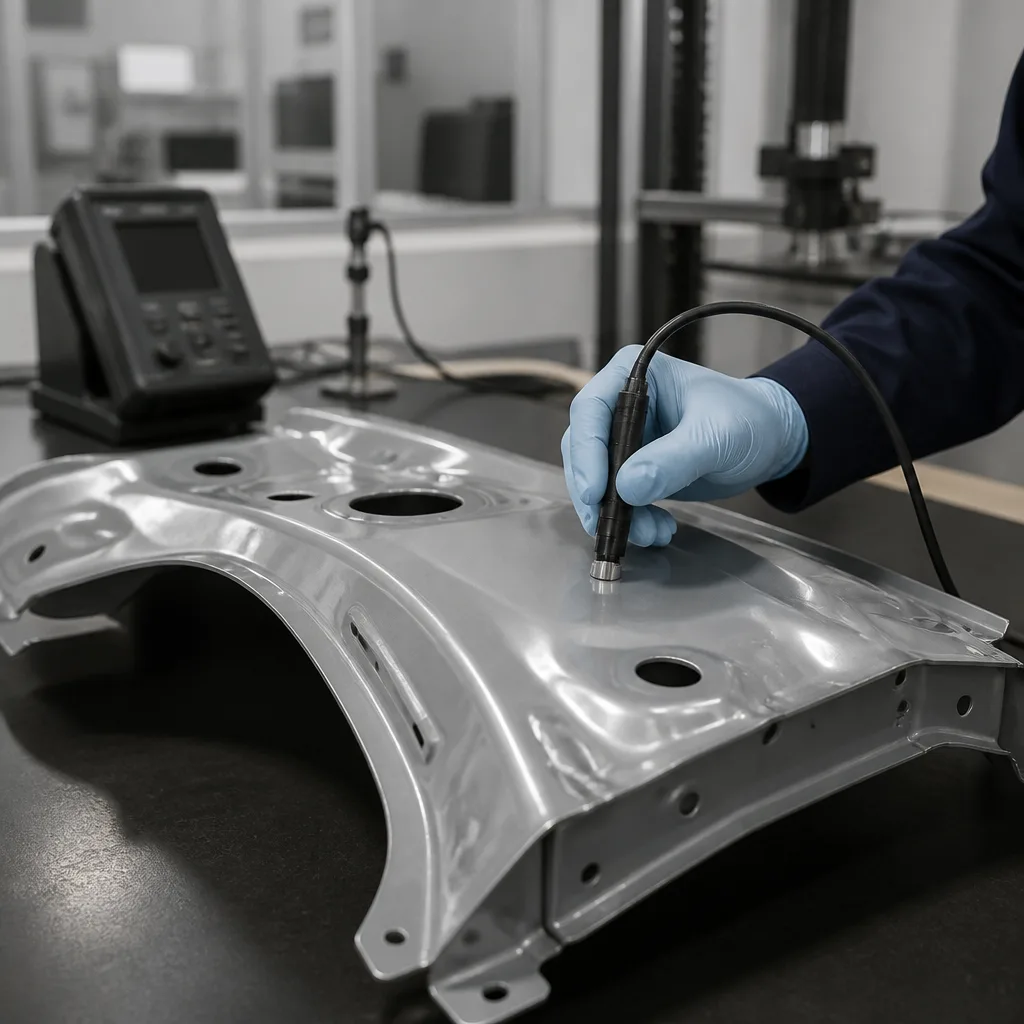
The primary goal of the Ford FLTM BI 117-01 standard is to ensure that paint systems applied to vehicle body panels and components meet design requirements in the following respects:
- Corrosion protection
- Appearance consistency
- Process control in dyeing lines
- Indirectly, adhesion performance (via the correct film thickness)
Paint thickness is critical for the following reasons:
- If it is too thin, it provides inadequate corrosion protection.
- If it's too thick, it can lead to cracking, poor curing, increased costs, or adhesion problems.
This standard generally applies to the following:
- Metallic surfaces (steel, galvanized steel, aluminum)
- Painted automotive body panels
- Coated components in production and verification tests.
This standard is used in the following areas:
- Original equipment manufacturers' production quality control.
- Supplier verification tests
- Laboratory coating development
The Ford FLTM BI 117-01 standard defines non-destructive measurement methods depending on the surface type:
- Magnetic induction method (iron-based surfaces): Used for steel or iron parts:
- A magnetic field is generated in the probe.
- The paint layer acts as a non-magnetic void.
- The change in magnetic flux is proportional to the coating thickness.
- Eddy current method (non-ferrous metals): Used for aluminum or non-magnetic metals:
- A high-frequency electromagnetic field is induced.
- Eddy currents form in the lower layer.
- Signal variation is related to coating thickness.
- Alternative advanced methods (supporting technologies): Depending on the supplier's equipment, the following methods are used:
- Ultrasonic thickness measurement
- Optical/digital microscopy (in advanced analysis situations)
Typical devices permitted for testing under the Ford FLTM BI 117-01 standard include:
- Magnetic induction coating thickness gauges
- Eddy current thickness gauges
- Calibrated reference standards (certified foils or blocks)
All equipment,
- It must be calibrated before testing.
- It must be periodically verified according to certified standards.
Proper calibration is a fundamental requirement for the following:
- The device needs to warm up before the measurement.
- Zero calibration on bare substrate.
- Use of certified thickness standards
- Verification on materials similar to test samples (same composition and surface condition)
Regular recalibration is necessary to maintain measurement accuracy.
This testing method generally follows these steps:
- A clean, uncoated reference area is prepared.
- The measuring device is calibrated.
- Multiple points are measured on the coated surface.
- It is saved with the following value:
- Minimum thickness
- Maximum thickness
- Average value
- Measurement conditions and device type are reported.
The key factors affecting the accuracy of the results are as follows:
- Surface roughness
- Curvature of the part
- Substrate thickness
- Edge effects
- Probe angle and pressure
- Magnetic properties of the base material
These factors are explicitly controlled in the standard to improve reproducibility.
The Ford FLTM BI 117-01 standard test method is part of a broader Ford paint and corrosion testing system that is often used in conjunction with:
- Ford FLTM BI 110 standard series (coating tests)
- Ford FLTM BI 123 standard series (corrosion test)
- Ford FLTM BO standard series (environmental resistance tests)
The Ford FLTM BI 117-01 standard is important because it standardizes how paint film thickness is measured on vehicle parts, and this seemingly simple measurement has a direct impact on vehicle durability, appearance, and manufacturing quality control. Here are the key reasons why this standard is considered important:
- It ensures corrosion protection performance: The paint systems on the body panels are the first barrier against corrosion. If the coating is too thin, moisture and salts can penetrate the metal substrate, leading to rust and structural deterioration. If it is too thick, it may crack or lose its adhesion over time. This standard ensures that the coating remains within the designed protective window.
- It guarantees a consistent vehicle appearance: Thickness differences affect the following:
- Color homogeneity
- Brightness level
- Surface texture (orange peel appearance, ripples)
By controlling the thickness, vehicles from different factories or suppliers are ensured to have the same visual quality.
- It controls the stability of the production process: Paint thickness is a key process indicator in coating lines (spraying, electroplating, powder coating). This standard allows engineers to:
- Detecting spray gun deviation or clogging.
- Identifying bath chemistry problems (in electroplating systems)
- To ensure consistent line performance.
Without a standard methodology, it is more difficult to detect process variations early.
- Improves durability and warranty performance: Correct film thickness reduces long-term failures such as:
- Peeling and delamination
- Stone impact damage
- UV degradation
- Corrosion-related warranty claims
This directly reduces costs and increases product reliability.
- Supplier quality compliance is ensured: Ford works with many global suppliers. This standard ensures the following:
- All suppliers measure thickness in the same way.
- Data can be compared across regions.
- Quality controls are consistent.
This is very important for global production systems.
- It supports lightweight material strategies: Modern vehicles use mixed materials (steel, aluminum). Each behaves differently in coating systems. This standard supports multi-material vehicle design by ensuring accurate thickness validation in both ferrous and non-ferrous substrates.
- Provides repeatable and verifiable measurements: This standard device calibration defines measurement points and acceptable techniques (magnetic induction/eddy current), ensuring that results are traceable and repeatable.
In short, the Ford FLTM BI 117-01 standard defines a standardized, repeatable method for measuring paint film thickness on metal parts using magnetic or eddy current principles. It ensures that coating systems in automotive manufacturing meet stringent durability and corrosion protection requirements.
For many years, our organization, with its competent and experienced staff, has been understanding the needs of its customers, providing the advanced testing services they require, and assisting them in the establishment, implementation, and improvement of management systems. Within this framework, we also provide testing services compliant with the Ford FLTM BI 117-01 standard.



