

Developed by Fiat Chrysler Automobiles (FCA) (now Stellantis), an Italian-American automotive company, the “Fiat 50461 Adhesion Test of Inorganic and Organic Coatings by Cross-Cut Method” standard is a material testing specification used to evaluate the adhesion strength of paints, coatings, and decorative surface treatments applied to automotive components. This standard is commonly known as the cross-cut adhesion test or grid adhesion test. This test method is primarily used to verify the durability of organic and inorganic surface coatings on plastics and metals used in vehicle interiors and exteriors.
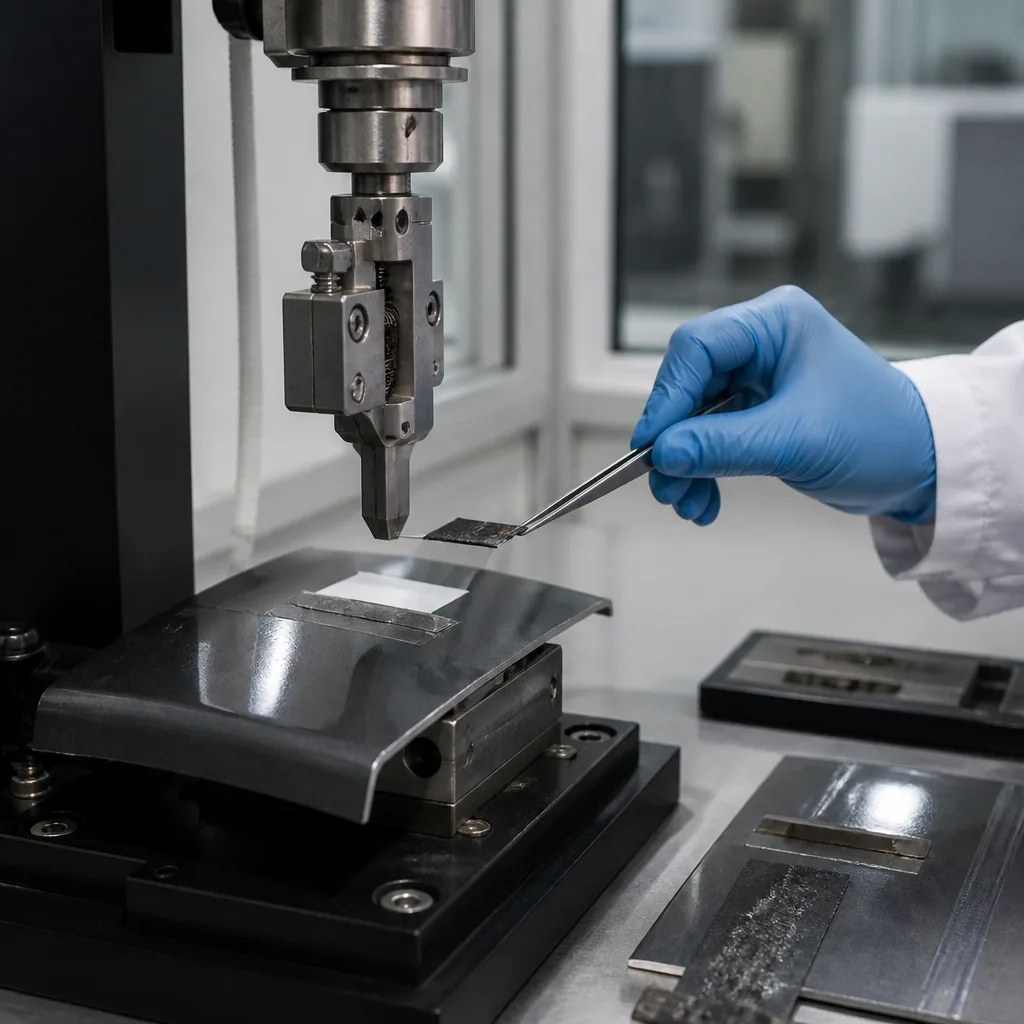
The purpose of the Fiat 50461 standard is to determine whether a coating remains firmly adhered to its substrate after a cut-and-band removal process. This method helps engineers evaluate the following:
This standard is particularly important for:
In automotive manufacturing, poor adhesion can lead to the following:
Therefore, the Fiat 50461 standard is used as a quality verification method during material approval and production control.
The test involves intentionally cutting the coating into a grid pattern and applying adhesive tape over the cuts. The tape is then quickly removed to assess whether the coating separates from the substrate. The amount of coating that separates determines the adhesion classification.
These tests utilize specialized cutting equipment called cross-cutting tools or squaring devices. The necessary equipment includes:
The blades create parallel cuts at controlled intervals, depending on the coating thickness.
Unless otherwise specified, tests are performed under the following controlled laboratory conditions:
For polymer-coated parts, testing is typically delayed until at least 96 hours after polymerization to ensure coating stabilization.
Tests generally follow these steps:
The Fiat 50461 standard uses an adhesion rating scale from Ad0 to Ad5:
Typically:
The Fiat 50461 standard is important because automotive coatings and decorative surface treatments must remain firmly adhered to vehicle components throughout the entire lifespan of the vehicle. This standard provides a controlled and repeatable method for verifying coating adhesion before parts enter production. This standard is necessary for the following reasons:
After environmental aging tests, adhesion is usually re-checked using the Fiat 50461 standard to confirm that the coating has not deteriorated.
The Fiat 50461 standard is commonly used in the following areas:
In conclusion, the Fiat 50461 standard is a fundamental automotive coating adhesion standard used to verify the adhesion quality of paints, coatings, and decorative surfaces. Using a controlled cross-cut and tape removal method, this standard provides a reliable and repeatable way to assess coating durability and long-term performance.
This specification plays a major role in preventing coating failures, ensuring aesthetic quality, and maintaining corrosion protection throughout the vehicle's lifespan.
For many years, our organization, with its competent and experienced staff, has been understanding the needs of its customers, providing the advanced testing services they require, and assisting them in the establishment, implementation, and improvement of management systems. Within this framework, we also provide testing services in accordance with the Fiat 50461 standard.
To get an appointment, to get more detailed information or to request an evaluation, you can ask us to fill in our form and reach you.

