

The “PSA D15 5279 Heat Curtain Insulation Efficiency” standard, developed by the French car manufacturer PSA Group (now part of Stellantis), describes a procedure that allows determining the efficiency of heat curtains used to limit the transmission of heat generated from a radiation source such as a muffler.
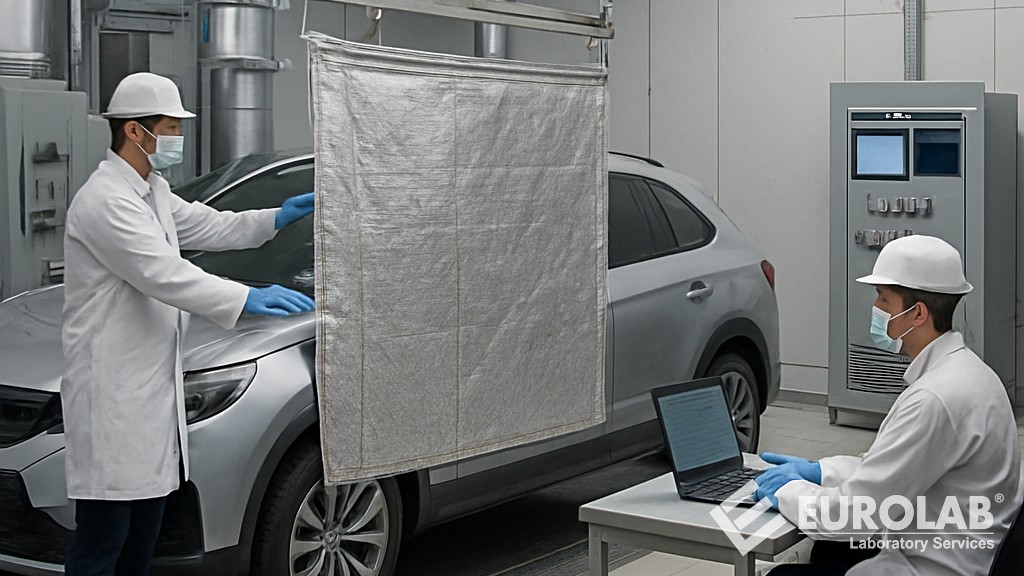
In principle, the heat curtain is exposed to heat radiation from a heat source at a controlled temperature for a specific period of time. The following values are recorded:
The warm side of the curtain is the front side that absorbs the radiant heat. The warm side corresponds to the back side of the curtain.
When preparing test samples,
While the process is underway,
When expressing the results, the following temperatures are given in degrees Celsius:
The distance between the source and the hot side of the screen is noted.
The PSA D15 5279 standard is part of the “D15” category of standards, which typically includes physical, chemical, or optical testing of materials-related properties such as plastics, paints, adhesives, solvents, or coatings. This category covers a variety of material testing protocols. Comparable standards include:
The PSA D15 5279 standard fits this framework as a specific thermal performance test and is required for verifying supplier parts in vehicles where exhaust heat management is important for emission compliance and passenger comfort.
In automotive engineering, heat shields (or thermal barriers) are critical components designed to protect sensitive parts from excessive heat generated by the engine, exhaust system, or other high-temperature sources. These heat shields are typically made from materials such as aluminum foil composites, fiberglass, ceramic coatings, or multilayer insulation fabrics. They are commonly used in the following areas:
The insulation efficiency aspect refers to the material's ability to reflect radiant heat, inhibit conductive/convective transfer, and maintain thermal barriers under real-world operating conditions. This standard includes a standardized test procedure for making the following measurements:
This standard ensures that heat shields meet PSA's requirements for vehicle safety, comfort (reducing cabin heat absorption), component lifespan, and fuel efficiency (minimizing heat loss or gain that affects systems such as air conditioning).
Modern Stellantis vehicles, particularly electric models where battery heat insulation is critical, utilize similar principles for advanced thermal management systems. However, the PSA D15 5279 standard represents an earlier approach focusing on the exhaust heat shield, contributing to overall vehicle efficiency and safety.
For many years, our organization, with its competent and experienced staff, has been understanding the needs of its customers, providing the advanced testing services they require, and assisting in the establishment, implementation, and improvement of management systems. Within this framework, we also provide testing services to businesses in accordance with the "PSA D15 5279 Thermal Curtain Insulation Efficiency" standard.
To get an appointment, to get more detailed information or to request an evaluation, you can ask us to fill in our form and reach you.

