

The “Ford FLTM BN 103-01 Resistance of Coated Fabrics and Plastic Films to Migration Staining and Blockage” standard, developed by Ford Motor Company (Ford), defines a test method used to evaluate the resistance of coated fabrics, plastic films, and plastic extruded strips to migration staining and blockage under high-temperature conditions. This standard is widely applied to automotive interior trim materials, including seat covers, door panels, instrument panel trims, and decorative vinyl components.
Automotive interior trim materials typically contain plasticizers, dyes, pigments, adhesives, and other chemical additives. Over the lifespan of a vehicle, especially in hot climates, these substances can migrate from one material to another. This migration can cause:
The Ford FLTM BN 103-01 standard was developed to ensure that interior trim materials maintain their appearance and functionality when exposed to high temperatures over time.
This standard applies primarily to:
The described test method determines a material's resistance to the following:
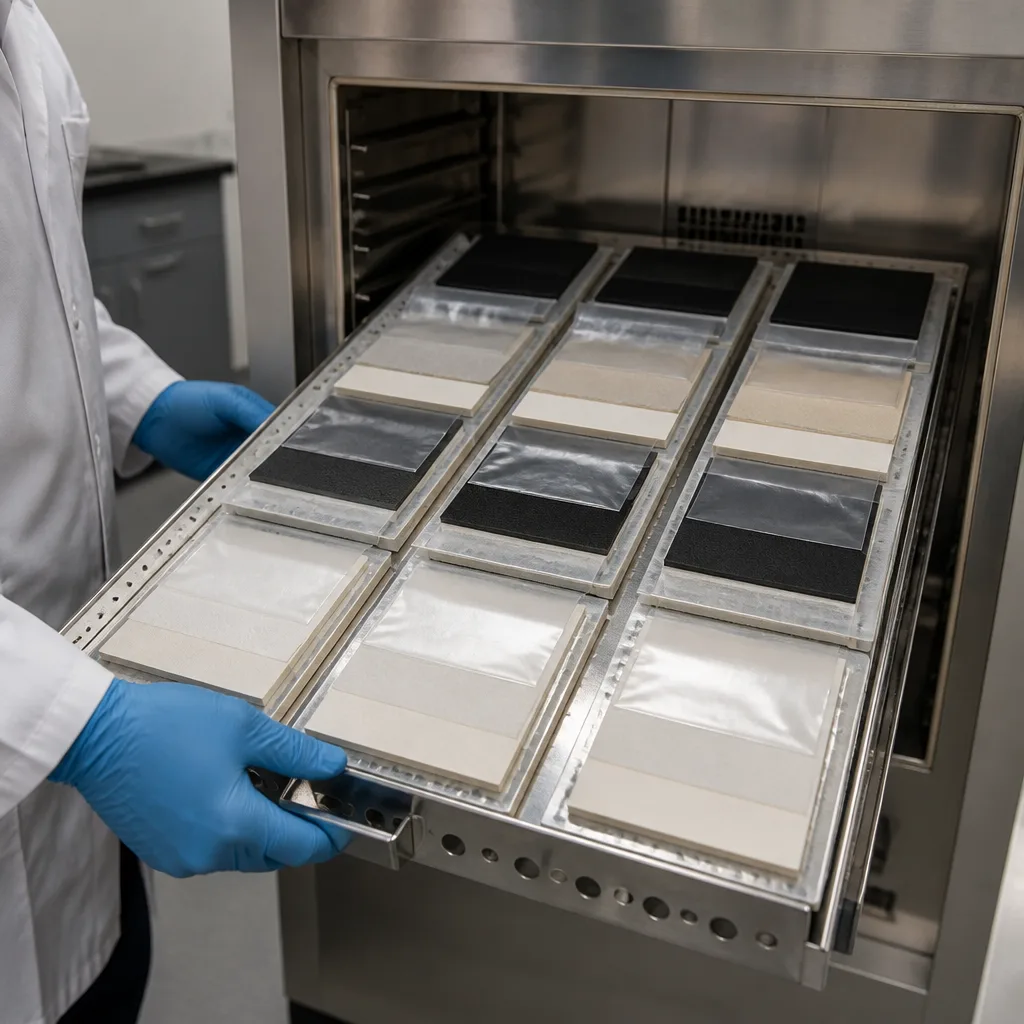
In general, this test follows these steps:
The materials are then graded according to Ford's acceptance criteria.
Materials that do not conform to the Ford FLTM BN 103-01 standard may exhibit the following:
These types of malfunctions may become apparent after the vehicle has been exposed to sunlight for an extended period.
Modern vehicle interiors contain numerous polymer-based materials positioned in close contact. In summer conditions, interior temperatures can exceed 80 degrees Celsius in some regions. Under these conditions, migration and occlusion become significant concerns.
The Ford FLTM BN 103-01 standard helps manufacturers in the following areas:
This test is particularly important for PVC-coated fabrics, synthetic leather, thermoplastic films, and decorative upholstery materials.
Although developed by Ford, this method is widely used in the automotive industry by the following sectors:
Many accredited laboratories offer testing services according to the Ford FLTM BN 103-01 standard as part of automotive material qualification programs. Materials that successfully meet the requirements of this standard generally provide the following:
The Ford FLTM BN 103-01 standard is essential because it helps ensure that automotive interior materials maintain their appearance and performance when exposed to heat, pressure, and prolonged contact with other materials. Without this testing, discoloration, adhesion, and material degradation can occur in vehicle interiors over their normal lifespan. The main reasons why this standard is considered important are:
When vehicles are exposed to high temperatures, these substances can migrate from one material to another. This can cause:
This standard verifies that materials demonstrate resistance to such migrations before being approved for production.
This standard evaluates whether materials remain stable and detachable after thermal exposure.
This standard enables engineers to predict long-term performance by recreating these conditions in a controlled laboratory environment.
This standard helps ensure a consistent and high-quality appearance.
In conclusion, the Ford FLTM BN 103-01 standard is a critical automotive material performance standard that evaluates the resistance of coated fabrics and plastic films to migration, staining, and adhesion. By simulating high-temperature service conditions, the test helps ensure that interior trim materials maintain their appearance, prevent unwanted color transfer, and exhibit adhesion resistance throughout the vehicle's lifespan. Compliance with this standard significantly contributes to durability, quality, and long-term aesthetic performance.
For many years, our organization, with its competent and experienced staff, has been understanding the needs of its customers, providing the advanced testing services they require, and assisting them in the establishment, implementation, and improvement of management systems. Within this framework, we also provide testing services to businesses in accordance with the Ford FLTM BN 103-01 standard.
To get an appointment, to get more detailed information or to request an evaluation, you can ask us to fill in our form and reach you.

