

Developed by Fiat Chrysler Automobiles (FCA) (now Stellantis), an Italian-American automotive company, the “Fiat 50470 Waterproofing Test for Decorations and Paints” standard is an internal automotive material and coating test specification used to evaluate the resistance of painted, coated, plastic, textile, or finished automotive components to prolonged immersion in water. This standard is widely referenced in Fiat’s material qualification systems for interior and exterior vehicle parts. This specification is defined as the water immersion resistance test method in Fiat coating and finishing requirements.
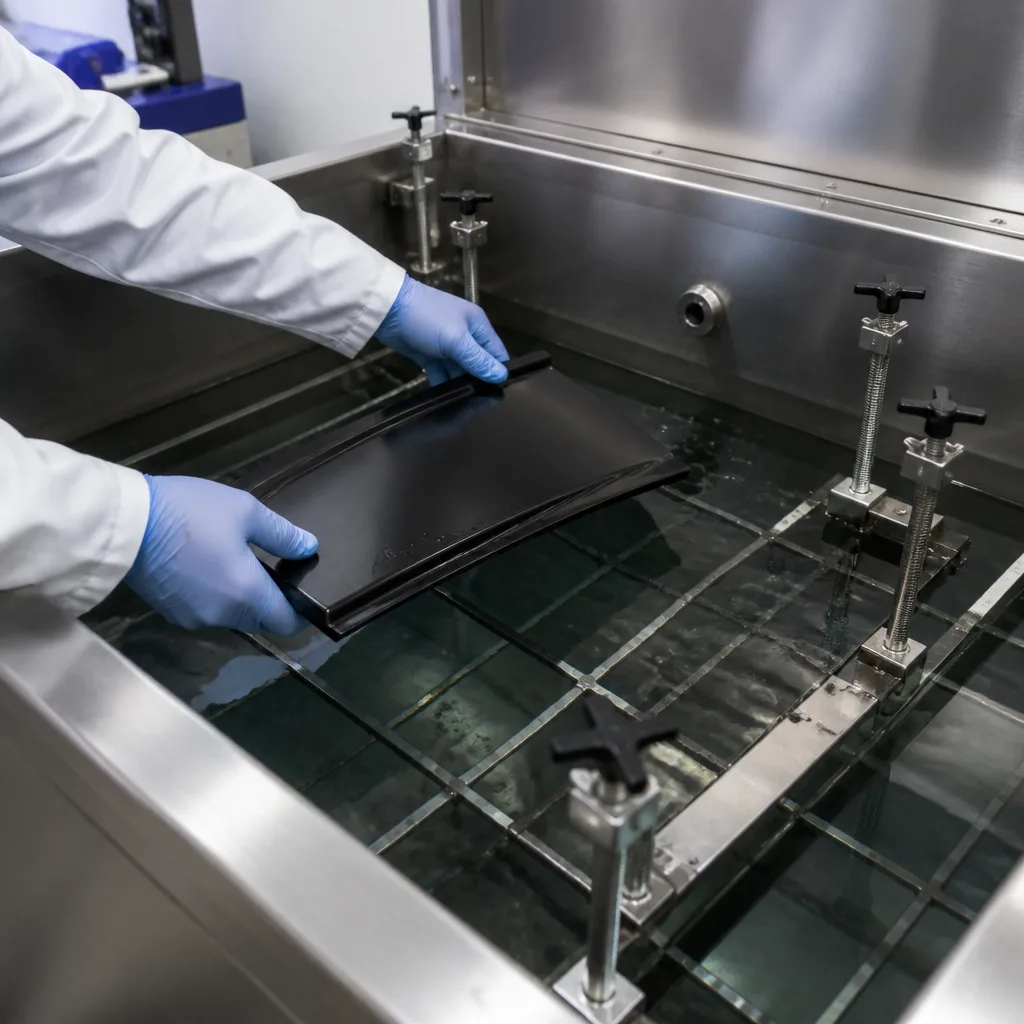
Automotive materials are constantly exposed to the following:
The Fiat 50470 standard verifies that after being immersed in water for a specified time and temperature, the material or coating retains the following:
This standard is typically applied in the following areas:
Essentially, the general principle of the Fiat 50470 standard includes the following:
Preparation of standardized test samples.
The examination usually focuses on the following:
In terms of evaluation criteria, the following situations are unacceptable after the test:
In submersion resistance tests, defects such as blistering and peeling are not permitted.
The Fiat 50470 standard is often used in conjunction with the following other Fiat environmental durability standards:
Together, these standards form a complete environmental durability verification program for automotive materials and coatings.
In short, the Fiat 50470 standard is important because it verifies whether automotive materials and coatings can withstand prolonged exposure to water and moisture. In real vehicle service conditions, water is one of the most aggressive environmental factors affecting durability, appearance, and safety. The main reasons why this standard is deemed necessary are as follows:
Good adhesion after submersion is critical for long-term vehicle quality.
Suppliers must demonstrate compatibility before components are approved for vehicle production.
By implementing the Fiat 50470 standard, manufacturers can ensure that materials remain functionally and visually acceptable throughout the vehicle's lifespan. While this standard is an automotive specification, similar immersion resistance assessments are commonly used in the following areas:
In conclusion, the Fiat 50470 standard is a significant environmental durability testing specification focusing on the resistance of automotive materials and coatings to water immersion exposure. This standard helps ensure the long-term durability, adhesion stability, corrosion protection, and aesthetic quality of vehicle components exposed to moisture during real-world operation. By preventing coating failure and material degradation, the specification directly contributes to vehicle reliability and customer satisfaction.
For many years, our organization, with its competent and experienced staff, has been understanding the needs of its customers, providing the advanced testing services they require, and assisting them in the establishment, implementation, and improvement of management systems. Within this framework, we also provide testing services in accordance with the Fiat 50470 standard.
To get an appointment, to get more detailed information or to request an evaluation, you can ask us to fill in our form and reach you.

