

General Motors (GM) standard "GMW 15851 Adhesively Attached Exterior Trim Component" describes a method for evaluating the manufacturing process and adhesion performance of adhesively attached exterior trim components. This testing is performed by the subsystem verification engineer prior to verification test completion and by the assembly plant quality team after product process and verification.
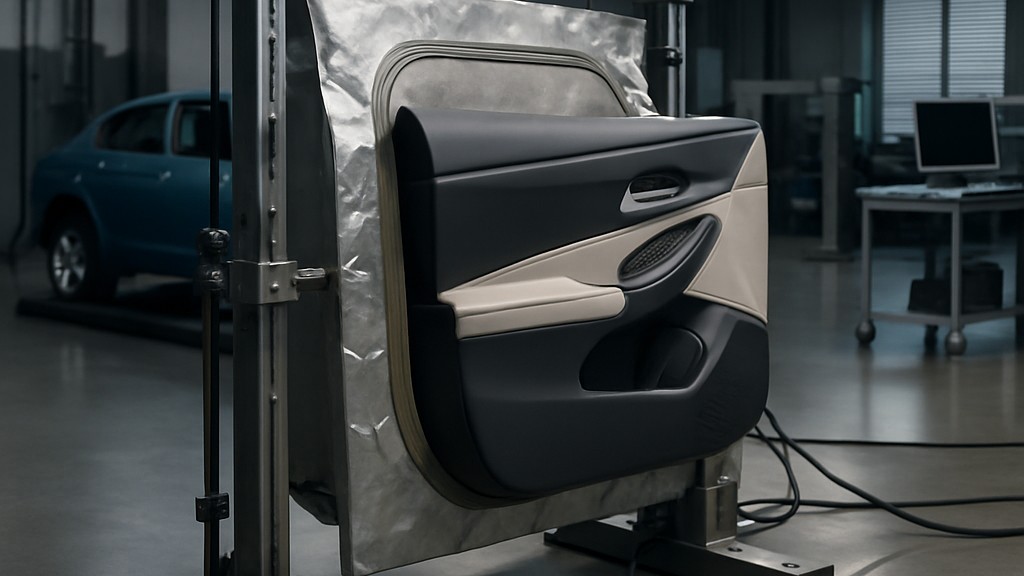
This test applies to all exterior trim components that are adhesively attached to the vehicle. A list of typical adhesively attached exterior trim components is provided in the table titled "Typical exterior trim components using adhesive as primary or secondary attachment." Adhesively attached emblems and nameplates must be tested in accordance with standard "GMW 16061 Retention performance of exterior emblems and nameplates."
In the tightly regulated, precision-driven world of automotive manufacturing, engineering standards serve as the backbone for ensuring quality, safety, and consistency across global production lines. General Motors (GM), one of the world's largest automakers, relies on a suite of proprietary standards known as GMW (General Motors Worldwide) specifications to guide the design, testing, and manufacturing of vehicle components. Among these, GMW 15851 stands out as a specialized standard that addresses critical performance criteria for materials or processes in automotive applications.
This standard reflects GM's commitment to innovation and reliability in an industry facing increasing demands for efficiency, durability and environmental compatibility.
Engineering standards developed by General Motors have been converted to the GMW series to align with global operations. The GMW 15851 standard was published to coincide with a period of rapid advancement in automotive technology, including the rise of electric vehicles (EVs), advanced driver assistance systems (ADAS), and lightweight materials to meet fuel efficiency regulations.
The primary purpose of the GMW 15851 standard is to establish uniform requirements for the evaluation and qualification of specific automotive materials or processes, ensuring they meet GM's rigorous performance criteria. Unlike broader standards such as GMW 3059, which cover substances restricted for environmental and safety reasons, the GMW 15851 standard targets more focused application, primarily in the following areas:
This standard's scope is limited to the internal supply chain, applying to suppliers producing parts for the North American, European, and Asian markets. It excludes non-automotive uses and emphasizes compliance with international regulations such as ISO 9001 for quality management and REACH for chemical safety. By standardizing these criteria, General Motors reduces variability in manufacturing, minimizes recalls, and accelerates time to market for new models.
While the exact details are confidential, the GMW 15851 standard generally provides a multi-layered validation framework, including material selection, performance thresholds, and failure modes. Key elements of this standard include:
These thresholds are calibrated to withstand real-world scenarios such as off-road driving or extreme climate conditions.
Nonconformance can result in rejected shipments or redesigns, highlighting the role of the standard in quality control.
The GMW 15851 standard finds practical use in various vehicle subsystems in the automotive industry:
Some suppliers customize products using these standards to build long-term partnerships with GM.
Implementing the GMW 15851 standard presents challenges for suppliers, including the need for specialized testing equipment and data analysis expertise. Smaller suppliers, in particular, face barriers due to access costs.
As GM moves toward a zero-emission future by 2035, the GMW 15851 standard is evolving to include bio-based materials or AI-powered predictive testing.
Ultimately, the GMW 15851 standard exemplifies how technical standards enable excellence in automotive engineering and balance innovation with reliability. As the industry rapidly moves toward sustainable mobility, standards like these continue to play a crucial role in shaping safer and smarter vehicles.
Our organization, which has been serving for many years and meticulously following global developments in science and technology, employs a skilled team and extensive infrastructure to conduct testing, measurement, and analysis in a wide range of areas for businesses across all sectors. In this context, we also provide testing services in accordance with the "GMW 15851 Adhesively Attached Exterior Flooring Component" standard.
To get an appointment, to get more detailed information or to request an evaluation, you can ask us to fill in our form and reach you.

