

The “Ford CETP 00.00-L-3190 Automotive Cyclic Corrosion Test Standard,” developed by Ford Motor Company (Ford), is a test standard used globally for accelerated cyclic corrosion testing, particularly for painted aluminum panels. This standard is part of Ford’s corrosion/durability testing suite.
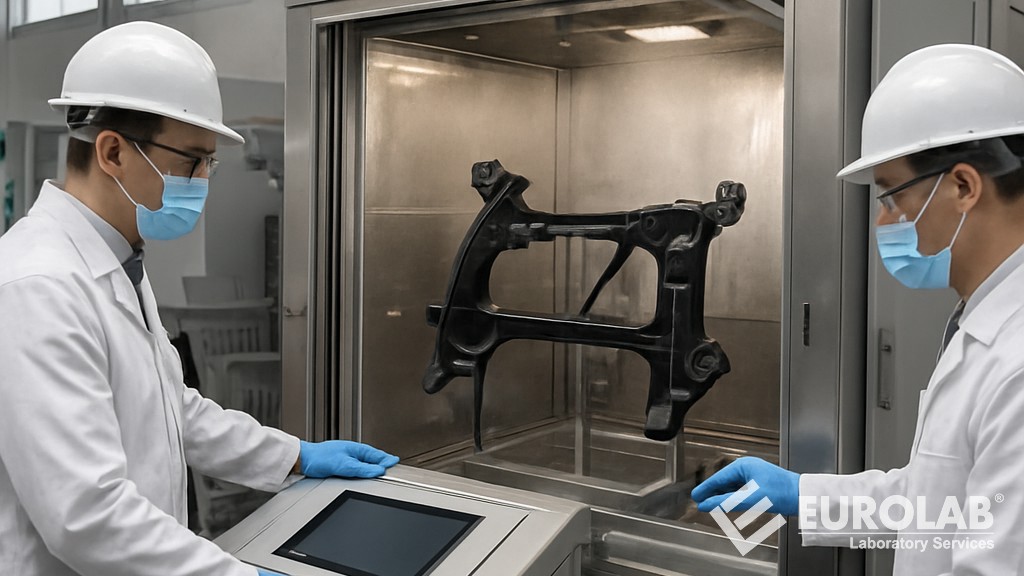
In the high-risk world of automotive manufacturing, ensuring the longevity and reliability of vehicle components is paramount. To this end, a series of rigorous testing protocols have been developed. Among these, the Ford CETP 00.00-L-3190 standard stands out as a cornerstone in evaluating corrosion resistance. The aim of this standard is to highlight the critical role of the methods used in maintaining vehicle durability.
Ford uses the Ford CETP 00.00-L-467 standard as another cyclic corrosion test for general parts. The L-3190 version is more specific (to aluminum panels) compared to the 467 version, which has a wider range of applications. The L-3190 test is relatively newer.
The method is referred to in the corrosion literature for aluminum as a 6-week (42-day) accelerated corrosion test (used in metallographic evaluation).
The Ford CETP 00.00-L-3190 standard includes a cyclical corrosion testing method. Cycles of salt spray/moisturizing/drying phases are used to accelerate the corrosion effects. Generally, the cycles include the following phases:
Post-test measurements may include corrosion assessment (white rust, red rust), metal loss, blistering, edge effects, and similar characteristics, depending on the coating and material.
The Ford CETP 00.00-L-3190 standard primarily includes the following information:
Essentially, the Ford CETP 00.00-L-3190 standard is very similar to the “Ford CETP 00.00-L-467 Accelerated Cyclic Corrosion Test” standard. This standard is said to have revolutionized automotive corrosion testing. It is used to develop and qualify new corrosion products, and to develop new pretreatment and finishing processes.
The key specifications of the Ford CETP 00.00-L-467 standard are as follows:
For many years, our organization, with its competent and experienced staff, has been understanding the needs of its customers, providing the advanced testing services they require, and assisting them in the establishment, implementation, and improvement of management systems. Within this framework, we also provide testing services to businesses in accordance with the "Ford CETP 00.00-L-3190 Automotive cyclic corrosion test standard".
To get an appointment, to get more detailed information or to request an evaluation, you can ask us to fill in our form and reach you.

