

The “GMW 14296 Perspiration Resistance of Automotive Materials” standard, developed by General Motors Worldwide (GMW), is a material testing specification used to evaluate the perspiration resistance of automotive materials. This standard is particularly important for materials used in vehicle interiors and other areas where a component may repeatedly come into contact with passengers' skin.
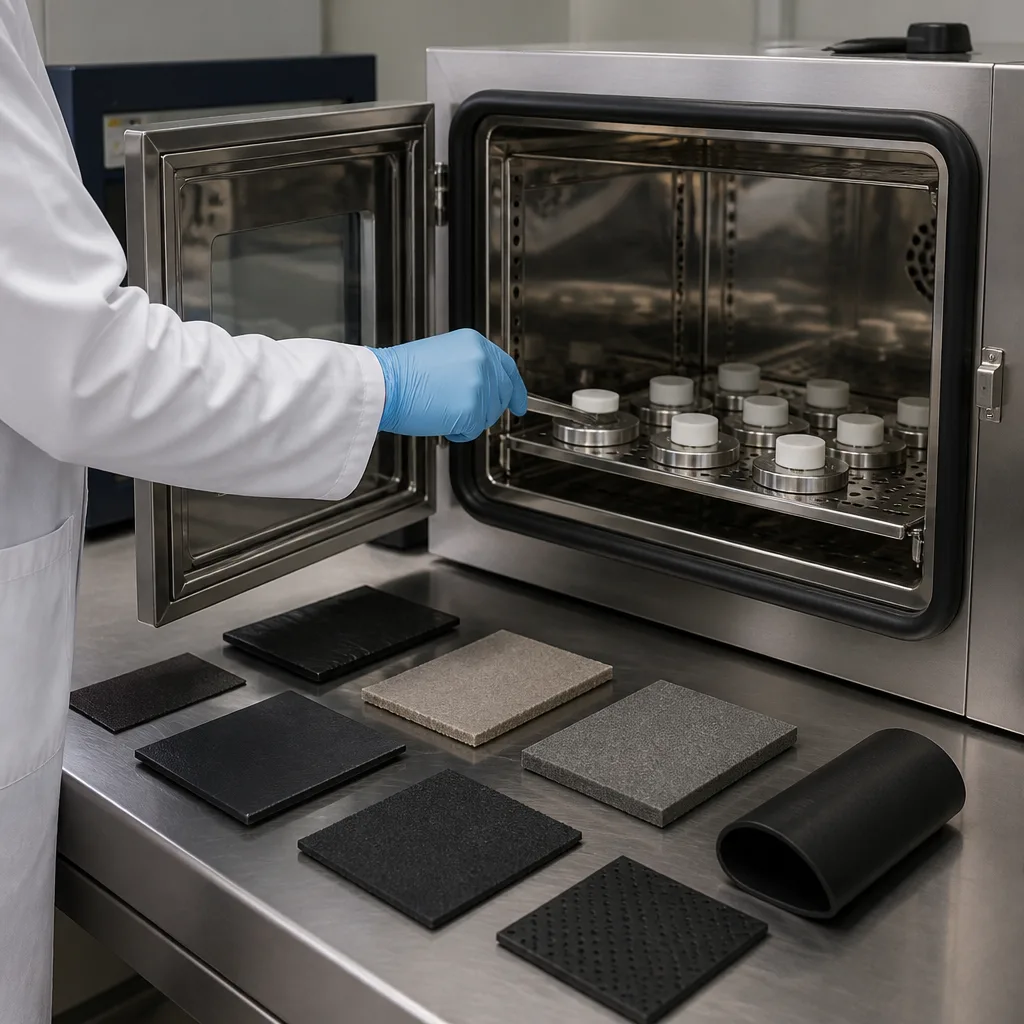
The test is applicable to a wide variety of materials, including plastics, elastomers, foils, leather, leather fiber boards, coated textiles, and plastic roll products.
During vehicle use, interior materials can be exposed to human sweat through direct or prolonged contact. Sweat contains water, salts, and other substances that can interact with a material's surface. The GMW 14296 standard is designed to determine whether exposure to perspiration leads to unacceptable changes in the material. Typical concerns include:
In conclusion, this test provides an accelerated method for evaluating whether a material can maintain its appearance and functional properties during realistic in-vehicle use.
One of the key features of the GMW 14296 standard is its relatively wide range of material applications. The properties specified for testing are as follows:
This broad applicability makes the specification useful during automotive material selection, development, and validation.
The basic concept in the tests is to expose a representative sample of material to a controlled perspiration environment under defined laboratory conditions. The perspiration environment aims to simulate the chemical atmosphere that might occur when human sweat comes into contact with an automotive material. After exposure, the sample is examined in terms of changes in its properties and appearance.
The precise test environment, sample preparation, exposure conditions, duration, and evaluation criteria are outlined in the GMW 14296 standard. The key question is whether perspiration causes a material to degrade beyond an acceptable level. Depending on the material and applicable acceptance criteria, the evaluation may include observations such as:
Car interiors are particularly susceptible to perspiration because passengers are frequently in direct contact with surfaces. Examples include:
A material that performs well under normal laboratory conditions can still degrade when repeatedly exposed to perspiration. For example, a low-resistance coating may gradually lose its appearance in areas of frequent contact. Similarly, paints or pigments may experience discoloration or transfer.
The GMW 14296 standard contributes to several important automotive quality objectives:
The GMW 14296 standard should not normally be considered a complete durability assessment on its own. Condensation is just one of many factors that automotive interior materials may encounter. A more comprehensive validation program might include the following tests:
Therefore, the GMW 14296 standard should be considered as a specific chemical/environmental resistance test within a larger automotive material validation program: a general workflow for perspiration resistance assessment is as follows: material selection - sample preparation - initial inspection - exposure to perspiration - conditioning - post-exposure evaluation - comparison with acceptance criteria - test report. The laboratory must verify sample dimensions, preparation, test environment, exposure conditions, and evaluation procedures according to this standard.
In short, the GMW 14296 standard is an automotive material test used to evaluate how resistant materials are to exposure to human sweat. This test is applicable to a wide variety of interior materials, including plastics, elastomers, foils, leather, leather fiberboard, coated textiles, and plastic roll products.
The key value of this standard lies in identifying materials that may undergo discoloration, staining, surface degradation, or other unacceptable changes when exposed to perspiration. By incorporating this test into material validation, suppliers can improve the durability, appearance, and long-term quality of vehicle interior surfaces.
For many years, our organization, with its competent and experienced staff, has been understanding the needs of its clients, providing the advanced testing services they require, and assisting them in the establishment, implementation, and improvement of management systems. Within this framework, we also provide testing services in accordance with the GMW 14296 standard.
To get an appointment, to get more detailed information or to request an evaluation, you can ask us to fill in our form and reach you.

