Stellantis MS-JK-3600 Plastic - Thermoplastic Polyurethane (PUR) Films
Developed by Stellantis, the multinational automotive manufacturing company formed by the merger of Italian-American Fiat Chrysler Automobiles and French PSA Group, the "Stellantis MS-JK-3600 Plastics - Thermoplastic polyurethane (PUR) films" standard specifies requirements for thermoplastic polyurethane (PUR) film materials, both supported and unsupported, laminated and unlaminated. This material is designed for dashboard trim pads, door trims, seats, gear lever and parking brake boot covers, and other suitable applications.
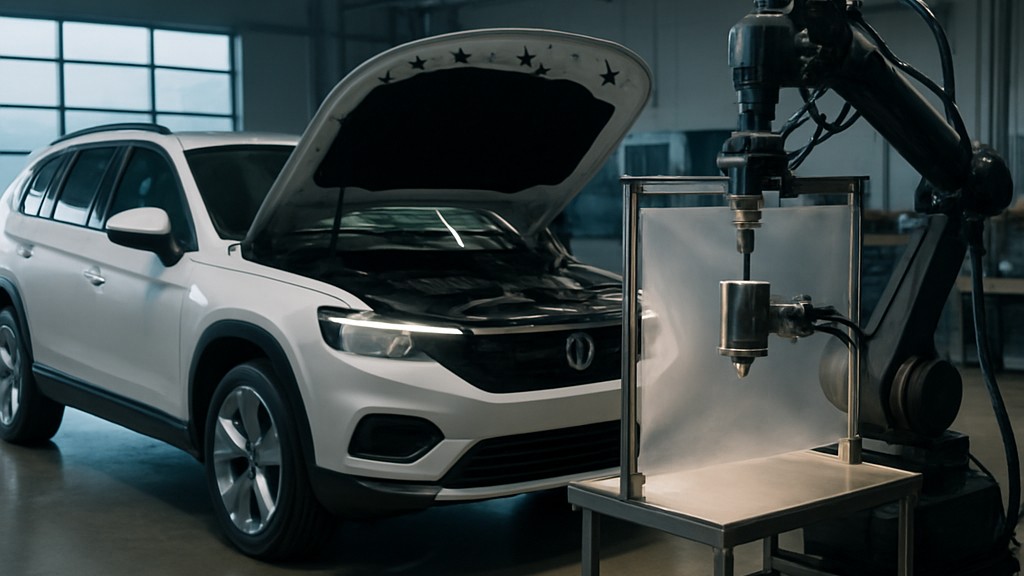
This standard specifies the physical and chemical requirements for PUR film materials used in Fiat Chrysler automobile products. It also specifies performance requirements for the fabrication of single-layer, double-layer, and other moldable and non-moldable PUR film structures.
This standard applies to material-level requirements. The appropriate performance specification applies to component or system-level requirements using this material. For example, "PF10254 Seat Complete Assembly Performance Standard" defines component/system-level requirements for seating applications. Other component-level standards using materials approved to this standard may include "PF.90058 Door trim panel assembly and components," "PF.90192 Floor console mounting system requirements," and "PF.90223 Instrument panel module system requirements." Requirements specified on the engineering drawings take precedence over any requirements specified in this standard for the same feature, i.e., performing heat aging at a higher temperature.
This standard does not cover material requirements for heavy-duty applications.
In this standard, material properties are described as follows:
- PUR film must be free of any manufacturing defects that could impair processing, handling, or appearance. The entire surface must be smooth and easily deep-drawn. During deep-drawing, there should be no tears, bubbles, significant grain loss, or gloss.
- Deep-drawn parts produced with sheet must have adequate dimensional stability, a durable grain, and be resistant to aging, depending on their application. Adequate adhesion to the substrate foam must be ensured during foaming. Care must be taken to ensure that sheeting with different substrate materials (foam, adhesive, spacer fabric) does not result in color/aging changes more severe than permitted. Color-mastered parts must meet all the requirements of this standard.
- PUR film should be composed of pure PUR or a composite of PUR and other fillers, flexible and free of tack. The PUR film should be smooth and free of surface defects such as bubbles, cracks, marks, or other imperfections that impair its appearance or function. The PUR film should be properly bonded and assembled so that it does not show whitening or other visible marks when wrinkled, scratched, or stretched. Unless otherwise specified in the table, a slip coating may be applied to the top surface of PUR films to prevent excessive friction and color cracking.
- The finished material must perform satisfactorily in the automotive production assembly process and application as agreed upon by the supplier and Fiat Chrysler Automobiles. The material must be capable of being processed in a production environment without causing adverse or detrimental effects to the customer.
- The finished assembly and its components must be fabricated and finished as detailed in the art drawing and as mutually agreed upon by the vendor and relevant engineering departments.
- All perforated PUR coated fabrics must have a back surface color decided by the product design office.
Approval of materials to this standard must comply with all relevant requirements of "LP-463DB-16-03 Soft flooring material approval process." The tables provided in this standard present the tests and test requirements for material source approval.
Thermoplastic polyurethane (TPU) films are versatile materials known for their flexibility, durability, and abrasion resistance, making them suitable for a variety of applications, including protective coatings, automotive coatings, and electronic device protection. TPU films generally offer the following properties:
- Flexibility and elasticity: TPU films are known for their excellent flexibility, which allows them to conform to complex shapes and surfaces.
- Durability: These films exhibit high resistance to abrasion, tearing and puncture, making them suitable for protective applications.
- Chemical and UV resistance: TPU films can withstand exposure to a variety of chemicals and UV radiation, providing long life in outdoor applications.
- Transparency: Many TPU films are optically clear, making them ideal for applications where visibility is important, such as screen protectors and automotive headlight covers.
Such standards for thermoplastic polyurethane (PUR) films are deemed necessary for several reasons, particularly when these materials are used in industrial, automotive, medical, or consumer applications:
- Ensures consistency and quality: These and similar standards define material properties such as thickness tolerance, tensile strength, abrasion resistance, and optical clarity. This ensures that each film batch performs the same, which is important in production where predictable behavior is critical.
- Safety and reliability: TPU films are used for protective functions in industries such as automotive, medical, and electronics. A standard ensures that the film does not degrade under UV or chemical exposure, does not emit harmful substances (low VOCs), and maintains its integrity in critical applications such as airbags, wearable electronics, or wound dressings.
- Interoperability: If different manufacturers use this standard, their products are compatible or interchangeable. This facilitates supply chain integration, outsourcing production, and the ability to use films with other standardized parts.
- Regulatory compliance: Many industries require compliance with national or international standards. These and similar standards can help ensure compliance with these higher-level regulations.
- Performance comparison: Manufacturers and customers can compare products more objectively. If films are compatible, buyers can compare cost and performance more fairly, and manufacturers can choose based on documented and verified features.
- Quality control and testing: Having this standard ensures that laboratories and factories use consistent testing methods, identify defective batches, and maintain high production standards.
In short, this standard is important to protect end users, enable scalable production, and facilitate trust between manufacturers and customers.
Our organization, which has been supporting businesses across all sectors for years through a wide range of testing, measurement, analysis, and evaluation activities, has a strong team of employees who closely follow global developments in science and technology and are constantly improving themselves. In this context, we also provide testing services to businesses in accordance with the "Stellantis MS-JK-3600 Plastic - Thermoplastic polyurethane (PUR) films" standard.



