

The “GME 60304 Automotive Interior Upholstery Stain Resistance to Water and Salt Solutions” standard, developed by General Motors Europe (GME), is a materials testing standard used to evaluate the resistance of automotive interior upholstery materials to stains (water stains) caused by exposure to water and salt solutions. This standard is typically applied to textile upholstery, fabrics, leather, coated textiles, and other decorative interior materials to ensure they maintain an acceptable appearance after accidental liquid exposure.
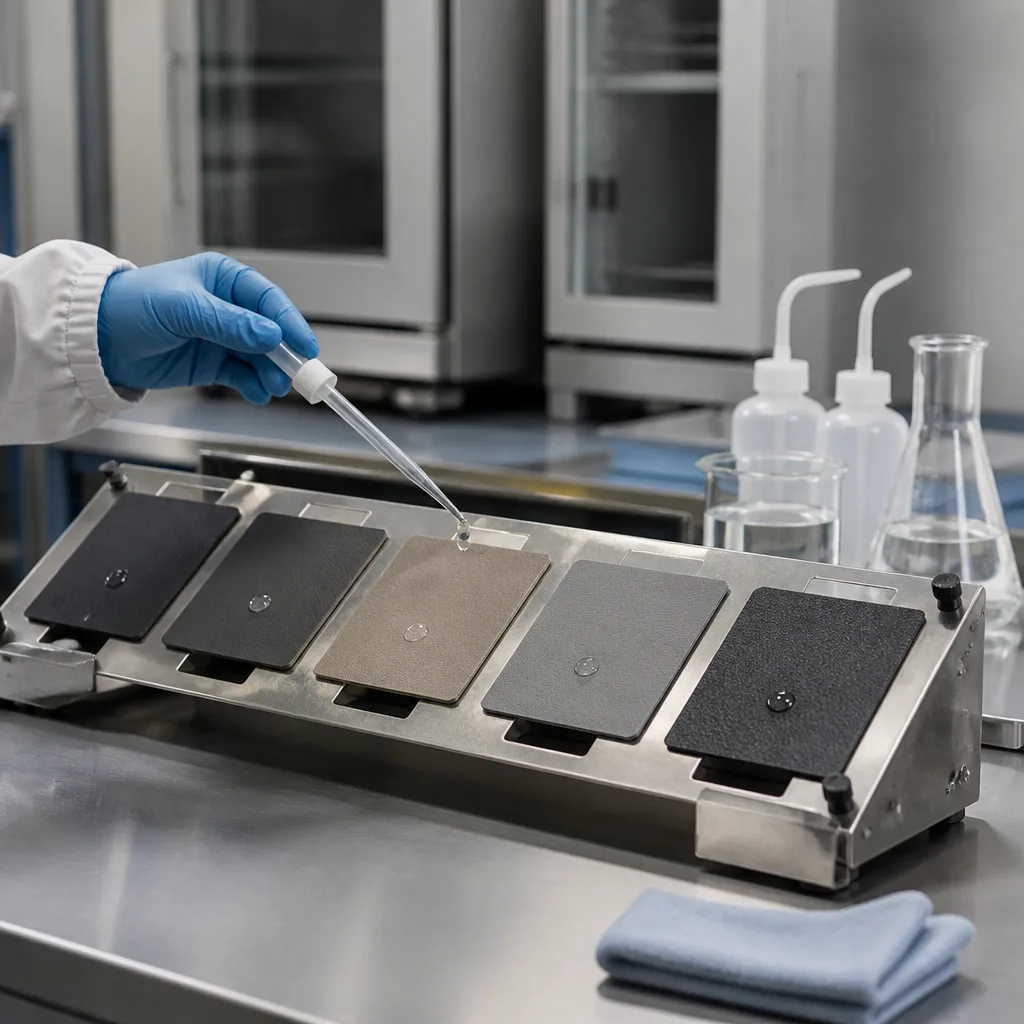
This standard is a key part of General Motors Europe’s materials qualification process because vehicle interiors are regularly exposed to moisture carried into the cabin by passengers, such as rain, snow, beverages, sweat, and road salt.
The primary purpose of the GME 60304 standard is to determine whether an interior material retains the following properties after contact with water or saline solutions and subsequent drying:
This testing method helps manufacturers verify that decorative materials remain attractive throughout the vehicle's lifespan.
The GME 60304 standard is primarily designed for the following types of automotive interior materials:
This method can also be used for supplier verification during material development and production quality control. This test simulates accidental exposure of flooring materials to liquids. In principle, a controlled amount of distilled water and salt solution is applied to the material surface. After a specified exposure time, the sample is dried under controlled environmental conditions. The tested area is then visually inspected for permanent changes.
Typical evaluation criteria include:
The affected area is typically compared to a raw reference sample.
The equipment used in tests typically requires the following:
Essentially, the testing process follows these steps:
The standard includes precise solution concentrations, droplet volumes, exposure times, drying conditions, and acceptance limits.
The performance characteristics evaluated are as follows:
The GME 60304 standard is commonly used in the following situations:
Automotive interiors are frequently exposed to moisture during daily use for the following reasons:
Without adequate resistance, these exposures can leave permanent stains that degrade the perceived vehicle quality. The GME 60304 standard helps ensure that interior materials remain visually acceptable over time.
Meeting the requirements of the GME 60304 standard helps manufacturers in the following areas:
The GME 60304 standard is often used in conjunction with other material specifications from General Motors Europe. These include:
Together, these standards provide a comprehensive framework for evaluating the physical properties, appearance, and durability of automotive interior materials.
In summary, the GME 60304 standard is a specialized laboratory test method designed to evaluate the resistance of automotive upholstery materials to staining from water and salt solutions. By simulating common sources of moisture encountered in vehicle interiors, this standard helps ensure that fabrics, leather, and other decorative materials maintain their appearance throughout the vehicle's lifespan.
For many years, our organization, with its competent and experienced staff, has been understanding the needs of its clients, providing the advanced testing services they require, and assisting them in the establishment, implementation, and improvement of management systems. Within this framework, we also provide testing services compliant with the GME 60304 standard.
To get an appointment, to get more detailed information or to request an evaluation, you can ask us to fill in our form and reach you.

