Fiat 50457 Gloss Meter for Determining Reflective Gloss of Paints, Varnishes and Enamels
The “Fiat 50457 Tests for Nonmetallic Materials - Determination of Reflective Gloss by Gloss Meter for Paints, Varnishes and Enamels” standard, developed by Fiat Chrysler Automobiles (FCA) (now Stellantis), an Italian-American automotive company, is an automotive material testing specification related to the evaluation of surface gloss, finish, and appearance stability of interior or upholstery materials used in vehicles. This standard is primarily aimed at evaluating surface visual quality and gloss retention under defined environmental or aging conditions.
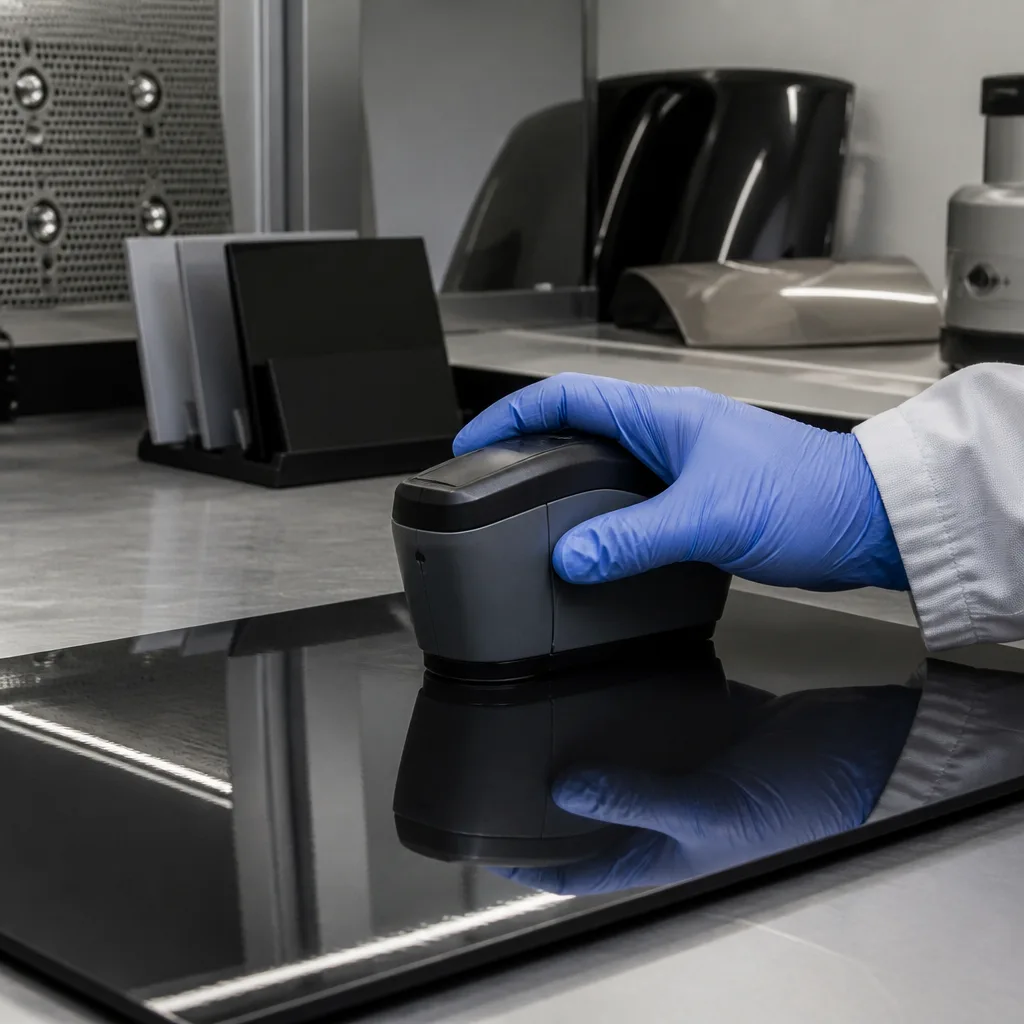
Modern automotive interiors incorporate numerous visible polymeric and coated components, including:
- Dashboard
- Door trims
- Center consoles
- Painted plastic parts
- Synthetic leather and decorative films
These materials should maintain a consistent appearance throughout the vehicle's lifespan. Excessive gloss variation, whitening, dulling, or uneven shine can negatively impact perceived quality.
The Fiat 50457 standard was developed to help ensure the following:
- Smooth surface appearance
- Controlled brightness levels
- Resistance to visual aging
- Long-term aesthetic durability
- Consistent supplier quality.
The Fiat 50457 standard relates to gloss testing and includes measurements of gloss or visual appearance before and after environmental exposure. Typical assessments include:
- Surface gloss: Measures the light reflected from the material's surface.
- Brightness uniformity: Detects visual inconsistencies.
- Post-aging appearance: Confirms durability after UV or heat exposure.
- Surface degradation: Indicates chalking, cracking, or dullness.
- Color and brightness retention: Confirms long-term visual stability.
It uses the following methods for weather and coating testing:
- SAE J2412 standard for artificial weathering exposure
- Adhesion test
- Color measurement
- Chalking and cracking analysis
The Fiat 50457 standard can be used with the following:
- Accelerated UV aging
- Indoor sunlight simulation
- Coating durability assessments
- Painted plastic verification programs
Typical test equipment used in these tests includes:
- Brightness meters (20-degree, 60-degree, or 85-degree geometry)
- artificial weather exposure rooms
- Xenon arc exposure systems
- Visual inspection lighting booths
- Color spectrophotometers
Equipment selection depends on the material category and component application.
Surface appearance is a significant factor in a customer's perception of vehicle quality. Even minor gloss discrepancies can create a visible mismatch between adjacent interior parts. The Fiat 50457 standard helps manufacturers with the following:
- Maintaining consistent interior aesthetics.
- Verifying supplier materials
- To reduce warranty complaints.
- Improving perceived vehicle quality
- Ensuring compatibility between trim components.
The Fiat 50457 standard is particularly important for soft-touch plastics, coated trim systems, and decorative interior surfaces where visual harmony is critical. This standard applies to:
- thermoplastics
- Coated plastics
- PVC coatings
- Polyurethane surfaces
- Painted interior upholstery
- Synthetic leather systems
- Decorative films and laminates
Automotive component suppliers typically perform these tests during product approval and production verification.
In short, the Fiat 50457 standard is required because automotive interior and upholstery materials must maintain a consistent visual appearance throughout the vehicle's lifespan. Differences in gloss, texture, or surface aging are immediately noticeable, and these imperfections significantly impact the perceived vehicle quality. This standard is considered important for the following reasons:
- Ensures a consistent interior look: Modern vehicle interiors often feature numerous adjacent parts, such as dashboards, door panels, center consoles, pillar trims, and decorative inserts, all manufactured by different suppliers. If one part appears brighter or matte than another, this discrepancy becomes highly visible under sunlight or cabin lighting. This standard standardizes gloss measurement, surface gloss assessment, and visual consistency criteria. This helps ensure all components have a uniform appearance.
- Prevents premature aging effects: Automotive interiors are exposed to UV radiation, heat cycles, humidity, cleaning chemicals, and mechanical abrasion. Without proper verification, materials can develop surface whitening, dulling, chalking, fading, and uneven gloss. This standard helps verify that materials maintain their appearance after environmental exposure and aging tests.
- It maintains perceived vehicle quality: Customers typically evaluate vehicle quality through visual and tactile impressions. Even if a component is functioning correctly, a poor surface finish can lead to perceptions such as cheap plastic appearance, low build quality, poor fit and workmanship, and inconsistent color matching. This standard ensures superior appearance, brand image consistency, and customer satisfaction by checking gloss and finish characteristics.
- Improves supplier quality control: Vehicle interiors involve a large supply chain. Different suppliers may use different raw materials, different molding conditions, different finishes, and different textures. This standard provides a common acceptance method so that suppliers can produce parts with comparable visual characteristics.
- Supports coating and decorative surface verification: Many modern interior pieces utilize soft-touch finishes, painted plastics, decorative films, metallic effect coatings, and piano black surfaces. These coatings are susceptible to gloss changes and environmental degradation. This standard helps verify the following:
- Coating durability
- Surface stability
- Long-lasting shine retention.
- Resistance to visual distortion
In summary, the Fiat 50457 standard is an automotive materials specification focusing on the evaluation of gloss, polish, and surface appearance of vehicle interior materials and trims. This standard supports visual quality control, aging resistance assessment, and long-term appearance consistency for automotive trim systems.
For many years, our organization, with its competent and experienced staff, has been understanding the needs of its customers, providing the advanced testing services they require, and assisting them in the establishment, implementation, and improvement of management systems. Within this framework, we also provide testing services in accordance with the Fiat 50457 standard.



