

The “Ford FLTM BN 158-01 Martindale Abrasion Test of Textile Fabrics” standard, developed by Ford Motor Company (Ford), describes a test method used to evaluate the abrasion resistance of textile fabrics used in automotive interiors. This standard utilizes the Martindale abrasion test, a globally accepted technique for measuring how well a fabric withstands repeated friction and abrasion over its lifespan. This method is commonly used for seat upholstery, door panels, armrests, headliners, and other interior trim materials where long-term durability is critical.
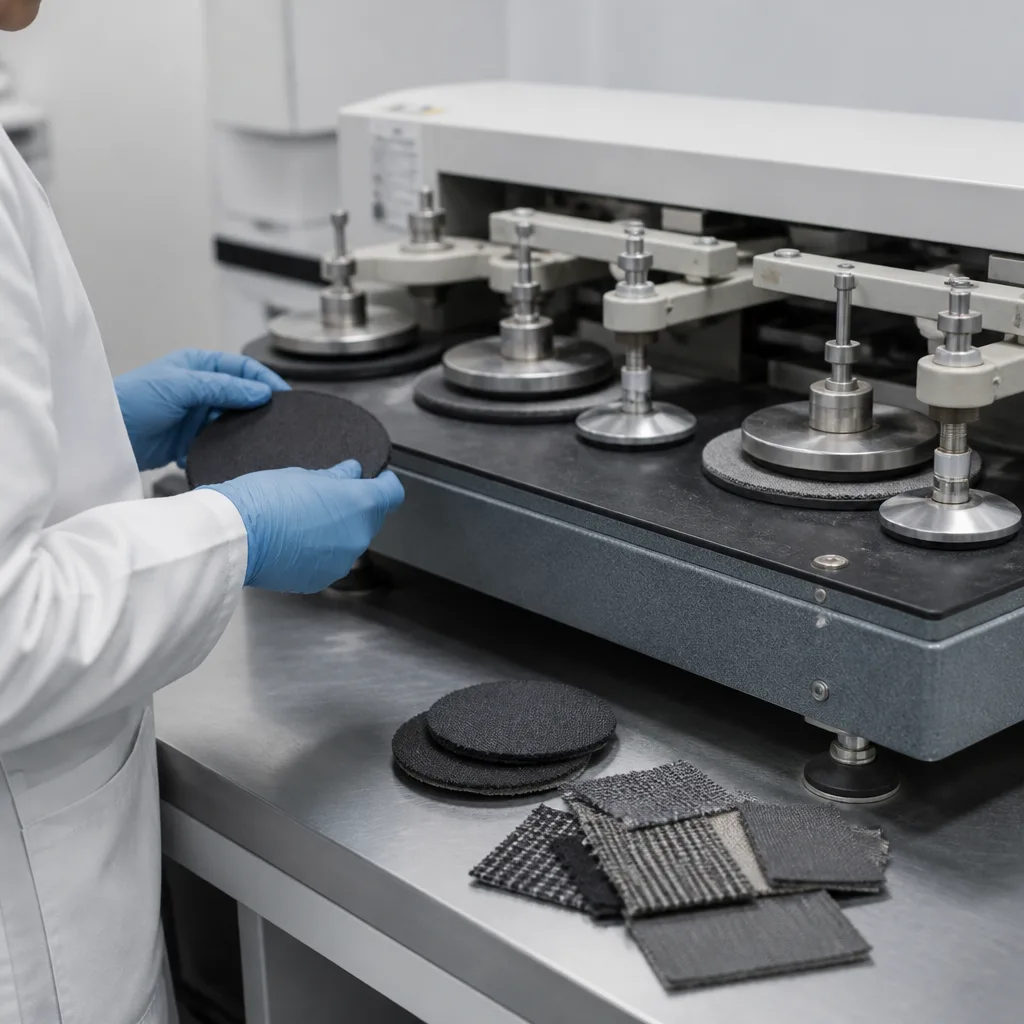
The primary purpose of the Ford FLTM BN 158-01 standard is to determine the wear properties of automotive textile materials under controlled laboratory conditions. By simulating years of passenger contact, the test helps engineers evaluate whether a fabric can maintain its appearance, structural integrity, and performance throughout the expected lifespan of a vehicle.
The Martindale method subjects circular fabric samples to repeated multi-directional friction against a standard abrasive surface. The sample follows a complex motion pattern that allows abrasion to occur from multiple directions, similar to real-world use. This test continues for a specific number of cycles or until a defined level of abrasion is observed.
Typical assessments include the following:
The number of wear cycles endured before failure provides a quantitative measure of durability.
This method generally follows these steps:
The FLTM BN 158-01 standard is commonly used in the evaluation of the following:
These components are subjected to constant friction from passengers entering, exiting, and moving around in the vehicle. This standard helps ensure that the materials remain attractive and functional for many years of use.
Several material properties influence test results. Factors affecting wear performance include:
Materials with stronger fibers and optimized structures generally exhibit higher wear resistance.
The Ford FLTM BN 158-01 standard is used for the following purposes:
This test serves as an important quality control tool in material development and production approval processes.
The main benefits of this standard are as follows:
By identifying weak materials before vehicle production, manufacturers can ensure a higher level of internal quality and durability.
The Ford FLTM BN 158-01 standard is important because it evaluates the abrasion resistance of automotive textile materials and ensures that fabrics used in vehicle interiors can withstand years of daily use without excessive wear, damage, or deterioration. The main reasons why this standard is considered necessary are as follows:
Testing materials before production helps identify potential durability issues early, reducing warranty claims and repair costs.
In conclusion, the Ford FLTM BN 158-01 standard is a critical durability standard for automotive textiles. Through Martindale abrasion testing, it provides a reliable method for evaluating the resistance of fabrics to wear from repeated use. This standard helps Ford and its suppliers select durable materials, improve interior quality, and ensure that vehicle occupants enjoy an attractive and long-lasting interior upholstery experience throughout the vehicle's lifespan.
For many years, our organization, with its competent and experienced staff, has been understanding the needs of its customers, providing the advanced testing services they require, and assisting them in the establishment, implementation, and improvement of management systems. Within this framework, we also provide testing services to businesses in accordance with the Ford FLTM BN 158-01 standard.
To get an appointment, to get more detailed information or to request an evaluation, you can ask us to fill in our form and reach you.

