

The "Stellantis D45 5254 Materials Exposed to Radiant Combustion Heat Source" standard, published by Stellantis, a multinational automotive manufacturing company formed by the merger of Italian-American Fiat Chrysler Automobiles and the French PSA Group, aims to measure and observe the temperatures at which sound insulation materials or other materials (rubber type, heat shield) are exposed to a heat source (such as a muffler or engine compartment).
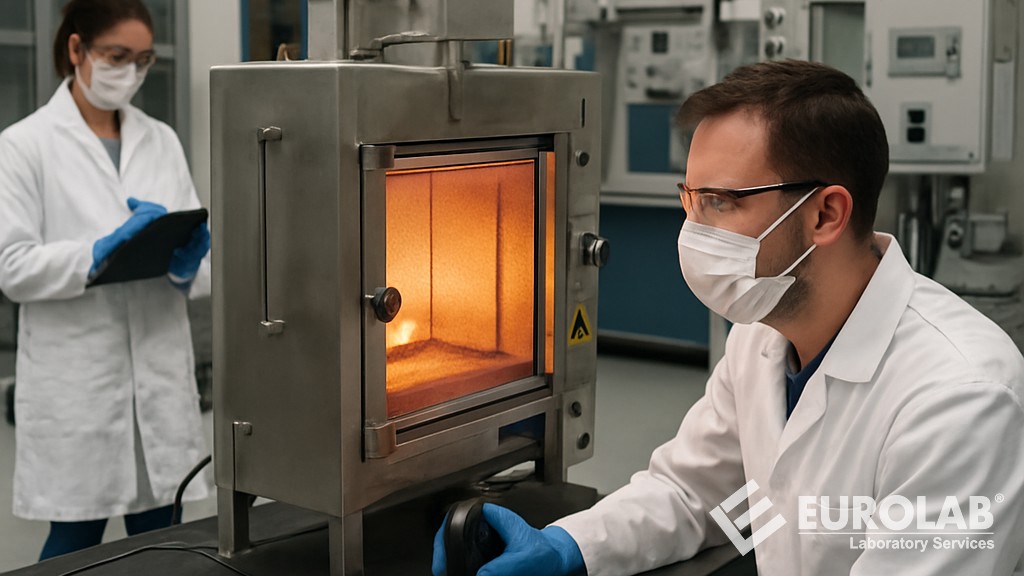
In principle, a sample of the material to be tested is exposed to heat radiation from a temperature-controlled infrared heater for a specific period of time. The temperatures reached are measured, and then the condition of the material is observed.
Samples must be representative of the quantity to be measured. To ensure this representativeness, it is necessary to know the basic characteristics of the study population. The sample selection criteria should be stated in the test report, the content of which is defined in the A10 0156 standard. If there is any doubt about the samples, Stellantis should be contacted for the procedures to be followed.
Depending on the type of part, the sample taken from the material to be tested consists of 3 test specimens of the same thickness as the material, measuring 300 mm x 100 mm. For pipes or casings, a sufficiently wide cross-section of material larger than the diameter of the infrared heater should be cut. Other dimensions should be specified in the test report. The test specimens should be conditioned in a climate chamber for 24 hours.
The steps to follow when conducting the test are as follows:
In short, the Stellantis D45 5254 standard involves a laboratory testing method to evaluate how non-metallic materials used in vehicle interiors and exteriors behave when exposed to radiant heat from a combustion source. The primary aim is to assess fire resistance and flammability risks and to ensure that materials do not readily ignite, spread flames, or excessively contribute to fire spread in real-world scenarios such as exposure to engine compartment heat or accidental fires.
The main objectives of this standard are:
This test method complements broader automotive flammability regulations such as the “FMVSS 302 U.S. Federal Motor Vehicle Safety Standard – Horizontal Burn Rate for Interior Materials” standard or the ISO 3795 standard, but focuses specifically on radiant heat from combustion rather than direct flame contact.
Automotive materials must balance lightweight design, cost, and aesthetics with stringent fire safety requirements. Stellantis D45 5254 and similar standards help prevent failures of very large dimensions.
Suppliers must certify materials according to these standards during homologation, which contributes to overall vehicle fire safety ratings.
The Stellantis D45 5254 standard is a niche engineering specification rather than a consumer-facing one. This standard is commonly found in supplier databases, material approval lists, and older PSA standard catalogs.
For many years, our organization, with its competent and experienced staff, has been understanding the needs of its clients, providing the advanced testing services they require, and assisting in the establishment, implementation, and improvement of management systems. Within this framework, we also provide testing services to businesses in accordance with the "Stellantis D45 5254 Materials exposed to radiant combustion heat sources" standard.
To get an appointment, to get more detailed information or to request an evaluation, you can ask us to fill in our form and reach you.

