

The "Toyota TSD5615G Individual Resin Wheel Cover Performance Evaluation Method" standard, a Toyota engineering standard, describes bench test methods for evaluating the performance and strength of resin wheel covers used in automobiles.
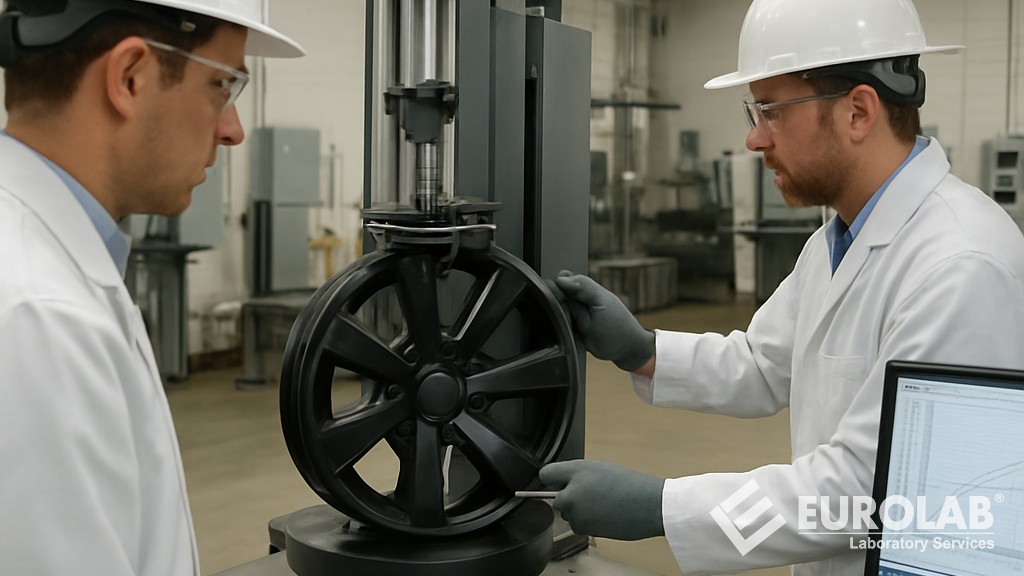
This standard includes specific test methods and acceptance criteria to ensure that wheel covers made from resin materials can withstand the various environmental, mechanical, and long-term usage stresses encountered during vehicle use. Resin wheel covers are lightweight and cost-effective alternatives to all-metal or alloy wheels and must maintain their appearance, structural integrity, and fit throughout the vehicle's lifespan.
The key considerations typically evaluated under this standard are as follows:
Advanced laboratories provide certification and conformity testing to verify that resin wheel covers, whether supplied by aftermarket or original equipment manufacturers, meet Toyota's rigorous quality requirements before being approved for use on production vehicles or as replacement parts.
Toyota has a broad family of standards for various vehicle components. Many of these focus on plastics, paints, rubbers, adhesives, and exterior/interior trim parts. Related standards, sometimes mentioned alongside the TSD5615G standard, include those for unlocking cables, interior trim, and other trim elements.
In the automotive industry, where wheel covers contribute to both aesthetics and minor aerodynamic/weight advantages, failure to meet these performance criteria can lead to cracking, splitting, discoloration, or safety issues (e.g., loose parts on the road). Compliance with the Toyota TSD5615G standard helps ensure long-term customer satisfaction and supports Toyota's reputation for reliability.
In short, the Toyota TSD5615G standard is an internal engineering testing standard developed to evaluate the performance and durability of resin wheel covers used on vehicles. Wheel covers are typically made from polymer or composite materials and are mounted on steel wheels to improve appearance and protect wheel components.
The purpose of this standard is to ensure that wheel covers meet Toyota's stringent requirements for mechanical strength, durability, environmental resistance, and long-term performance before being approved for use on production vehicles.
The Toyota TSD5615G standard defines the test procedures and evaluation criteria used to verify the reliability of resin wheel covers under conditions that simulate real vehicle operation.
This standard generally applies to the following:
Tests ensure that the wheel covers maintain their appearance, structural integrity, and proper fit throughout the vehicle's lifespan.
Although wheel covers may seem like purely decorative components, they play various practical roles on a vehicle:
Because these components are exposed to harsh environments such as road vibrations, stone chips, and temperature fluctuations, Toyota requires them to pass standardized durability and performance tests.
The Toyota TSD5615G standard evaluates several key performance characteristics of resin wheel covers, including:
Typical assessments under the Toyota TSD5615G standard include the following:
These tests simulate real-world conditions encountered throughout a vehicle's lifespan.
The Toyota TSD5615G standard is part of a broader set of Toyota engineering specifications that cover materials, coatings, and component durability. Examples include:
Together, these standards ensure consistent quality and reliability in Toyota vehicles worldwide.
In conclusion, the Toyota TSD5615G standard is a key internal specification used to verify the performance and durability of resin wheel covers used on Toyota vehicles. This standard defines rigorous mechanical, environmental, and durability tests to ensure the wheel covers remain securely fitted, maintain their appearance, and withstand the demanding conditions encountered during daily driving.
For many years, our organization, with its competent and experienced staff, has been understanding the needs of its customers, providing the advanced testing services they require, and assisting them in the establishment, implementation, and improvement of management systems. Within this framework, we also provide testing services compliant with the Toyota TSD5615G standard.
To get an appointment, to get more detailed information or to request an evaluation, you can ask us to fill in our form and reach you.

