DBL 7382 Coating of Metal Parts in Vehicle Interiors
The “DBL 7382 Coating of Metal Parts in Vehicle Interiors” standard, developed by Daimler, the owner of the Mercedes-Benz brand, describes the technical requirements, quality criteria, and test methods for organic coatings (such as paints, enamels, or similar surface treatments) applied to metal components used in vehicle interiors. This standard applies to coated metal parts located in the following areas:
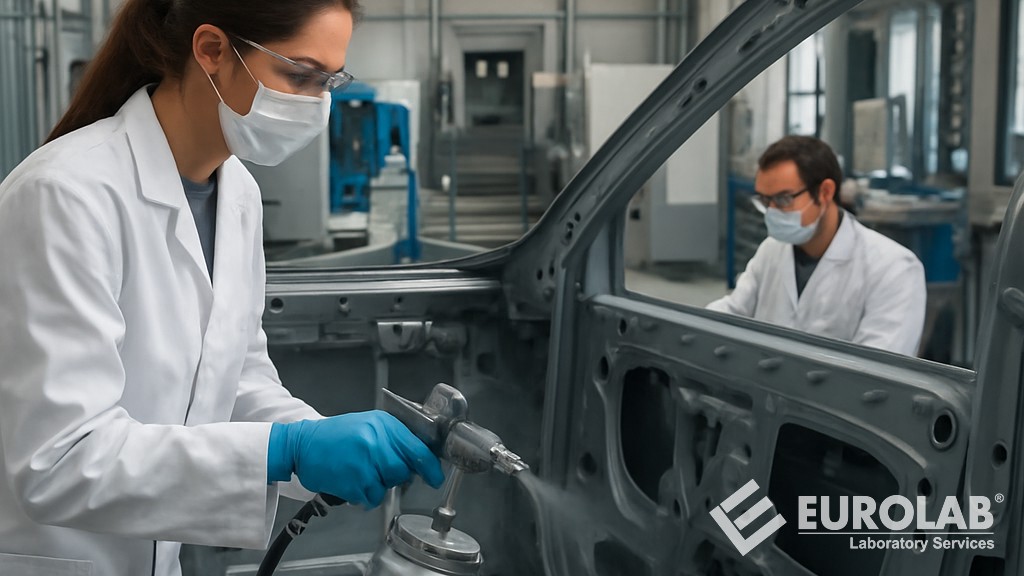
- Vehicle interiors
- Luggage compartments (rear compartments)
- Doorways (areas visible or accessible when doors are open)
This standard covers all metallic base materials (e.g., steel, aluminum, or other alloys) to which organic coatings are applied for decorative, functional, or protective purposes. These parts are generally not exposed to extreme external environmental conditions such as road salt, UV radiation from direct sunlight, or severe mechanical abrasion (unlike exterior or underbody components). The coating must provide adequate corrosion protection, aesthetic appearance, resistance to indoor conditions (humidity, temperature variations, occasional contact), and resistance to typical indoor stresses.
The relevant standards in the DBL series are as follows:
- DBL 7381: Organic coatings for exterior, underbody and engine compartment metal parts (higher corrosion exposure).
- DBL 7384: Coatings for plastic parts in vehicle interiors.
- DBL 7399: General requirements and tests for paints, enamels and similar coating materials.
The DBL 7382 standard summarizes the following in general terms:
- Coating quality criteria (appearance, homogeneity, adhesion, thickness).
- Corrosion resistance (e.g., salt spray or cyclic corrosion tests, but less aggressive than those for exterior parts).
- Mechanical properties (scratch resistance, adhesion as determined by cross-screening or similar tests, stone chip or impact resistance where applicable).
- Environmental durability (resistance to humidity, temperature cycling, condensation, and indoor climate simulation).
- Aesthetic aspects (brightness, color stability, resistance to fading or discoloration).
- Specific testing methods refer to DIN EN ISO standards, for example, salt spray according to ISO 9227, cross-cut adhesion according to ISO 2409, and scratch tests.
For example:
- Scratch resistance is clearly tested.
- Adhesion and visual assessment after environmental exposure.
- Limitations on defects such as blistering, rusting, or cracking after accelerated aging.
Advanced laboratories conduct these tests to qualify suppliers and ensure that parts meet Mercedes-Benz quality standards before mass production begins.
Suppliers of interior metal components (door handles, trim pieces, brackets, seat mechanisms, trunk hardware) must demonstrate compliance with the DBL 7382 standard through testing in independent or accredited laboratories. This ensures long-term reliability, customer satisfaction, and prevents warranty issues related to coating failures such as peeling, corrosion, or poor appearance.
This standard is part of Mercedes-Benz’s broader range of material and process specifications to guarantee consistent quality among global suppliers.
In short, the DBL 7382 standard is a workshop and supply standard developed by Daimler/Mercedes-Benz to define how metal parts used in vehicle interiors should be coated, tested, and accepted by manufacturers and suppliers.
Unlike international standards such as ISO or ASTM, the DBL 7382 standard is an original equipment manufacturer (OEM) specification, meaning it was created by Mercedes-Benz/Daimler for internal and supplier use. This standard covers quality requirements and test methods for organic coatings and paints applied to metal parts (e.g., decorative trims, structural components, panels) installed in vehicle interiors.
The primary objectives of the DBL 7382 standard are to ensure the following:
- The finished coated parts meet stringent quality and durability criteria without showing any defects that would impair appearance or performance.
- Surface properties such as corrosion protection, adhesion, scratch resistance, and weather resistance are verified using standardized testing methods.
- Suppliers understand and comply with Mercedes-Benz's technical requirements before parts are accepted into production.
The DBL 7382 standard typically includes the following:
- Coating quality criteria: Those that are acceptable in terms of surface finish, color, gloss, smoothness, and defect limits.
- Material and coating properties: Defines which metallic base materials and coatings are covered.
The specification refers to various test procedures for evaluating coating performance:
- DBL 7382 § 9.7 Scratch/adhesion resistance test: This generally describes the assessment of mechanical scratch resistance and coating adhesion for metal internal parts. This test ensures that painted or organically coated metal components can withstand mechanical stress without unacceptable damage. The purpose of this section is to verify:
- Resistance of the coating to mechanical scratching.
- Integrity of coating adhesion to metal substrate.
- Behavior of the coating after defined surface damage.
- No flaking, peeling, or separation.
- DBL 7382 § 9.13 Corrosion assessment of coated metal parts: This defines the evaluation of the corrosion behavior of coated metal internal components after exposure to environmental influences. It assesses how well the coating protects the substrate against corrosion. Its purpose is:
- To evaluate surface corrosion formation.
- To assess edge corrosion and creep.
- To determine coating protection performance after climate or salt exposure.
- DBL 7382 § 9.14 Measurement of post-damage corrosion spread: Specifies detailed measurement and acceptance criteria for corrosion spread resulting from an artificial defect after exposure to environmental influences. It defines how corrosion spreading from scratches or cuts should be measured and evaluated for supplied parts. The aim is to determine:
- How far the corrosion spreads from intentional coating damage
- Whether the coating system maintains its barrier protection.
- Whether substrate protection remains within defined limits
This simulates real-life situations such as:
- Assembly scratches
- Edge damage
- Handprints
In practice, manufacturers and testing laboratories use the DBL 7382 standard for the following purposes:
- Performing quality assurance tests on parts before they are shipped to assembly plants.
- To verify coating performance under mechanical and environmental stress.
- Prepare conformity reports proving that the parts meet Mercedes-Benz requirements.
For many years, our organization, with its competent and experienced team, has been understanding the needs of its clients, providing the advanced testing services they require, and assisting them in the establishment, implementation, and improvement of management systems. Within this framework, we also provide testing services compliant with the DBL 7382 standard.



