

The “Daimler DBL 3391 Organic Coating for Metal Parts on the Exterior of Commercial Vehicles” standard, developed by Daimler-Benz, relates to topcoat paints for component parts of commercial vehicles exposed to weathering, corrosion, and, where applicable, mechanical stress. This standard applies to coatings on the exterior and undercarriage, chassis, and engine compartment of the vehicle.
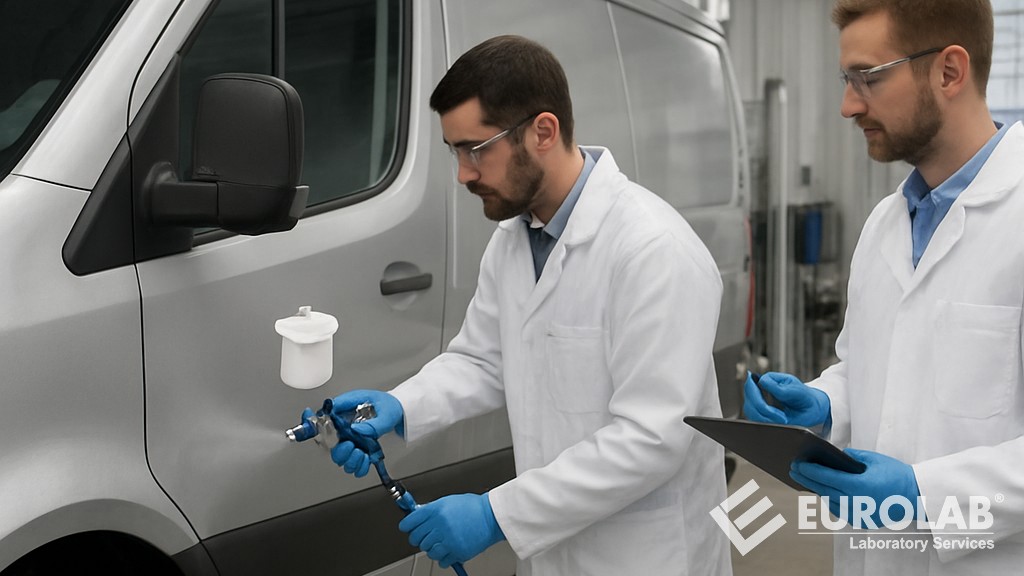
These coatings are both topcoats of individual parts or components and topcoats of the chassis assembled from primed component parts and painted using the chassis painting method.
This standard involves testing the surface protection properties of paint in terms of appearance, corrosion protection, mechanical resistance, weather resistance, and chemical resistance. However, this standard is not applicable to the following applications:
The general requirements in this standard are stated as follows:
The Daimler DBL 3391 standard is a Mercedes-Benz internal delivery specification that sets requirements for organic coatings applied to metallic components used on the exterior of commercial vehicles. This standard is part of the company's standardization system, defining technical requirements for materials, coatings, and components supplied to the company.
The aim of the Daimler DBL 3391 standard is to ensure that metal parts used in vehicle exterior environments have adequate protection against environmental and mechanical stresses. This standard specifies organic coating systems that provide corrosion protection, durability, and visual quality for components exposed to weather and road conditions.
Typical targets include:
These requirements are especially important for commercial vehicles operating in challenging conditions.
The Daimler DBL 3391 standard applies primarily to metallic exterior parts used in commercial vehicles. The specification covers coating systems used on components subjected to high environmental stress. Typical applications include:
This standard is particularly important in situations where high corrosion exposure is expected.
This standard defines requirements for organic coating materials, which may include the following:
Coatings must meet defined criteria such as:
These coatings are designed to provide long-lasting protective barriers against corrosion and environmental degradation.
The Daimler DBL 3391 standard specifies a series of laboratory and environmental tests to verify coating performance. Typical test methods include:
These tests ensure that the coating retains its protective properties for the entire lifespan of the vehicle.
Suppliers producing parts in accordance with the Daimler DBL 3391 standard must comply with strict quality control and process documentation requirements. Typical obligations include:
Manufacturing facilities may also be required to obtain certification under quality management standards such as ISO 9001 or IATF 16949.
The Daimler DBL 3391 standard is part of a broader set of Mercedes-Benz engineering and delivery specifications covering materials, coatings, and components used in vehicle systems. Examples include:
Together, these standards ensure consistent quality, durability, and performance for all supplier parts used in Mercedes-Benz vehicles.
In conclusion, the Daimler DBL 3391 standard defines the technical requirements, test methods, and quality criteria for organic coatings applied to the metallic exterior components of Mercedes-Benz commercial vehicles, ensuring high corrosion resistance and long-term durability in demanding operating environments.
For many years, our organization, with its competent and experienced team, has been understanding the needs of its clients, providing the advanced testing services they require, and assisting them in the establishment, implementation, and improvement of management systems. Within this framework, we also provide testing services compliant with the Daimler DBL 3391 standard.
To get an appointment, to get more detailed information or to request an evaluation, you can ask us to fill in our form and reach you.

