

The “GMI 60272 Compatibility of PVC Interior Trim Materials with Amines” standard, developed by General Motors International (GMI), is a material testing specification that evaluates the compatibility of PVC (polyvinyl chloride) interior trim materials with amines. This standard is primarily used to ensure that automotive interior components made from PVC-based materials maintain their appearance, performance, and durability when exposed to amine-containing substances.
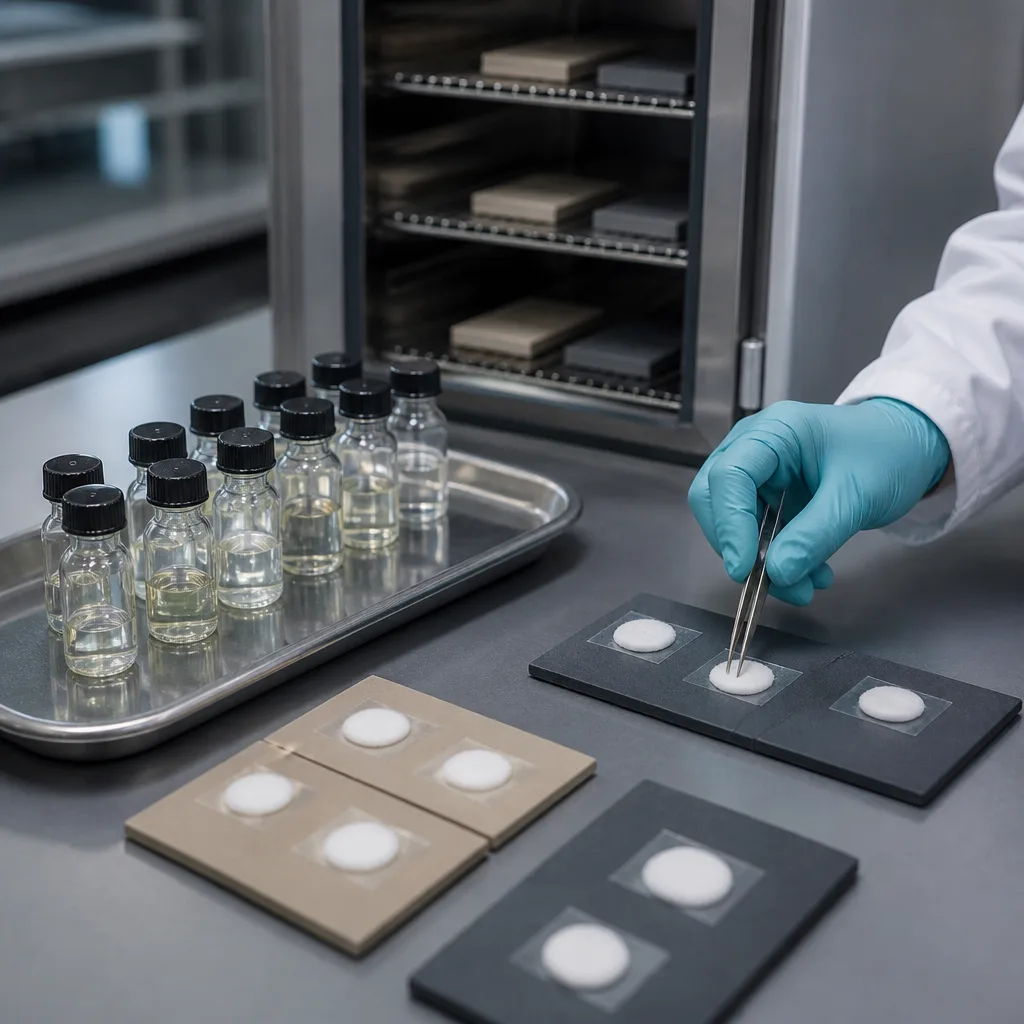
In modern vehicles, interior upholstery materials can come into contact with chemicals from cleaning products, personal care products, human contact, and the vehicle operating environment. Some of these substances contain amines that can chemically interact with PVC formulations, plasticizers, stabilizers, pigments, and surface coatings. The GMI 60272 standard was developed to identify and prevent such compatibility issues.
Amines are not inherently harmful to the automotive industry. In fact, they are widely used and crucial in automotive manufacturing. However, some amines can cause problems, particularly when they come into contact with certain materials such as polymers, coatings, and interior trim materials. This is why standards like GMI 60272 have been developed.
Amines are organic compounds derived from ammonia in which one or more hydrogen atoms have been replaced by organic groups. They contain nitrogen and are used in many industrial applications. In automotive manufacturing, amines are found in:
Some amines can be irritating or harmful in high concentrations, especially in industrial settings. Therefore, automotive manufacturers monitor the following:
Standards regarding interior emissions help ensure that materials are safe for passengers.
The GMI 60272 standard primarily applies to the following:
The tests performed assess whether amine exposure has caused the following:
Amines are commonly found in the following:
When these chemicals come into contact with PVC surfaces, they can react with additives or plasticizers in the PVC structure. Potential problems in this case include:
The general testing concept includes the following:
Typical assessments include the following:
Typical automotive PVC materials evaluated include:
The GMI 60272 standard supports several key vehicle requirements:
Because automotive interiors are exposed to many uncontrolled chemicals during actual vehicle use, the GMI 60272 standard is considered important. According to this standard, without a compliance test,
The GMI 60272 standard provides a controlled method to verify that PVC interior materials are suitable for long-term automotive applications.
The difference between the described test method and general chemical resistance tests is as follows:
The advantage of the GMI 60272 standard is that it focuses on a known failure mechanism affecting PVC automotive interiors.
In summary, the GMI 60272 standard is a specialized automotive interior material testing standard developed to ensure that PVC components remain stable when exposed to amine-containing substances. It helps General Motors and its suppliers prevent discoloration, surface damage, and premature aging of interior parts. Furthermore, by checking chemical compatibility, this standard contributes to improved vehicle durability, appearance quality, and customer satisfaction.
For many years, our organization, with its competent and experienced team, has been understanding the needs of its clients, providing the advanced testing services they require, and assisting them in the establishment, implementation, and improvement of management systems. Within this framework, we also provide testing services compliant with the GMI 60272 standard.
To get an appointment, to get more detailed information or to request an evaluation, you can ask us to fill in our form and reach you.

