

Copper-Nickel-Chrome Plating (Chrome Plating) of Fiat PS-50014 Thermoplastic Parts
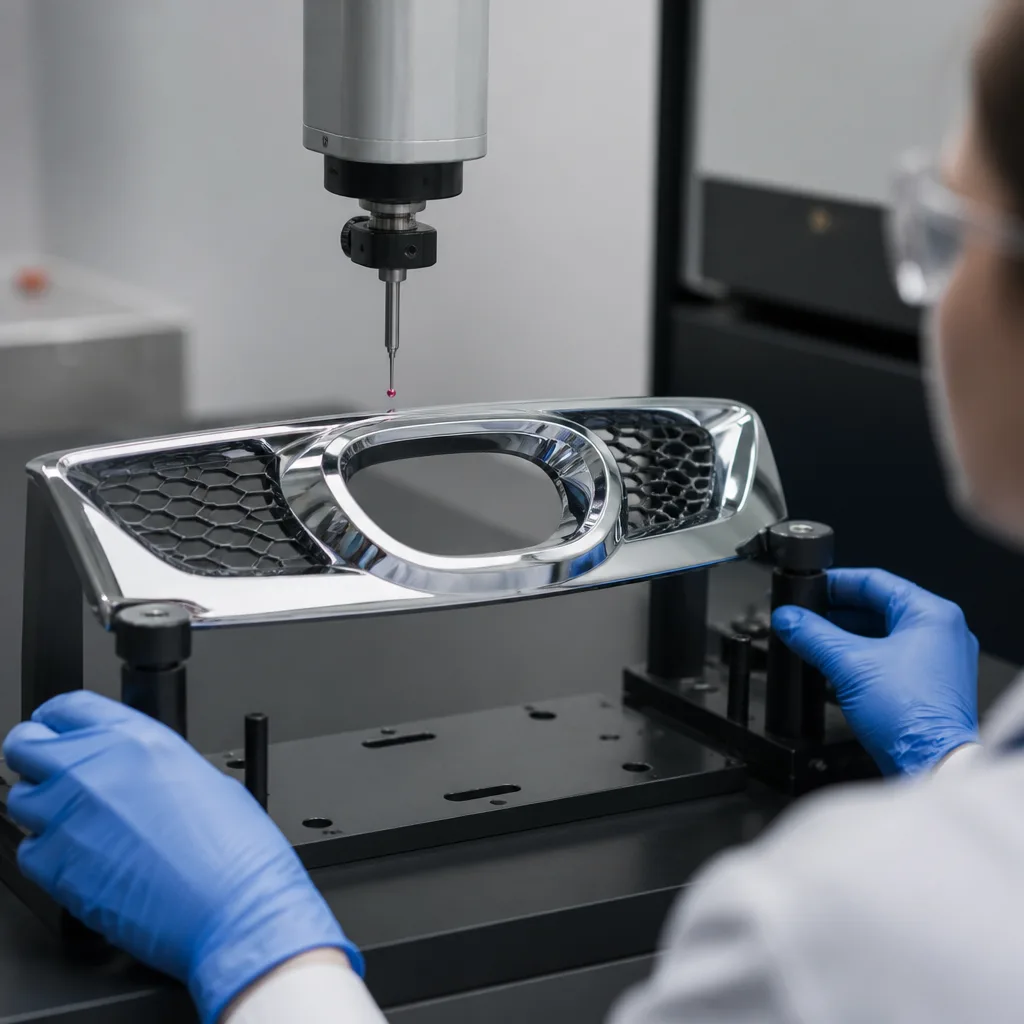
The “Fiat PS-50014 Copper-nickel-chrome plating (chrome plating) of thermoplastic parts” standard, developed by Fiat Chrysler Automobiles (FCA) (now Stellantis), an Italian-American automotive company, is an automotive materials and processes specification that defines the requirements for decorative copper-nickel-chrome electroplating on thermoplastic parts. Originally developed within Fiat, this standard continues to be used within the broader Stellantis engineering framework for interior and exterior decorative components.
This standard applies to the following coated plastic parts:
These parts are typically manufactured from coating-grade thermoplastics such as acrylonitrile butadiene styrene (ABS) and polycarbonate (PC)/acrylonitrile butadiene styrene (ABS) blends, and filled polyamides.
The main objective of the Fiat PS-50014 standard is to ensure that chrome-plated plastic components meet the following requirements:
This specification replaces older standards such as Fiat PS-8810 and Fiat 9-57413, aligning with previous FCA requirements.
The Fiat PS-50014 standard specifies a multi-layer electroplating system:
This multi-layered structure provides the following:
Chrome plating can include traditional decorative chrome or newer trivalent chrome systems approved by the FCA.
The Fiat PS-50014 standard defines two exposure classifications:
External components must meet stricter high exposure requirements due to UV radiation, salt spray, humidity, and road contaminants.
The Fiat PS-50014 standard includes various qualification and production control tests:
Poor adhesion can lead to blistering or peeling during vehicle use.
These tests simulate years of outdoor exposure.
This is very important because plastic and metal coatings expand differently with temperature changes.
The inspection is generally carried out under simulated vehicle assembly conditions.
The Fiat PS-50014 standard primarily supports the following:
The material must be classified as a coating grade to ensure acceptable coating adhesion and surface quality.
Suppliers are expected to maintain traceability and process control documentation consistent with automotive quality systems such as IATF/ISO automotive standards.
The Fiat PS-50014 standard is often associated with the following related trim standards:
These standards support modern decorative surface technologies and more environmentally friendly chrome systems.
The Fiat PS-50014 standard is necessary because decorative chrome-plated plastic parts are exposed to harsh automotive environments while also serving as highly visible styling elements. Without a standardized specification, suppliers may produce inconsistent quality plated components, leading to premature failures and customer dissatisfaction. This standard is considered important for the following reasons:
This standard specifies adhesion requirements and test methods to verify that the coating remains adhered after exposure to thermal, moisture, and environmental factors.
These requirements help prevent the following:
Even minor flaws can negatively impact perceived vehicle quality. This standard ensures the following:
Consequently, the Fiat PS-50014 standard is essential because it sets uniform requirements for decorative copper-nickel-chrome plating on plastic automotive components. This standard ensures that plated thermoplastic parts maintain both their functional durability and superior visual quality throughout the vehicle's service life.
For many years, our organization, with its competent and experienced staff, has been understanding the needs of its customers, providing the advanced testing services they require, and assisting them in the establishment, implementation, and improvement of management systems. Within this framework, we also provide testing services in accordance with the Fiat PS-50014 standard.
To get an appointment, to get more detailed information or to request an evaluation, you can ask us to fill in our form and reach you.

