

Developed by General Motors Worldwide (GMW), the “GMW 14688 Scratch and Abrasion Resistance” standard is a test standard used to evaluate the scratch and abrasion resistance of plastic materials and components. It is particularly applicable to automotive interior and exterior plastic parts where surface appearance, durability, and perceived quality are important.
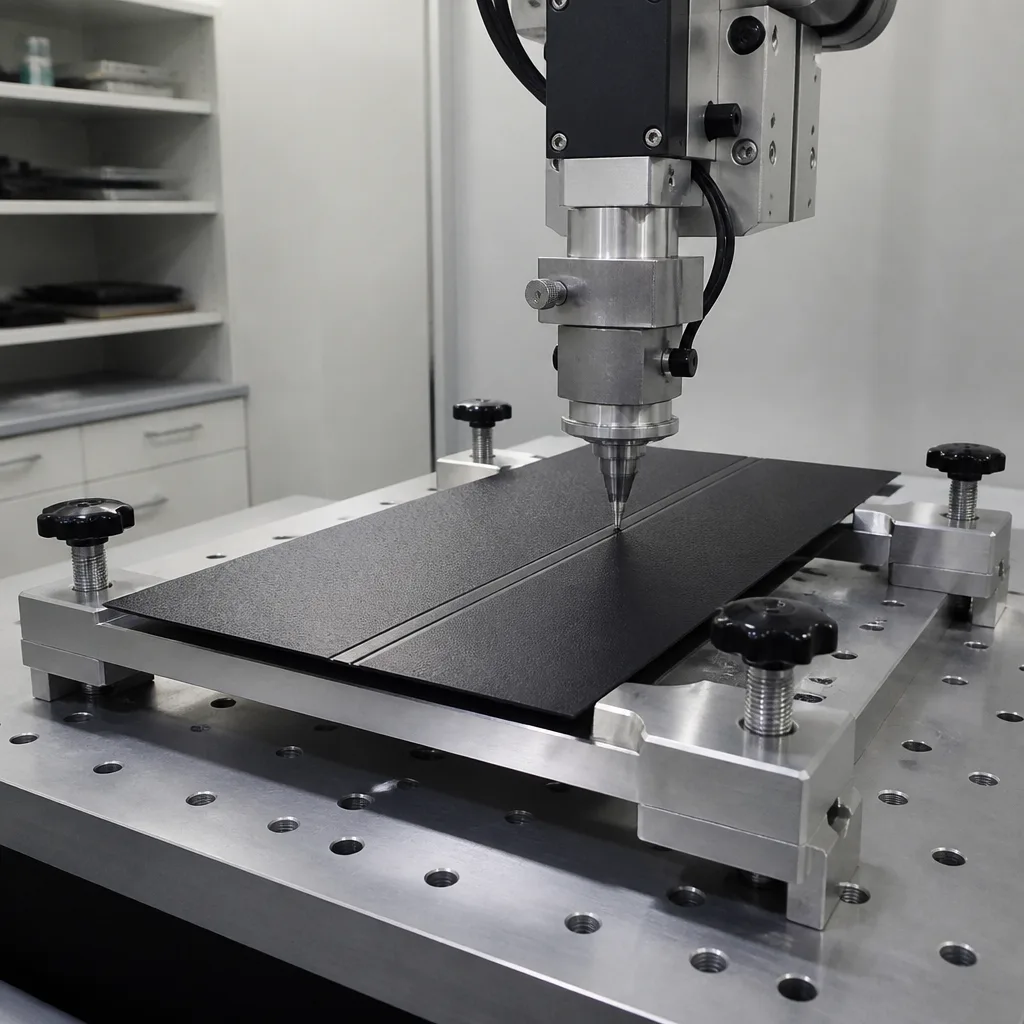
This standard applies to uncoated interior and exterior plastic parts and defines two different evaluation approaches:
In practical automotive testing, cross-scratch equipment associated with the GMW 14688 standard can use controlled loads and scratch paths to produce repeatable surface damage. The key principle is repeatability: the two materials must be subjected to essentially the same mechanical stress for their scratch resistances to be objectively compared.
The GMW 14688 standard defines this method as a development method and restricts it to sample plates with the correct color and texture. This distinction is important because a material may have good resistance to relatively deep scratches but still show noticeable surface marks from light contact.
During vehicle use, plastic surfaces can be damaged by fingernails, tools, clothing accessories, luggage, cleaning equipment, and other objects. Even if the plastic remains structurally intact, visible scratches or changes in gloss can significantly reduce the perceived quality of the vehicle. The GMW 14688 standard provides a controlled laboratory method to determine how susceptible a plastic surface is to such damage. Therefore, this standard helps manufacturers in the following areas:
The GMW 14688 standard applies primarily to uncoated plastic components, including automotive interior and exterior parts. Examples may include:
Test laboratories also list plastics, elastomers, and foils among the materials that can be evaluated according to the GMW 14688 standard.
Scratch resistance and abrasion resistance are different things:
Scratch Resistance, Abrasion Resistance
Therefore, scratches and wear should not be considered exactly the same characteristic.
After mechanical processing, the tested area is examined to determine the degree of visible surface alteration. Depending on the applicable procedure and material, the assessment may include visual evaluation or instrumental measurement of changes in surface appearance. This is particularly important for automotive plastics, as two scratches of similar physical dimensions can have very different visual effects depending on the material's color, texture, grain structure, gloss, and pigmentation. For example, a scratch on a glossy black part may be much more noticeable than a similar scratch on a textured gray part.
The GMW 14688 standard is important because surface appearance is a crucial component of perceived automotive quality. A plastic part may meet dimensional and mechanical requirements, but if its surface shows visible damage during normal use, it may be rejected by the customer. Therefore, testing supports various stages of the automotive supply chain: material selection, formulation development, part development, supplier qualification, production quality control, and vehicle durability. It can help identify materials that are more resistant to daily contact and thus retain their appearance for longer.
Automotive components can encounter many sources of surface damage, including:
Especially for internal components, even if a single incident doesn't cause serious damage, repeated small contacts can gradually lead to visible deterioration.
The GMW 14688 standard is particularly valuable for automotive interiors because many components are constantly exposed to human contact. For example, a center console can be touched hundreds or thousands of times over the life of the vehicle. Door panels and instrument panel surfaces are also touched during normal entry, exit, cleaning, loading, and maintenance. Therefore, a suitable material must possess not only sufficient strength and dimensional stability but also good cosmetic durability.
In conclusion, the GMW 14688 standard contributes to long-term vehicle appearance, perceived quality, supplier competence, material selection, and customer satisfaction by specifying materials and surface designs resistant to visible damage.
For many years, our organization, with its competent and experienced staff, has been understanding the needs of its clients, providing the advanced testing services they require, and assisting them in the establishment, implementation, and improvement of management systems. Within this framework, we also provide testing services in accordance with the GMW 14688 standard.
To get an appointment, to get more detailed information or to request an evaluation, you can ask us to fill in our form and reach you.

