

Developed by General Motors Europe (GME), the “GME 60318 Peel Resistance Test for Self-Adhesive Tapes and Films” standard is a materials testing standard that specifies a test method for determining the peel resistance of self-adhesive tapes and films used in automotive applications. This standard provides an indication of adhesive bond strength and consistency by evaluating the force required to detach an adhesive tape or film from its substrate under controlled conditions.
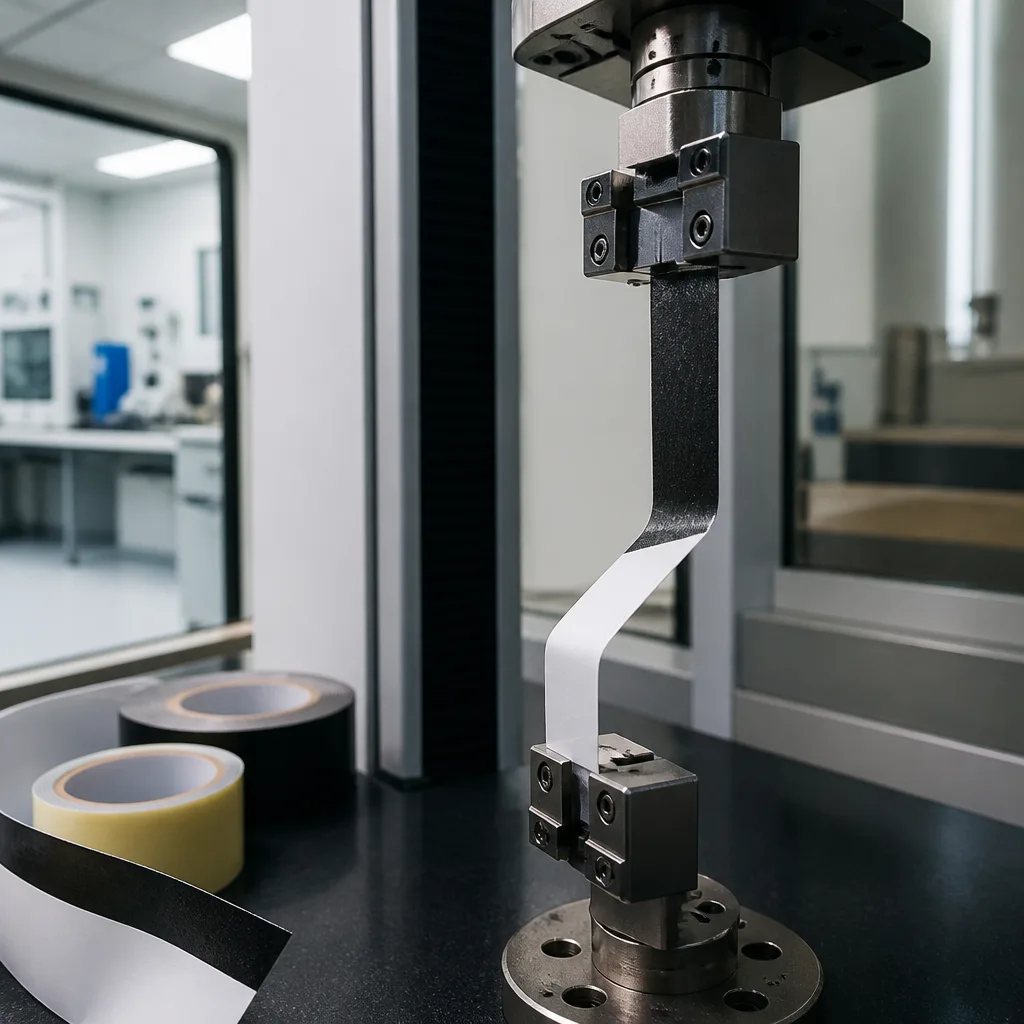
Peel resistance is one of the most important performance characteristics of pressure-sensitive adhesive products used in vehicles, including decorative films, protective films, foam tapes, labels, cable tapes, and sealants.
The primary objectives of the GME 60318 standard are as follows:
This standard provides a repeatable laboratory method that enables manufacturers and suppliers to evaluate adhesive performance under the same test conditions.
The GME 60318 standard applies to the following:
These materials are commonly used in:
In principle, this test method measures the force required to detach an adhesive material from a bonded surface at a specific angle and speed. The test process generally follows these steps:
Typical laboratory equipment used in these tests includes:
Proper calibration of the test equipment is necessary to obtain accurate results.
This test method typically identifies the following:
Maintaining consistent parameters ensures comparable results between laboratories.
The tests typically report the following values:
These values help engineers determine whether the adhesive provides sufficient bonding strength for the intended application.
Various failure modes can be observed during the test:
Each failure mode provides valuable information about material performance and adhesion quality.
Modern fasteners rely heavily on adhesive bonding instead of traditional mechanical fasteners. Application areas include:
Poor adhesion performance can lead to the following:
The GME 60318 standard helps prevent these problems through standardized verification of peel resistance.
Several variables affect peel resistance:
Proper control of these factors is crucial for obtaining reliable and repeatable test results.
The GME 60318 standard offers several advantages:
The GME 60318 standard is frequently used in conjunction with other adhesive testing standards, including:
While the general purpose is similar, the GME 60318 standard has been adapted to General Motors' specific automotive materials, manufacturing processes, and quality requirements.
Typical applications of this standard include:
In conclusion, the GME 60318 standard is a key General Motors engineering standard for evaluating the peel resistance of self-adhesive tapes and films. This standard helps ensure automotive tapes and films provide reliable, durable, and consistent adhesion throughout a vehicle's lifespan by defining a standardized method for measuring the force required to remove adhesive materials from bonded surfaces. This standard plays a vital role in material qualification, supplier verification, and manufacturing quality control for adhesive components used in vehicles.
For many years, our organization, with its competent and experienced staff, has been understanding the needs of its clients, providing the advanced testing services they require, and assisting them in the establishment, implementation, and improvement of management systems. Within this framework, we also provide testing services compliant with the GME 60318 standard.
To get an appointment, to get more detailed information or to request an evaluation, you can ask us to fill in our form and reach you.

