VW TL 52608 Fine Fiber Non-Woven Fabric, Multi-Layer - Material Requirements
The standard “VW TL 52608 Fine-fibre non-woven fabric, multi-layer – Material requirements”, developed by the Volkswagen automobile company, describes the material requirements for absorbent non-woven fabrics based on thermoplastic fibres, used, for example, in direct upholstery sound insulation.
The requirements in this standard are stated as follows:
- Initial supply and modifications must be approved according to VW 01155 standard.
- Emission behavior must be in accordance with the VW 50180 standard.
- Avoidance of hazardous substances must be in accordance with the VW 91101 standard.
- For complete testing, at least 1 m2 of sheet or piece with the same surface area is required.
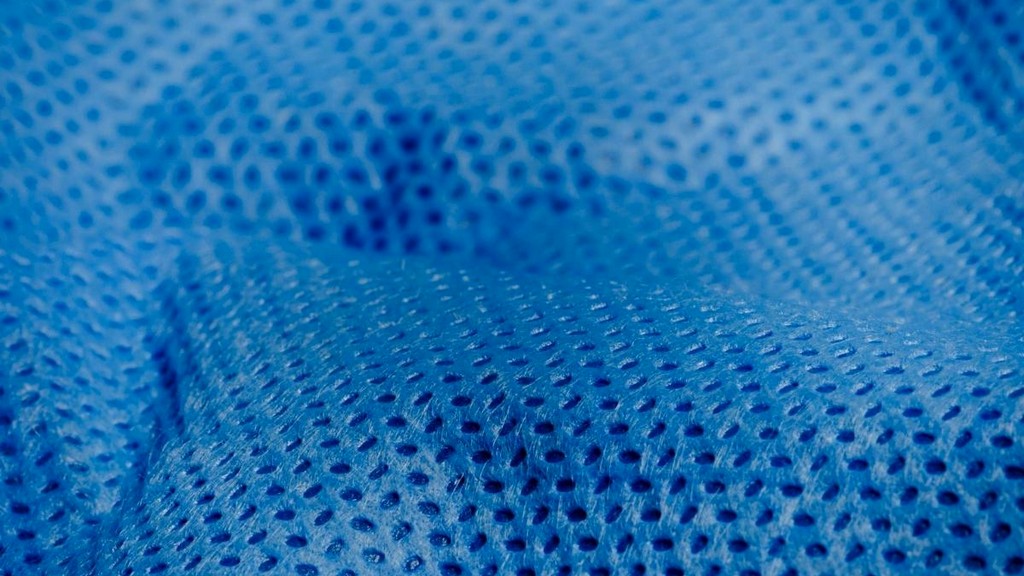
- The multi-layer nonwoven fabric system consists of a base nonwoven fabric (core) and two upper layers nonwoven fabric (outer layers).
- The base nonwoven fabric is a bulky, fine-fiber nonwoven fabric made from 100 percent polyester fibers and qualifies as a thermally bonded nonwoven. Uniform adhesive fiber bonding is required and is achieved by melting the solid binders provided in the fiber form.
- The respective outer layers, consisting of polyester/rayon fibers, are thermally solidified and flattened by calendering.
- The outer layers are bonded to the base nonwoven fabric with a polyethylene-based laminating aid. The bond must be permanent.
- Parts must maintain their dimensional and functional integrity during transportation, storage, assembly, and subsequent use at temperatures ranging from -40 degrees Celsius to plus 90 degrees Celsius, as well as when exposed to climatic conditions such as 55 degrees Celsius and 95 percent relative humidity.
- The parts must be physiologically safe and, for example, must not cause skin irritation (fine fiber dust) or emit unpleasant odors.
- Substances emitted at higher temperatures must be toxicologically safe.
- The parts must be made of thermoplastic nonwoven fabric, not deformed or completely flat. The parts can be coated with adhesive.
- The material should be polyethylene terephthalate as the base nonwoven fabric, polyethylene terephthalate, viscose or polyethylene as the outer layers.
- Before testing, samples must be conditioned for at least 24 hours in an atmosphere of 23 degrees Celsius and 50 percent relative humidity according to the VW 50554 standard.
Additionally, material requirements and required properties are included in the tables provided in the standard.
In addition, there are additional requirements for adhesive-coated parts. The adhesive must be applied to the entire surface area. The adhesive surface is covered with a tear-resistant protective film (e.g., silicone-coated polyethylene). Adhesion requirements must comply with the VW 50131-C standard.
The thickness measurement is carried out under a preload force of 0,2 N. Preferably, the thickness measurement test results from the compression test are used here.
In the compressive stress test, the compressive stress test is performed at 40 percent deformation (thickness reduction) according to DIN EN ISO 3386-1, taking into account the PV 3919 standard. The 1st and 4th pressures are evaluated in each case. Each intermediate pressure is performed at approximately 70 percent deformation. Thickness measurement is performed under a preload force of 0,2 N. The test speed is 100 mm/min. It is preferable to plot the load-displacement curve. Worn parts are measured immediately after removal. Three separate layers are stacked to perform the tests.
The difference between the initial thickness measurement and the thickness before the fourth compression is considered the extent of the reduction in thickness after tension. The test is carried out on the basis of the PV 3919 standard.
Delamination load is determined by a shear test on 5 cm wide strips, where the specimen is split in half. The specimen is cut along half its width and height (thickness), starting at the narrow end in each case. The test is performed at a travel speed of 100 mm/min. It is preferable to plot the load-displacement curve.
Tear strength is determined on 5 cm wide sample strips. The test is performed with a feed rate of 100 mm/min and a free compression length of 100 mm.
Air permeability is determined according to DIN EN ISO 9237. During this test, the test pressure is 200 Pa and the test surface area is 100 cm2.
Volkswagen TL 52608 is a group of standards that specify material requirements for fine-fiber nonwoven fabrics used in automotive applications, particularly absorbent nonwovens for applications such as direct upholstery sound insulation. This standard covers multilayer nonwoven fabrics based on thermoplastic fibers (mainly polyester).
In short, this standard defines a system consisting of:
- A base layer made of 100 percent polyester superfine fiber, thermally bonded using a binder.
- Two outer layers made of polyester/rayon, calendered and laminated to the base using a polyethylene-based adhesive.
The main reasons why the VW TL 52608 standard is considered important are:
- Quality and consistency in automotive parts: This standard defines stringent specifications for multilayer nonwoven fabrics, particularly those used in soundproofing and interior upholstery (e.g., pillar covers). Without such a standard, material quality would vary, leading to:
- Unreliable acoustic performance
- Premature wear or delamination
- Customer dissatisfaction with appearance or odor
- Vehicle comfort and noise reduction: The specified nonwovens are designed to:
- Absorbing sound inside the vehicle (noise, vibration, harshness control)
- Reducing road, engine or wind noise
- Ensuring the cabin is quiet and comfortable
The VW Group requires vehicles to meet a first-class standard of comfort. This standard ensures that the material performs acoustically in all conditions.
- Environmental and thermal resistance: The fabric must be resistant to:
- Extreme temperatures (minus 40 degrees to plus 90 degrees)
- Humidity and condensation
- Wear and tear
This is important because vehicles operate in all climates. It's unacceptable for a material to deteriorate in extreme heat or extreme cold. This standard guarantees global durability.
- Health and safety for passengers: This standard requires:
- No skin irritation
- No toxic emissions
- No strong odor (especially when heated)
This is about protecting both passenger health and brand perception. A material that smells bad or emits volatile organic compounds (VOCs) in sunlight could lead to complaints or even legal issues.
- Production and supply chain control: This standard serves as a clear benchmark for suppliers and manufacturers. It prevents miscommunication between design teams and suppliers, resulting in faster approvals, fewer rejections, and global sourcing. Every parts supplier must comply with this standard to be accepted into the supply chain.
- Cost savings through specification: By standardizing performance, VW avoids over-engineering (e.g., using more expensive materials than necessary). It also prevents underperforming parts from needing to be replaced or recalled. This balance leads to an optimized cost-performance ratio.
The primary users of this standard are:
- Tier 1 and 2 suppliers of non-woven sound insulation
- Materials engineers who design cabin components
- Quality inspectors verifying part compatibility
- Test laboratories performing mechanical, environmental and emissions testing
- Manufacturers of interior components for floor panels, columns, ceiling tiles, etc.
Ultimately, the VW TL 52608 standard is important because it allows a small, hidden part of the vehicle (such as the felt behind a plastic trim panel) to:
- Meets expectations for performance, safety and durability
- Contributes to a quiet, comfortable and premium VW vehicle
- Can be reliably produced and supplied worldwide
- It's one of the many behind-the-scenes standards that make modern automotive engineering possible.
Our organization, which has been serving for many years and meticulously following global developments in science and technology, employs a skilled team and extensive infrastructure to conduct testing, measurement, and analysis in a wide range of areas for businesses across all sectors. In this context, we also provide testing services in accordance with the "VW TL 52608 Fine-fiber nonwoven fabric, multi-layer - Material requirements" standard.



