

The “GMW 14885 Painted Aluminum Wheels – Paint Performance Requirements” standard, developed by General Motors Worldwide (GMW), describes the paint and coating performance requirements for painted aluminum wheels and aluminum wheel covers. This standard addresses not only paint materials but also pretreatment, coating processes, and the durability of the finished coating.
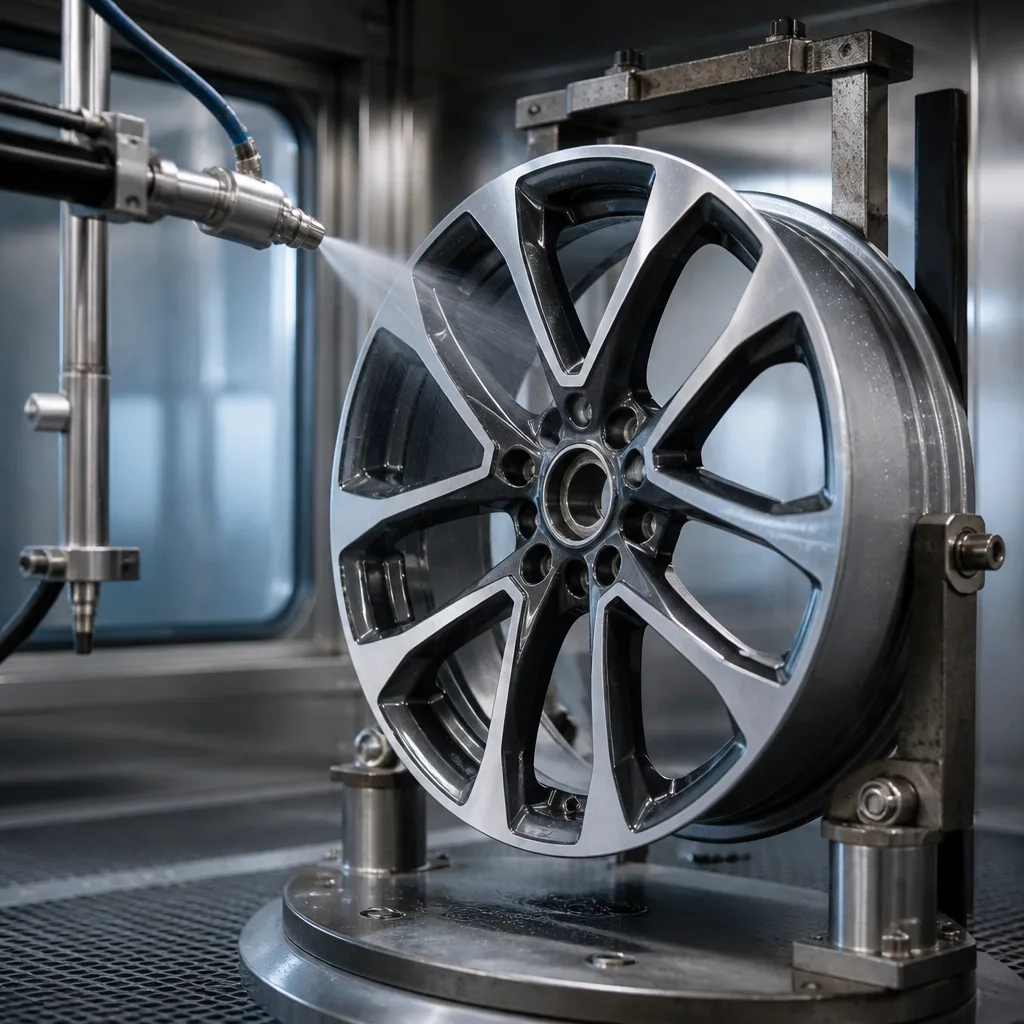
This specification is particularly important because automotive wheels are exposed to harsh environmental conditions including moisture, road salt, stone chips, cleaning chemicals, ultraviolet radiation, and temperature variations. Therefore, a wheel coating must provide both an attractive appearance and long-term protection of the aluminum substrate.
The GMW 14885 standard applies to painted aluminum road rims and aluminum wheel covers. This standard specifies requirements for aluminum pretreatment, paint/coating materials, coating processes, and the durability of the finished coating system. The specification distinguishes between two main rim types:
The distinction between Type A and Type B is important because the rim appearance and coating structure can differ. Type A rims feature bright metal areas with a clear coating. These surfaces require special attention to the appearance and durability of the clear coating. Type B rims are fully colored and do not have bright metal areas covered with a clear top coating in the relevant outer areas. Consequently, the applicable testing requirements may vary depending on the rim structure and the coating system being evaluated.
The requirements apply to the surfaces defined in the relevant engineering drawing. Painted components are expected to meet the specified requirements and General Motors and customer expectations prior to commissioning.
The primary goal of the GMW 14885 standard is to ensure that the entire coating system, not just the topcoat, provides adequate protection. The coating system may include several layers, such as:
Proper pretreatment is particularly important because aluminum surfaces can be susceptible to corrosion and coating adhesion problems. Therefore, the coating system must provide both adhesion and corrosion protection.
Commercial coating systems are sometimes qualified according to the GMW 14885 standard. For example, the coating manufacturer's technical data indicates GMW 14885 standard approval for aluminum wheel coating products.
The GMW 14885 standard includes a set of requirements designed to evaluate the performance of finished wheel rims. Depending on the wheel type and qualification stage, the tests focus on the following characteristics:
The GMW 14885 standard should not be viewed as an isolated test method. It operates within a larger group of General Motors specifications that cover individual coating characteristics. For example,
These standards are listed in General Motors test service references along with the GMW 14885 standard.
The GMW 14885 standard is also related to the Production Part Approval Process (PPAP). The current specification defines the typical tests required for PPAP, approved material sources, and color development. This is important because laboratory qualification alone is not sufficient. The production process must consistently produce rims whose coating performance meets the specified requirements.
The GMW 14885 standard is important because an automotive wheel cover performs several functions simultaneously:
Without adequate coating performance, an aluminum wheel can experience coating degradation, corrosion, loss of appearance, or premature rejection during production.
In conclusion, compliance with the GMW 14885 standard helps manufacturers and laboratories ensure that painted aluminum wheels maintain their appearance, corrosion protection, and functional durability throughout the vehicle's lifespan.
For many years, our organization, with its competent and experienced staff, has been understanding the needs of its clients, providing the advanced testing services they require, and assisting them in the establishment, implementation, and improvement of management systems. Within this framework, we also provide testing services in accordance with the GMW 14885 standard.
To get an appointment, to get more detailed information or to request an evaluation, you can ask us to fill in our form and reach you.

