

The “Ford FLTM BJ 126-01 Grease staining paint test” standard, developed by Ford Motor Company (FORD), describes a test method for determining the tendency of unreduced greases used in exterior or interior automotive applications to stain or soften painted surfaces exposed to heat and sunlight.
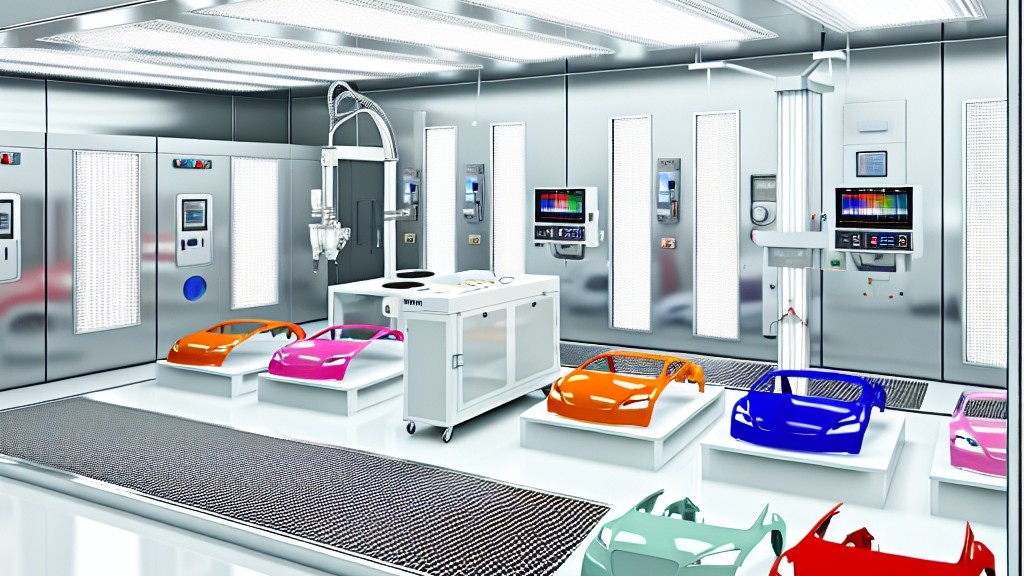
The following equipment is mainly used in these tests:
All test values defined in this standard are based on material that has been conditioned in a controlled atmosphere at 24 degrees plus/minus 23 degrees and 2 percent plus/minus 50 percent relative humidity for at least 5 hours prior to testing and tested under the same conditions unless otherwise stated.
When performing the test, the microhardness of the painted panel or panels is first checked before the test exposure according to the “Ford FLTM BI 112-02 Tukon paint hardness” standard. A uniform bead of test grease is placed across the width of the painted test panel. Using a stick, the grease is pulled uniformly along approximately 1/3 of the length of the test panel, and a thickness of between 0,0 mm and 0,50 mm is obtained. A wet film meter or equivalent can be used to measure the thickness. As a control, the currently approved grease is applied to the same test panel as described above. The panel is kept in the fluorescent sun lamp cabinet for 16 hours. After exposure, the grease is removed with a soft cloth. The microhardness of the paint on the test grease and control grease-smeared areas of the test panel is checked. Any staining or softening of the paint on the grease-covered areas is reported.
The chemicals, materials, parts and equipment referenced in this standard must be used and handled appropriately. Each party is responsible for determining appropriate use and handling at their facility.
Whatever the cause, grease stains can be unsightly and smelly. It is very important to remove them immediately because if left alone they can become increasingly difficult to remove. For hygiene reasons it is important to have a clean car interior. In this respect it is important to determine the stain resistance of the interior and exterior painted surfaces of the vehicle, which are always exposed to high temperatures and sunlight. This resistance is intended to eliminate the impact power of unreduced greases.
Our organization has a strong staff that closely follows the developments in the world in the field of science and technology and constantly improves itself. Among the numerous test, measurement, analysis and evaluation studies provided for businesses in various sectors, there are also test services in accordance with the "Ford FLTM BJ 126-01 Grease paint paint test" standard.
To get an appointment, to get more detailed information or to request an evaluation, you can ask us to fill in our form and reach you.

