

DBL 5306 General Technical Delivery Conditions and Test Methods for Interior Fittings and Similar Products

DBL 5306 General Technical Delivery Conditions and Test Methods for Interior Fittings and Similar Products

The “DBL 5306 General technical delivery conditions and test methods for interior fittings and similar products” standard, developed by Daimler, the owner of the Mercedes-Benz brand, describes the requirements, delivery conditions, and a wide range of test procedures that materials used in the interiors of Mercedes-Benz vehicles must meet to ensure durability, safety, appearance, and quality.
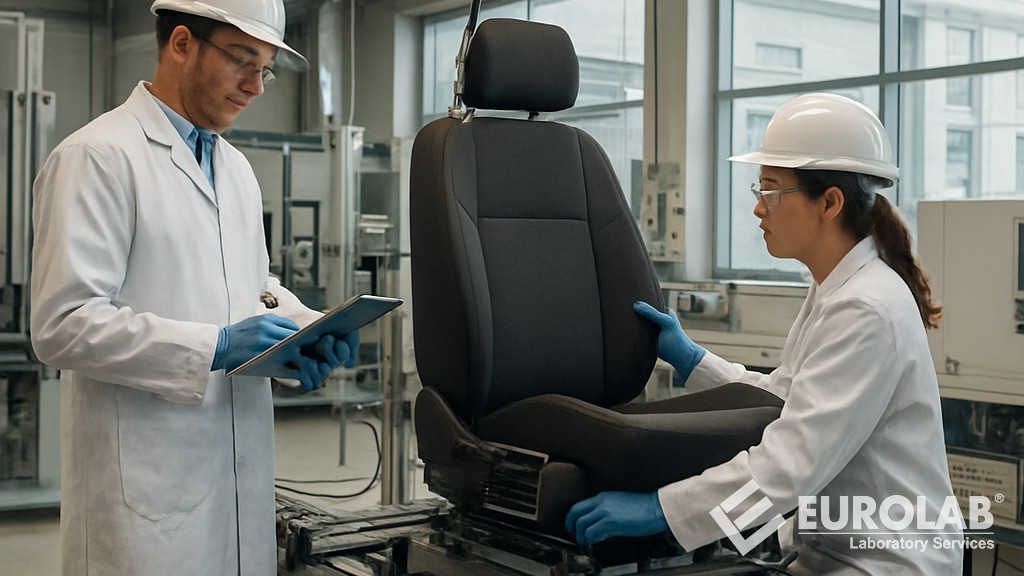
DBL 5306 General Technical Delivery Conditions and Test Methods for Interior Fittings and Similar Products

This standard applies to a wide range of interior materials and components, including the following:

  • Textiles (fabrics, upholstery, carpets)
  • Plastics and polymers
  • Leather and synthetic leather
  • Foams, composites, and flooring components.
  • Other similar products used in instrument panels, door panels, seats, headliners, etc.

Companies supplying Daimler/Mercedes-Benz must demonstrate suitability through specified tests before materials are approved for use in production equipment. This acts as a quality control point: materials that fail these tests risk being rejected in the supply chain.

This standard is divided into sub-sections, each describing specific test methods and acceptance criteria. Laboratories typically refer to individual sections. Common testing areas include:

  • § 1: Bending stiffness
  • § 2: Blocking resistance
  • § 3.1: Scratch resistance (from fingernail or knife tip)
  • § 3.2: Exposure to scratches with a chisel
  • § 4.1: Abrasion resistance
  • § 6.1: Heat resistance - Free exposure
  • § 6.2: Heat resistance - Folded exposure
  • § 7.1: Cold resistance - Folded exposure
  • § 7.2: Cold resistance - Bending resistance
  • § 7.3: Cold resistance - Ball drop test
  • § 8.1: Permanent deformation under constant load - Dry method
  • § 8.2: Permanent deformation under constant load
  • § 9.3: Contamination behavior (Martindale method)
  • § 9.4: Cleaning behavior
  • § 15.2: Measurement of grip indentation
  • § 16: Foam adhesion
  • § 19.3: Sliding/adhesive friction and coefficient of friction
  • § 20: Contact staining
  • § 25.1 Seam tear resistance
  • § 25.2 Edge yarn tensile strength
  • § 26.1.1: Peel tensile test in standard atmosphere
  • § 26.1.3: Shear tensile test in standard atmosphere
  • § 26.1.4: Shear tensile test under heat

Many tests simulate long-term use, environmental exposure (heat, folding, scratching by passengers), and daily wear and tear inside a car.

These standards are mandatory for Mercedes-Benz suppliers. Compliance is required for parts to be used in Mercedes vehicles. The methods described are generally referred to in conjunction with relevant Daimler standards such as DBL 5307 (flammability), DBL 5430 (emissions and odors), DBL 5555 (polymer parts) or DBL 8585 (restricted substances).

The DBL 5306 standard helps ensure that Mercedes-Benz interiors maintain high quality, are resistant to visible damage, and provide a long service life in real-world conditions.

Mercedes-Benz (Daimler) vehicles are positioned as high-end luxury products where the interior must offer exceptional long-term quality, durability, and perceived value far beyond basic functionality. Customers expect the interiors of these vehicles to look and feel like new for many years, even after intensive daily use, extreme temperatures, sun exposure, and physical contact (e.g., fingernails, keys, rings, bags, or grip surfaces).

Without a rigorous and unified standard like DBL 5306, suppliers may offer inconsistent or lower-quality materials, which can lead to:

  • It may quickly show visible scratches, abrasions, or marks (which could detract from the premium appearance).
  • It can develop permanent indentations, wrinkles, or folds from normal use.
  • It may fade, crack, separate into layers, or change texture under heat, UV, or mechanical stress.
  • It may not be durable enough for everyday use (e.g., impacts from falling balls, thread breakage at seams, marks from hand grips).

This leads to higher warranty claims, customer dissatisfaction, negative reviews, and damage to the brand's reputation for superior workmanship.

The main reasons why these standards are considered so necessary are as follows:

  • Brand differentiation and premium positioning: Mercedes-Benz competes through perceived luxury and build quality. Interiors are one of the most visible and tactile parts of a car. DBL 5306 standards apply various tests (e.g., scratch resistance, heat/folding exposure, indentation test) to ensure that materials maintain a flawless look and feel throughout the vehicle's lifespan (typically 10-15 years or at least 200.000 km).
  • Supplier quality control and consistency: Daimler sources from hundreds of global suppliers. A single mandatory standard prevents variability: every part (seats, instrument panels, door panels, headliners) must undergo the same tests before approval, reducing defects entering production.
  • Long-term durability and customer satisfaction: Interiors are exposed to challenging real-world conditions:
  • High cabin temperatures (up to 80-100 degrees Celsius in vehicles parked in the sun)
  • Repetitive mechanical stress (sitting, leaning, loading objects)
  • Contact with sharp objects or abrasive materials.

This standard validates durability by simulating these conditions and minimizes visible wear and tear that could disappoint owners.

  • Risk and cost reduction: Early rejection of non-compliant materials prevents costly recalls, rework, or field failures. It also supports compliance with relevant standards (e.g., DBL 5307 for flammability, DBL 5430 for emissions and odors).
  • Industry-wide expectations for premium original equipment manufacturers: Similar stringent interior standards exist at competing firms, but the DBL 5306 standard has been tailored to Mercedes' high expectations. Test laboratories worldwide are specifically accredited for this standard, demonstrating its critical role in the supply chain.

In conclusion, the DBL 5306 standard and its sub-sections are not an optional feature, but a mandatory quality control point that protects the Mercedes-Benz brand's promise of reliability and superior quality in every vehicle.

For many years, our organization, with its competent and experienced team, has been understanding the needs of its clients, providing the advanced testing services they require, and assisting them in the establishment, implementation, and improvement of management systems. Within this framework, we also provide testing services compliant with the DBL 5306 standard.

WhatsApp

