

The “GME 60341 Test Method for Determining Seam Strength of Upholstery Edge Materials” standard, developed by General Motors Europe (GME), is an automotive test specification designed to determine the seam strength of upholstery materials used specifically in vehicle seat covers and interior soft upholstery.
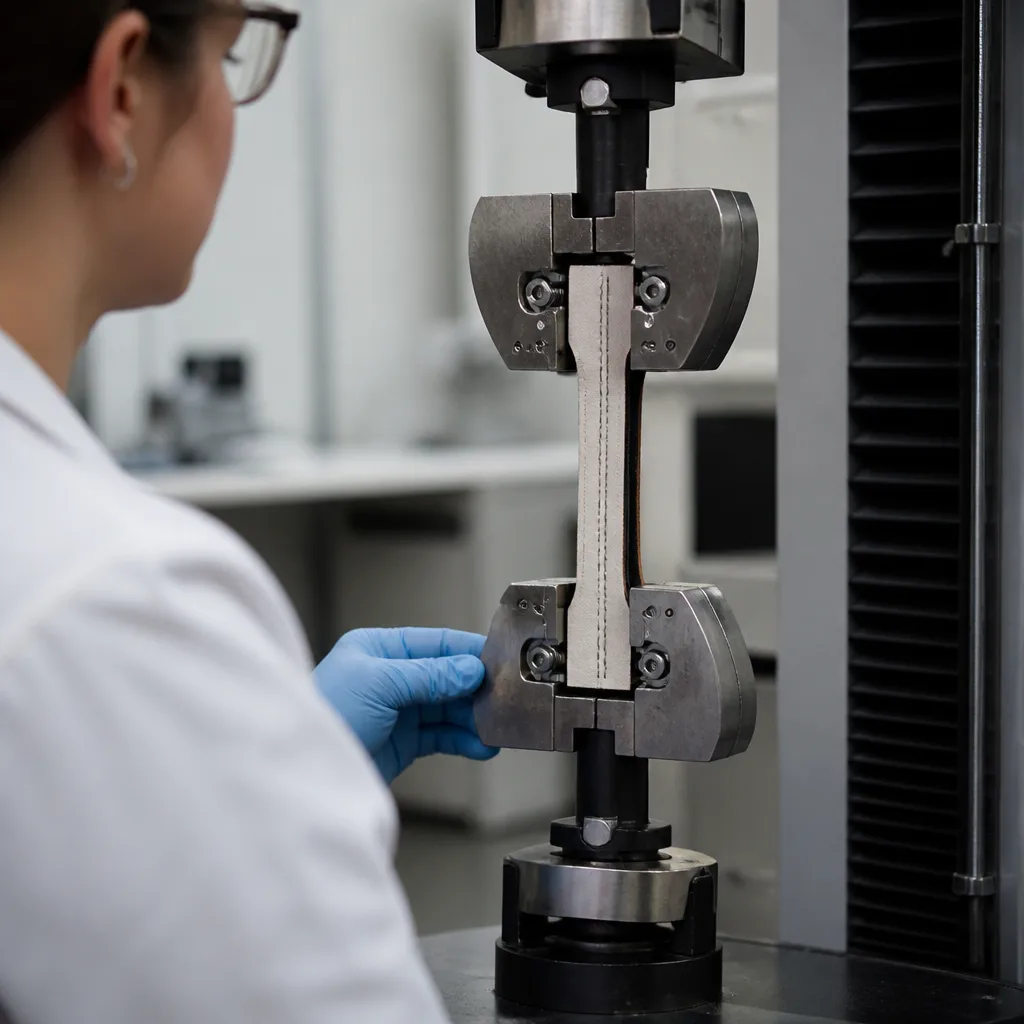
The primary purpose of this standard is to evaluate the ability of seams in flooring materials to withstand mechanical loads. The test is primarily applied to:
This standard specifies the maximum force required to break or separate a weld under tensile loading.
A car seat cover is subjected to repeated forces in the following situations:
Therefore, seam performance is a critical factor in ensuring durability and passenger safety.
In principle, a prepared sample containing a suture is subjected to tensile force until the suture breaks. This test generally evaluates the following:
The measured result indicates the floor structure's ability to maintain its integrity under service conditions.
The typical test procedure essentially follows these steps:
This is important because textile strength can vary significantly depending on environmental conditions.
Typical parameters evaluated in these tests include:
The GME 60341 standard is considered important for the following reasons:
This standard helps ensure that the upholstery maintains its structural integrity throughout the vehicle's lifespan.
A material may have excellent tensile strength, but still fail due to poor seam design.
The GME 60341 standard is typically used in the following situations:
This standard is especially important for:
The GME 60341 standard is typically part of a broader internal material verification program that includes the following tests:
In conclusion, the GME 60341 standard is a crucial standard used in automotive interior durability testing, measuring the strength and reliability of seams in upholstery materials. By verifying the seams' resistance to mechanical loads, this standard helps automotive manufacturers and suppliers ensure that seats and interior upholstery remain safe, durable, and visually acceptable throughout the vehicle's lifespan.
For automotive seat suppliers, compliance with the GME 60341 standard is a key indicator of material quality, stitching process control, and long-term interior performance.
For many years, our organization, with its competent and experienced staff, has been understanding the needs of its clients, providing the advanced testing services they require, and assisting them in the establishment, implementation, and improvement of management systems. Within this framework, we also provide testing services compliant with the GME 60341 standard.
To get an appointment, to get more detailed information or to request an evaluation, you can ask us to fill in our form and reach you.

