

Developed by Fiat Chrysler Automobiles (FCA) (now Stellantis), an Italian-American automotive company, the “Fiat 50438 Bally Leather and Synthetic Leather Fatigue Test” standard is an automotive material testing specification used to evaluate the tensile strength or fatigue durability of leather and synthetic leather materials. This method, often referred to as the Bally fatigue test or Bally tensile test, is primarily applied to vehicle interior materials such as seat upholstery, armrests, door panels, steering wheel covers, and instrument panel covers.
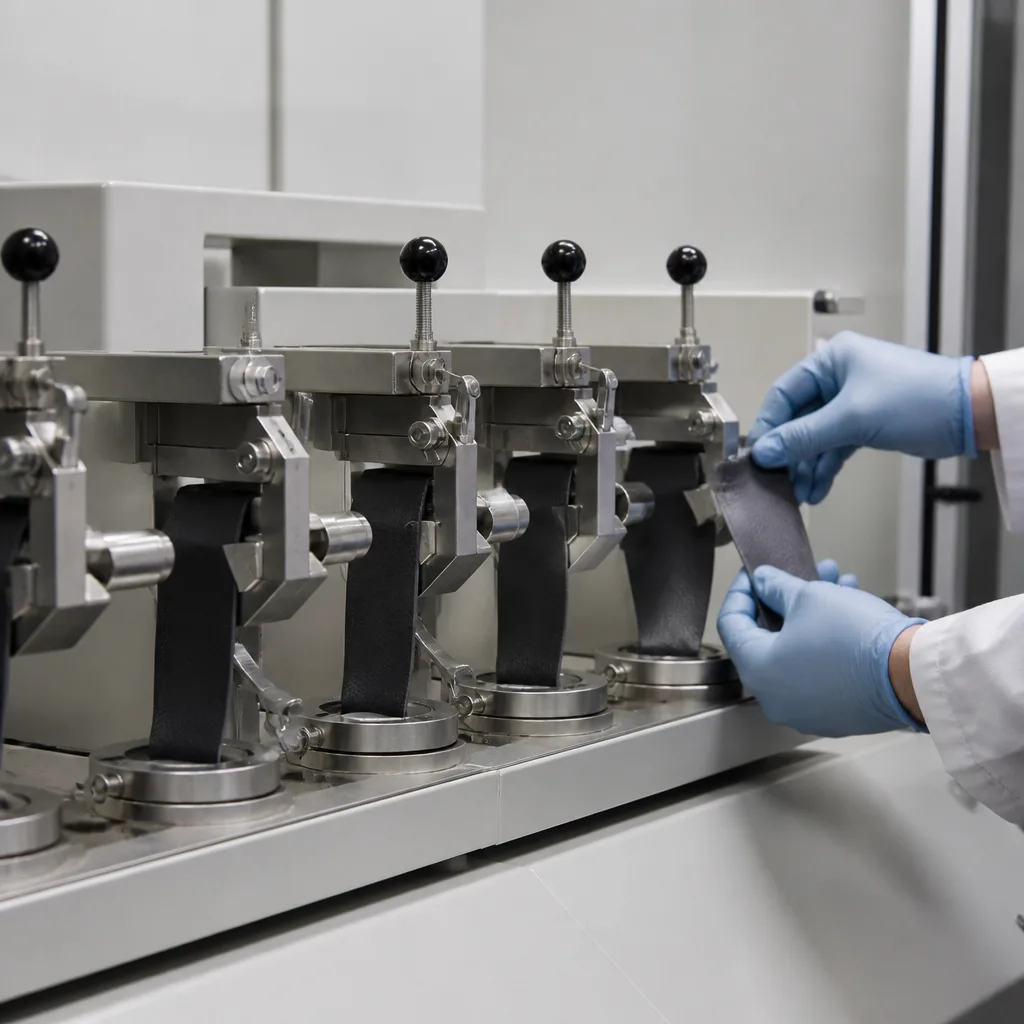
Automotive interior materials are constantly subjected to bending and deformation during vehicle use. Leather and synthetic leather surfaces are repeatedly bent by the following movements of passengers:
The Fiat 50438 standard test method determines whether the material can withstand these repeated bending cycles without the following conditions being met:
This test is particularly important for polyvinyl chloride (PVC), polyurethane (PU), and coated textile synthetic leathers used in automotive interiors. The Bally method involves repeatedly bending a sample of material back and forth under controlled conditions. During the test, the sample is mounted in clamps and bent along a defined crease line.
Typical Bally stretch parameters include:
The test essentially continues until visible damage occurs or until the required number of cycles are successfully completed.
Tests are performed using a Bally skin stretch test device. This device includes:
The testing device simulates long-term folding and bending stresses encountered during vehicle operation.
In general, this test follows these steps:
The materials typically tested include:
These materials are commonly used in automotive interiors because they combine aesthetics, comfort, and durability.
The Fiat 50438 standard test method is technically related to various international Bally standards, including:
Automotive manufacturers typically adapt these international methods with additional original equipment manufacturer (OEM) specific requirements, such as those listed below:
The Fiat 50438 standard is important because interior trim defects are highly visible to customers. Material that cracks or peels after repeated use can significantly reduce the perceived quality of the vehicle. This method helps manufacturers ensure the following:
For synthetic leather, Bally fatigue performance is particularly critical because polymer coatings can become brittle over time due to the following reasons:
Common faults identified in the Fiat 50438 test include:
The Fiat 50438 standard Bally fatigue test is generally applied to the following:
These components undergo continuous cyclical deformation throughout the vehicle's lifespan.
From an engineering perspective, the Fiat 50438 standard is a durability verification method for flexible coated materials. It helps engineers in the following areas:
High Bally fatigue resistance generally indicates better long-term service life in automotive interiors.
In conclusion, the Fiat 50438 standard is a key automotive durability test used to evaluate the elasticity resistance of leather and synthetic leather materials under repeated bending conditions. This method simulates real-world usage stresses to which vehicle interior trim components are subjected, helping to ensure long-term durability, appearance preservation, and customer satisfaction.
For many years, our organization, with its competent and experienced staff, has been understanding the needs of its customers, providing the advanced testing services they require, and assisting them in the establishment, implementation, and improvement of management systems. Within this framework, we also provide testing services in accordance with the Fiat 50438 standard.
To get an appointment, to get more detailed information or to request an evaluation, you can ask us to fill in our form and reach you.

