

The “GM 9515P Taber Abrasion Resistance Test for Automotive Materials” standard, published by General Motors (GM), is an engineering testing standard that evaluates the abrasion resistance of automotive materials and surface coatings using the Taber abrasion test. This standard is widely used to assess the durability of coatings, plastics, painted components, decorative coatings, textiles, and other interior and exterior automotive materials subjected to repeated abrasion.
Although the GM 9515P standard has been phased out as General Motors transitioned many older GM standards to newer GMW standards, it continues to be referenced by numerous test laboratories and suppliers when evaluating older components or comparing past qualification data.
The primary purpose of the GM 9515P standard is to determine how well a material resists surface wear caused by repeated mechanical abrasion. Automotive components are constantly exposed to friction resulting from the following factors:
This standard helps manufacturers predict how these surfaces will perform after years of daily use.
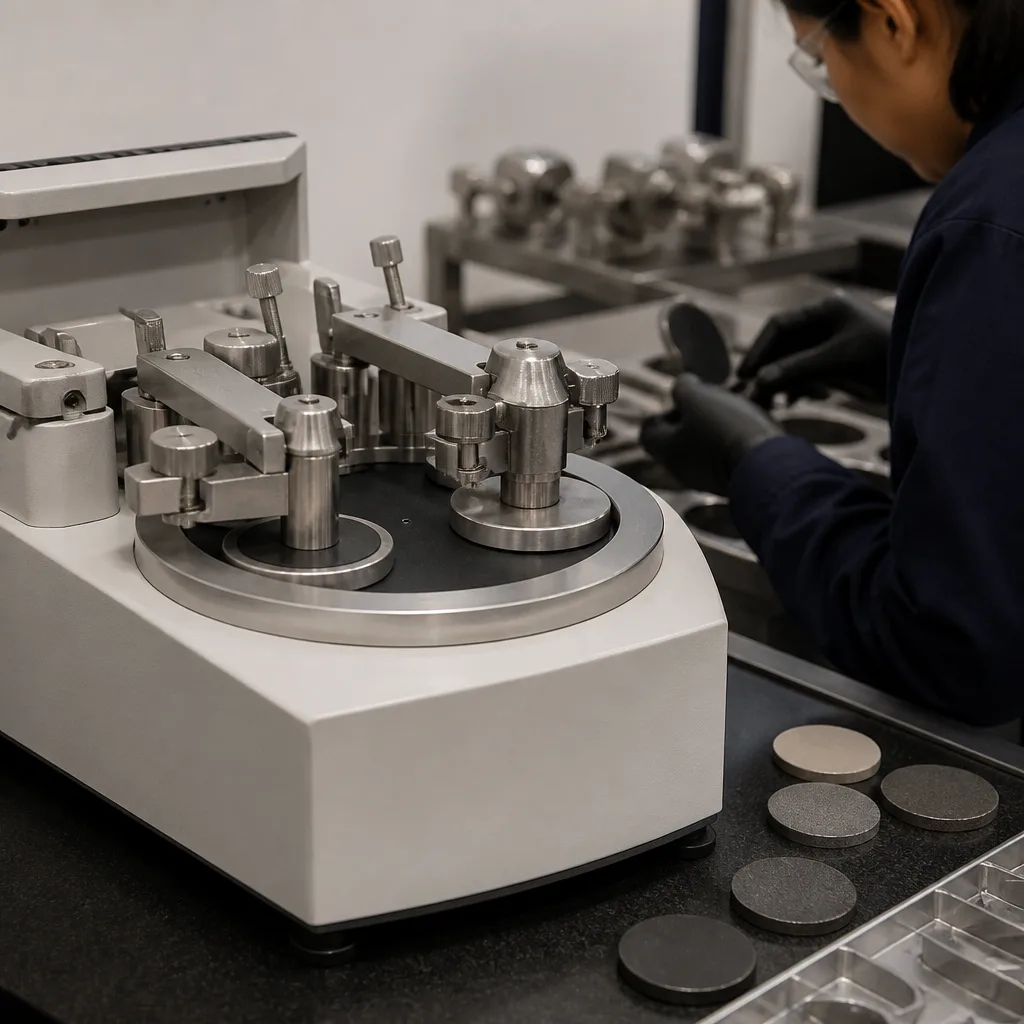
In principle, the GM 9515P standard is based on the Taber wear method. Generally, this method follows these steps:
The Taber wear testing machine provides a controlled and repeatable simulation of long-term mechanical wear.
The GM 9515P standard is applicable to a wide variety of automotive materials, including:
This method is suitable wherever maintaining the long-term outlook is important.
The test typically requires a Taber abrasion testing machine, consisting of the following components:
Different types of abrasive wheels can be selected depending on the material being evaluated.
After the wear test, engineers examine the sample for the following characteristics:
Acceptable limits are defined by the relevant GM material or component specification.
The GM 9515P standard is used for testing components such as those listed below:
These parts are in frequent contact and therefore require high wear resistance.
The GM 9515P standard offers several advantages:
Because the test conditions are standardized, different materials can be compared under the same wear conditions.
The GM 9515P standard is one of General Motors' various durability testing methods. It is often used in conjunction with the following standards:
Together, these tests provide a comprehensive assessment of automotive material performance.
As General Motors adopted globally harmonized engineering specifications, many older GM standards, including the GM 9515P standard, were replaced with GMW standards. Although the GM 9515P standard has been decommissioned, some laboratories continue to offer testing for the older standards to verify their authenticity and meet customer demands.
Although developed for General Motors, the GM 9515P standard is also used by the following industries:
Wear resistance, as defined in the GM 9515P standard, directly affects the appearance and performance of a vehicle over its lifespan. Rapidly wearing surfaces can lead to customer dissatisfaction, increased warranty claims, and a decrease in perceived quality.
The GM 9515P standard has played a significant role in assisting manufacturers in the following areas:
Although now an outdated specification, the GM 9515P standard remains a valuable reference for understanding wear resistance requirements and evaluating older GM vehicle components where historical compliance data is necessary.
Essentially, the GM 9515P standard is based on the “ASTM D4060 Standard Method for Testing the Abrasion Resistance of Organic Coatings with Taber Abrasive” standard developed by the American Society for Testing and Materials (ASTM). This test method involves determining the resistance of organic coatings applied to a flat, hard surface, such as a metal panel, to abrasion produced by Taber abrasive.
For many years, our organization, with its competent and experienced staff, has been understanding the needs of its clients, providing the advanced testing services they require, and assisting them in the establishment, implementation, and improvement of management systems. Within this framework, we also provide testing services compliant with the GM 9515P standard.
To get an appointment, to get more detailed information or to request an evaluation, you can ask us to fill in our form and reach you.

