

The “GM 9635P Dusting Test for Fiber Sound Absorbing Pads” standard, published by General Motors (GM), is a material testing specification that evaluates the dusting characteristics of fiber sound absorbing pads used in automotive vehicles. The GM 9635P standard specifies the tendency of fiber acoustic insulation materials to release loose fibers or dust during manufacturing, assembly, transportation, and vehicle operation. This specification is generally applied to nonwoven fiber insulation, acoustic pads, and soundproofing materials used throughout a vehicle.
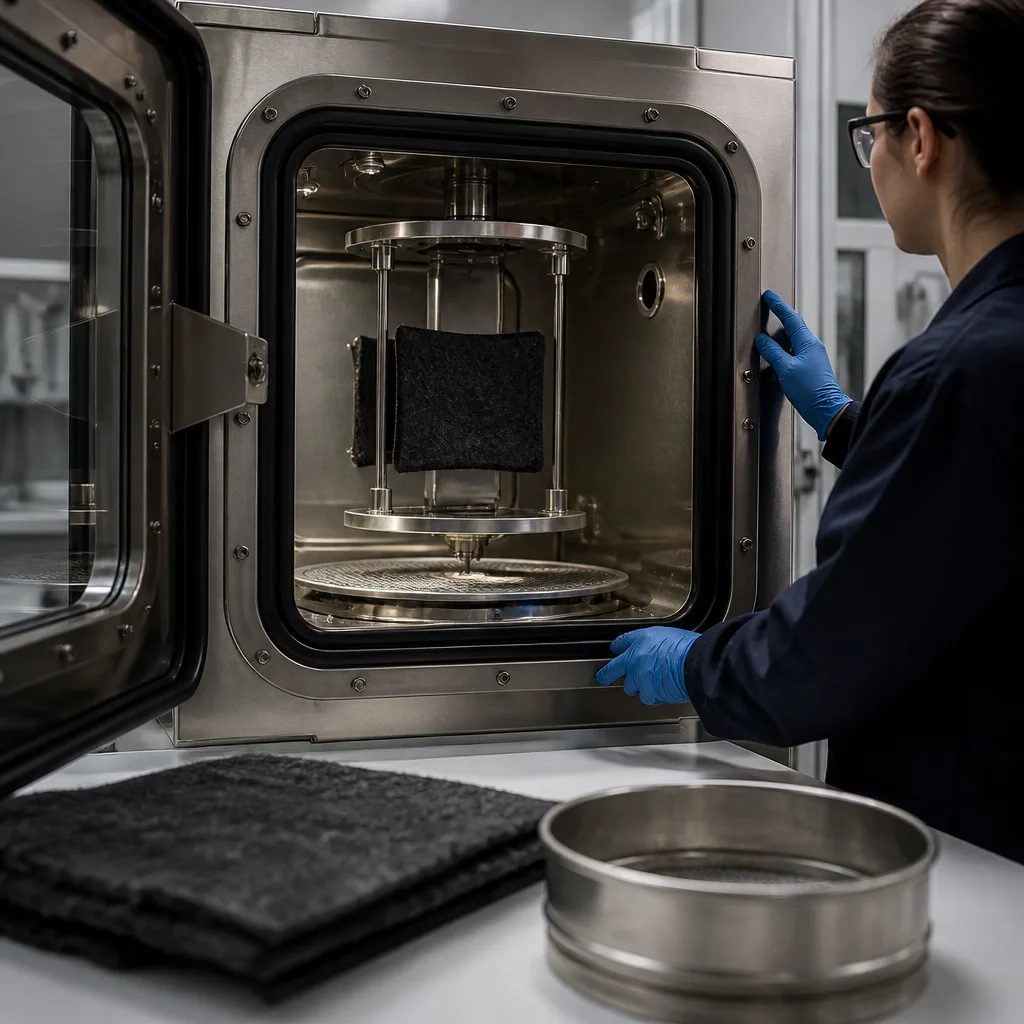
Dust formation is a significant quality assessment because airborne fibers can contaminate vehicle interiors, interfere with assembly processes, and reduce customer satisfaction.
The primary purpose of the GM 9635P standard is to ensure that fiber-based sound absorbers provide the following:
This specification helps suppliers demonstrate that the insulation materials will remain intact for the entire lifespan of the vehicle.
The GM 9635P standard is commonly used in the following areas:
These products are typically made from the following materials:
Dust removal testing is considered important because loose fibers can lead to various production and performance problems:
The test method described in the GM 9635P standard generally evaluates the amount of loose fibers released when a sound-absorbing pad is subjected to controlled mechanical disturbance. Typical evaluation includes:
The aim is to simulate the processing that materials undergo during production and vehicle assembly.
Depending on the material application, typical evaluation criteria are as follows:
Acceptable limits are defined by General Motors engineering specifications.
The GM 9635P standard is frequently used in the following areas:
The GM 9635P standard is typically performed in conjunction with other General Motors material qualification tests. These include the following tests:
Together, these tests provide a comprehensive assessment of a material's suitability for automotive use.
Although the GM 9635P standard was developed for General Motors, the test methodology is also applicable to suppliers producing the following products:
Many first and second-tier suppliers conduct similar dust emission assessments as part of their quality assurance programs.
Materials that meet the requirements of the GM 9635P standard offer several advantages:
In conclusion, the GM 9635P standard is a key General Motors specification for evaluating the dust emission performance of fiber acoustic insulation pads. This standard helps ensure cleaner manufacturing, improved in-vehicle quality, and reliable long-term performance by measuring the tendency of acoustic insulation materials to release loose fibers or dust. Compliance with the GM 9635P standard is a crucial part of qualifying fiber-based acoustic materials for use in modern vehicles.
For many years, our organization, with its competent and experienced staff, has been understanding the needs of its clients, providing the advanced testing services they require, and assisting them in the establishment, implementation, and improvement of management systems. Within this framework, we also provide testing services compliant with the GM 9635P standard.
To get an appointment, to get more detailed information or to request an evaluation, you can ask us to fill in our form and reach you.

