

The “Ford FLTM BI 103-01 Salt Spray Resistance Test for Painted Panels and Parts” standard, developed by Ford Motor Company (Ford), describes a test method used to evaluate the corrosion resistance of painted automotive panels and components when exposed to salt spray (salt mist) environments. This standard is primarily designed for painted metal and coated automotive parts that must withstand prolonged exposure to road salt, marine atmospheres, and other corrosive environments.
The purpose of the Ford FLTM BI 103-01 standard is to determine how effectively a paint system protects the underlying substrate from corrosion. This test helps engineers evaluate the following:
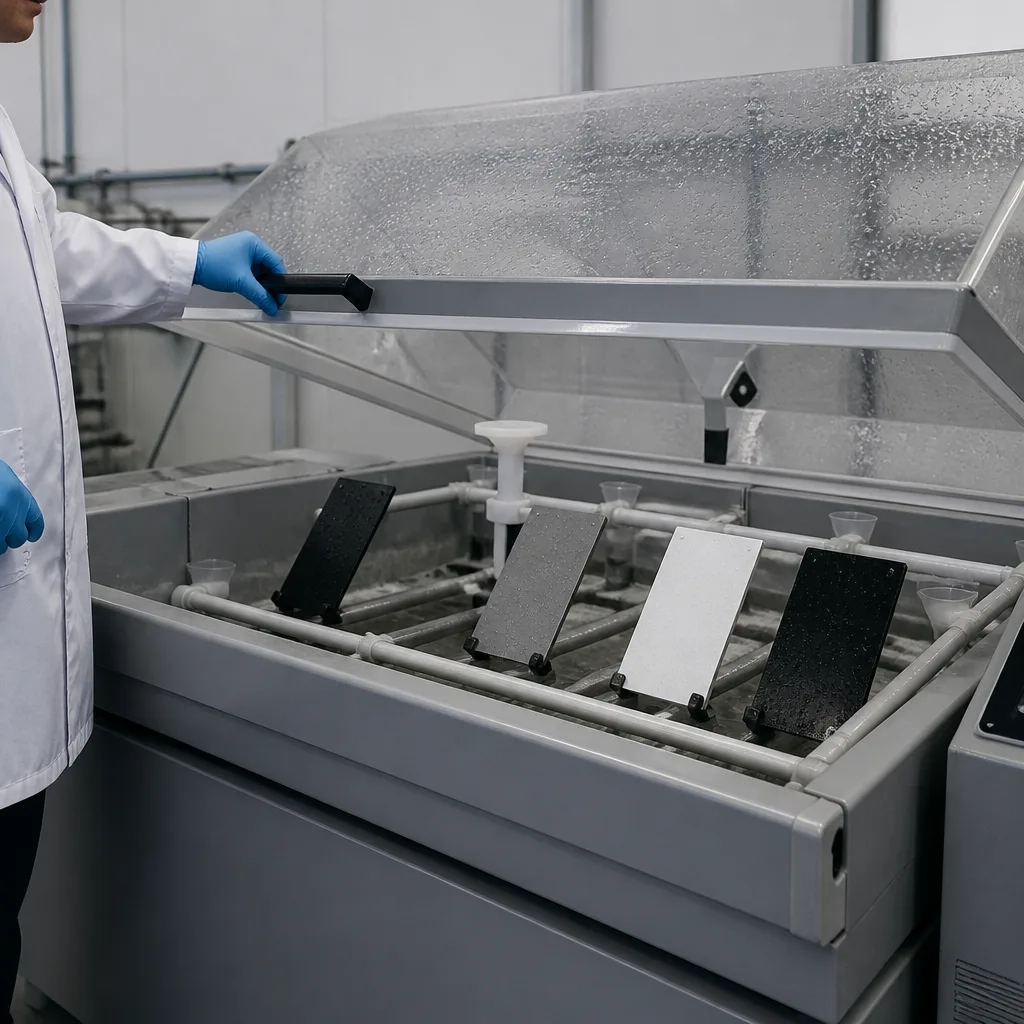
This standard is based on the well-established standard “ASTM B117 Standard Practice for the Operation of Salt Spray (Mist) Appliances”, developed by the American Society for Testing and Materials (ASTM). This test uses a controlled salt mist environment to accelerate naturally occurring corrosion processes throughout the vehicle's lifespan.
This method generally follows these steps:
Following exposure, test samples are evaluated for the following aspects:
In many cases, ratings similar to those given in the ASTM D714 standard can be used to assess coating damage.
The Ford FLTM BI 103-01 standard is commonly applied in the automotive industry in the following areas:
This testing method helps verify that the coatings meet Ford's durability requirements before production approval.
This standard provides:
Since corrosion failures can take years to manifest in service, accelerated salt spray testing offers a practical way to predict long-term performance.
However, like ASTM B117-based tests, the Ford FLTM BI 103-01 standard is an accelerated laboratory method and does not perfectly replicate real-world vehicle environments. Factors such as UV exposure, cyclical wet-dry conditions, temperature fluctuations, and mechanical damage are not fully represented by continuous salt spray testing. Therefore, manufacturers often use this method in conjunction with cyclical corrosion and field exposure testing.
Ultimately, corrosion is one of the most costly durability problems in vehicles. Rust can weaken metal parts, degrade their appearance, reduce resale value, and lead to expensive warranty repairs. A standardized corrosion test allows Ford and its suppliers to identify weak coating systems before vehicles reach customers. This standard is considered important for the following reasons:
In this respect, the Ford FLTM BI 103-01 standard helps prevent rust before it becomes a field problem. In practical terms, the Ford FLTM BI 103-01 standard is important because it provides a repeatable, accelerated way to assess whether a painted automotive component will resist corrosion throughout its intended service life. This protects vehicle durability, appearance, customer satisfaction, and warranty costs.
In conclusion, the Ford FLTM BI 103-01 standard is a key corrosion performance standard used to evaluate painted automotive panels and parts. This method measures the resistance of paint systems to rust, blistering, loss of adhesion, and corrosion spread by exposing coated samples to a controlled salt spray environment. As a Ford-specific adaptation of the ASTM B117 standard, this standard plays a vital role in verifying coating durability and ensuring long-term vehicle corrosion protection.
For many years, our organization, with its competent and experienced staff, has been understanding the needs of its customers, providing the advanced testing services they require, and assisting them in the establishment, implementation, and improvement of management systems. Within this framework, we also provide testing services compliant with the Ford FLTM BI 103-01 standard.
To get an appointment, to get more detailed information or to request an evaluation, you can ask us to fill in our form and reach you.

