Fiat 9-03160 Pre-shaped Car Headliner - Corrosion Resistance
The “Fiat 9-03160 Preformed Automotive Headliners - Corrosion Resistance” standard, developed by Fiat Chrysler Automobiles (FCA) (now Stellantis), an Italian-American automotive company, is an internal material testing specification used to verify automotive interior components. This standard is part of a series of standardized testing methods used specifically to evaluate the performance and durability of materials and parts used in vehicle interiors. These specifications ensure that components meet quality, safety, and longevity requirements before production approval.
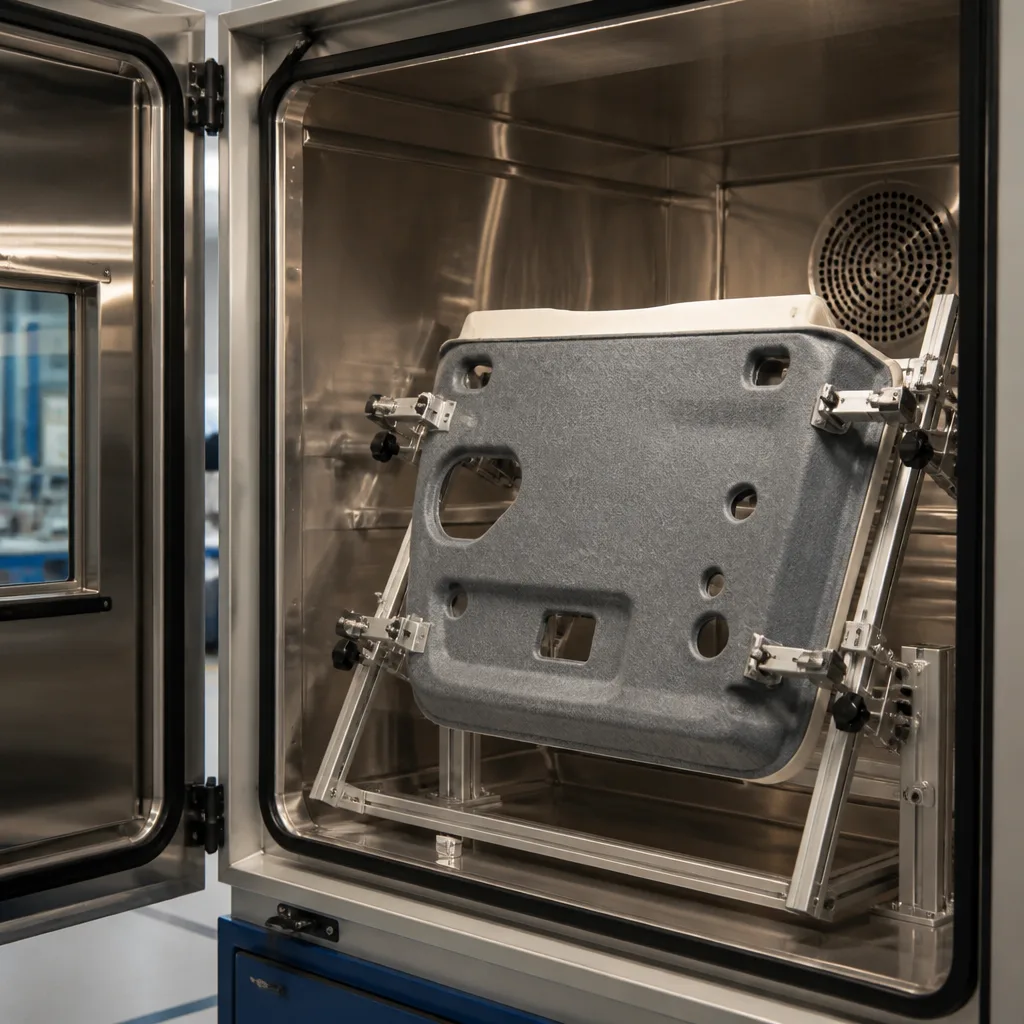
This standard relates to door panels and rear side trim. It typically covers tests for the following features:
- Scratch and abrasion resistance
- Wear and tear resistance
- Surface durability
- Maintaining the appearance during use.
This is part of a broader set of Fiat norms used for the process of testing and obtaining approval from state or competent authorities for interior trim materials from suppliers and test laboratories, ensuring their compliance with relevant technical regulations and safety and environmental standards. This standard is typically used on vehicles and related platforms where robust interior materials are critical (e.g., caravans, commercial vehicles). These tests help ensure that parts can withstand daily wear and tear, cleaning, UV exposure, and mechanical stress.
In short, the Fiat 9-03160 standard is an internal engineering or materials specification used within the automotive manufacturing and supplier qualification system. This standard was generally created for the following purposes:
- To define material performance requirements.
- Standardizing testing procedures
- Ensuring supplier consistency.
- Improving durability and safety.
- Controlling production quality among global suppliers.
- To guarantee compatibility with Fiat production processes.
This standard helps ensure that each approved component performs consistently, regardless of supplier or manufacturing location, and applies to:
- Plastics
- elastomers
- Textiles
- Coatings
- Adhesives
- Metallic components
- Assembly verification procedures
Original equipment manufacturers (OEMs) rely heavily on such standards because general international standards alone are often insufficient for vehicle-specific requirements. The Fiat 9-03160 standard helps achieve the following:
- Consistent component quality: Suppliers must meet the same technical requirements, minimizing variation between parts.
- Vehicle durability: This standard defines resistance to the following:
- Heat
- Vibration
- Gender
- chemicals
- Exposure to UV rays
- Corrosion
- Mechanical fatigue
- Production reliability: In high-volume automotive assembly processes, production compliance is critical.
- Safety compliance: To enhance long-term reliability and passenger safety, internal specifications often exceed minimum legal requirements.
- Global supplier control: Fiat has historically worked with large international supplier networks. Internal standards ensure consistent quality levels worldwide.
The Fiat 9-03160 standard is commonly used by:
- Automotive suppliers
- Materials laboratories
- Quality engineers
- Verification engineers
- Original equipment manufacturers' purchasing departments
- Certification laboratories
Automotive headliners are exposed to heat, humidity, condensation, dust, and sometimes microbial contamination throughout the life of a vehicle. Due to these environmental conditions, resistance to decay is a critical performance requirement for automotive headliner materials.
Corrosion resistance refers to the ability of ceiling lining components and textile or foam materials to resist the following:
- Fungal formation
- Bacterial spoilage
- Mold formation
- Decay due to moisture.
- Long-term material degradation
A vehicle headliner is the interior trim layer fitted to the ceiling of a vehicle. It typically consists of:
- Decorative fabric surface
- Polyurethane foam backing
- Adhesive layers
- Fiberglass or composite substrate
- Insulation materials
Ceiling panels provide the following:
- Interior aesthetics
- Acoustic insulation
- Thermal insulation
- Vibration damping
- Passenger comfort
Resistance to decay is important for the following reasons:
- High humidity exposure: Vehicle roofs are frequently exposed to condensation, temperature fluctuations, trapped moisture, and water leaks. Without adequate resistance, organic materials can degrade over time.
- Preventing mold and mildew growth: Fungi and mold can develop in foam layers, textile fibers, adhesives, and insulation materials. This can lead to unpleasant odors, staining, health problems, and customer complaints.
- Long-term interior durability: Automotive manufacturers expect interior materials to withstand 10-15 years of service life, high summer temperatures, winter condensation, and changing climates. Decay-resistant materials maintain structural integrity, the vehicle's appearance, and adhesion performance.
- Passenger health and cabin air quality: Microbial growth in the cabin can negatively impact air quality, allergies, and passenger comfort. Modern original equipment manufacturer specifications increasingly include antifungal testing, volatile organic compound requirements, and microbial resistance assessment.
The ceiling tiles most susceptible to decay and the potential problems are as follows:
- Natural fibers: Moisture absorption.
- Cotton backing: Mold growth
- Polyurethane foam: Hydrolysis degradation
- Organic adhesives: Microbial attack
- Cellulose materials: Fungal decay
Synthetic materials generally offer better resistance than natural fibers.
Typical assessments include the following:
- Fungal resistance test: Materials are exposed to controlled amounts of fungal spores under hot and humid conditions.
- Moist heat aging: Samples are subjected to cycles of high humidity, high temperature, and prolonged exposure.
- Odor assessment: After aging, materials are checked for musty odor, chemical degradation, and volatile emissions.
- Adhesion: The strength of adhesion between fabric and foam is measured after exposure to moisture.
Manufacturers ensure resistance to decay in the following ways:
- Use of synthetic fibers: Polyester and polypropylene are commonly used because they absorb less moisture.
- Antimicrobial treatments: Special additives inhibit the growth of fungi and bacteria.
- Improved adhesives: Modern adhesives are resistant to hydrolysis, moisture, and thermal aging.
- Closed-cell foams: These reduce moisture absorption compared to open-cell structures.
- Moisture control design: Ceiling drainage and sealing systems help prevent water ingress.
Consequently, corrosion resistance is a critical property for automotive headliners, as vehicle interiors are constantly exposed to moisture, heat, and environmental stress. Properly designed headliner materials resist mold growth, maintain appearance, preserve structural integrity, and help ensure long-term cabin comfort and durability.
For many years, our organization, with its competent and experienced staff, has been understanding the needs of its customers, providing the advanced testing services they require, and assisting them in the establishment, implementation, and improvement of management systems. Within this framework, we also provide testing services in accordance with the Fiat 9-03160 standard.



