

The “Volvo STD 420-0003 Fogging - Organic Substances” standard, developed by Volvo, describes a test method for determining the fogging properties of materials used in the interiors of motor vehicles. This method can also be applied to the liquid, paste, powder, or solid raw materials that form the basis of such materials or from which the materials are manufactured. The method can also be applied to other materials and finished products. The procedure can be applied to the measurement of fogging condensation on glass surfaces within the limits of the test conditions.
This test will not, or cannot, accurately measure reflectometer readings in the following situations:
In such cases, the gravimetric method is preferred.
In principle, a test piece is heated in a glass beaker. Volatile components are then condensed onto a cooled glass plate or a cooled aluminum foil disc.
Component tests should be performed no earlier than one week and no later than four weeks after the date of manufacture. Storage conditions for the components from the date of manufacture to the date of testing must be the same as those for which the components were supplied for production (same temperature, humidity, packaging, etc.). Test pieces extracted from the components must be manufactured on the day the testing procedure begins. For finished products, circular test pieces with a diameter of 80 mm plus/minus 1 mm are cut from the sample. The thickness of the test pieces can be up to 10 mm. Thicker materials are machined to 10 mm on the underside (the underside is the side away from the visible side on the vehicle). If other test piece dimensions are required, these may be as specified in the product specification. When preparing test pieces from materials that cannot be made into circular test pieces, the material is cut into 80 mm long pieces with the appropriate profile. At least two test pieces must be tested.
In the automotive manufacturing world, ensuring the quality and safety of vehicle interiors is paramount. A critical issue often overlooked by consumers is fogging, caused by volatile organic compounds (VOCs) from interior materials such as plastics, fabrics, and adhesives evaporating and condensing on glass surfaces like windshields. This not only impairs visibility but also contributes to poor interior air quality for passengers. To combat this, Volvo has developed rigorous testing standards, including the Volvo STD 420-0003 standard, a comprehensive methodology for evaluating the fogging properties of materials used in motor vehicle interiors. This standard replaces previous protocols such as the Volvo STD 1027-2711 standard and the Renault D45 1727 standard. It includes a standardized test procedure to measure how much residue materials leave on glass and helps suppliers and manufacturers select low-emission components that meet Volvo's stringent environmental and safety requirements.
Condensation occurs when the heat inside a parked or idling vehicle causes volatile organic compounds (VOCs) from interior upholstery, seats, or dashboard materials to evaporate. These vapors then settle, forming a hazy film on cooler glass surfaces, reducing transparency and potentially compromising driver safety. In addition to visibility issues, chronic exposure to these emissions can affect air quality, leading to health problems such as headaches or respiratory irritation.
Volvo and similar car manufacturers are prioritizing defogging tests to comply with global regulations, such as the European Union's regulations on VOC emissions, and to maintain their commitment to sustainable, passenger-friendly designs. The Volvo STD 420-0003 standard enables materials to undergo a controlled simulation of real-world conditions, fostering innovation in alternatives containing low volatile organic compounds, such as bio-based plastics and low-emission adhesives.
In summary, the Volvo STD 420-0003 standard specifies a test method aimed at determining the fogging properties of materials used in the interiors of motor vehicles. This method applies to both raw materials and finished components, and it is recommended that testing be carried out between one and four weeks after production to capture realistic emission profiles.
The test is multifaceted and incorporates two main variables: fogging F, which focuses on the overall fogging potential using reflection measurements; and fogging G, which emphasizes gravimetric analysis for precise weight-based residual measurement. These methods are compliant with industry standards such as ISO 17072 for passenger car interiors, but have been adapted to the Volvo ecosystem, including trucks and buses under the Volvo Group umbrella.
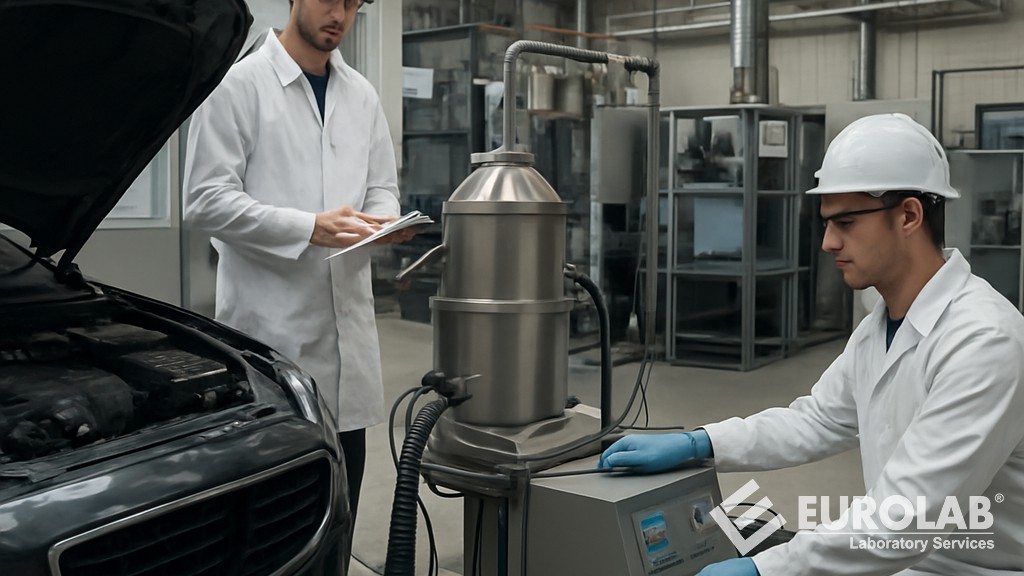
These tests simulate thermal evaporation in a controlled chamber. The principle involves heating a material sample to accelerate VOC release, and then collecting and measuring the condensed residue on a cooled glass plate. Differences in reflection (how much light is reflected from the residue-coated glass) or weight provide measurable data, and the results are expressed as a percentage or milligrams per square meter of evaporation.
The setup mimics a vehicle's microclimate: high temperatures (typically 100 degrees for 3 hours) represent summer heat, while the glass plate is cooled to approximately 20-25 degrees to encourage condensation. This difference triggers the fogging effect, allowing engineers to predict long-term performance.
The Volvo STD 420-003 standard mandates materials with low-fogging properties, reducing VOC emissions and aligning with Volvo's carbon neutrality goals by 2040.
For many years, our organization, with its competent and experienced staff, has been understanding the needs of its customers, providing the advanced testing services they require, and assisting in the establishment, implementation, and improvement of management systems. Within this framework, we also provide testing services to businesses in accordance with the "Volvo STD 420-0003 Condensation - Organic Matter" standard.
To get an appointment, to get more detailed information or to request an evaluation, you can ask us to fill in our form and reach you.

