

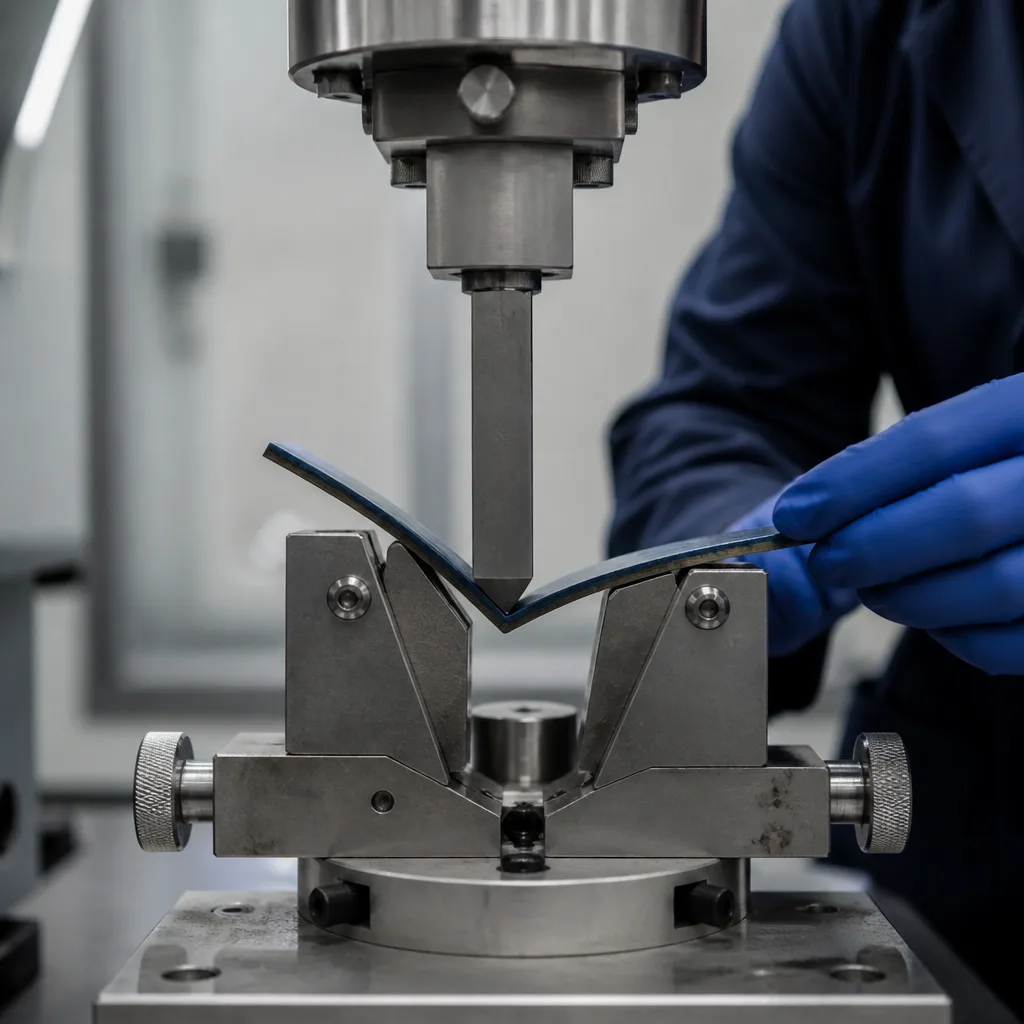
The “Ford FLTM BI 009-05 Bending Test for Coating Adhesion” standard, developed by Ford Motor Company (Ford), describes a test method used to evaluate the ability of a coating system to remain firmly adhered to a substrate when subjected to bending deformation. This standard is primarily applied to painted or coated automotive components and metal panels to assess coating flexibility and adhesion under mechanical stress.
Automotive coatings undergo numerous forming and bending processes during production, including the following:
A coating that adheres well to a flat surface may crack, peel, or separate into layers when the substrate is bent. The Ford FLTM BI 009-05 standard was developed to determine whether a coating system can withstand this type of deformation without loss of adhesion.
In principle, this test involves bending a coated sample along a specific angle or radius and then examining the coating for the following characteristics:
The severity of coating damage is visually assessed and compared to the acceptance criteria defined in Ford material specifications.
In general, the testing process follows these steps:
The materials generally evaluated with this test are as follows:
This testing method is particularly useful for materials that undergo shaping processes in vehicle manufacturing.
Bending tests can reveal various coating weaknesses. The identified failure modes are as follows:
These defects may indicate insufficient coating flexibility, inadequate surface preparation, or inadequate adhesion between the coating layers and the substrate.
Ford uses the bending-adhesion test to evaluate the quality of the following products:
This method helps ensure that coatings maintain their performance throughout the manufacturing and vehicle lifespan.
The Ford FLTM BI 009-05 standard is typically used in conjunction with the following other Ford coating evaluation methods:
These tests, together, evaluate coating performance under varying mechanical and environmental stresses.
The Ford FLTM BI 009-05 standard is required because automotive coatings must maintain their adhesion and integrity as metal parts are bent, shaped, assembled, and used throughout the life of a vehicle. A coating that performs well on a flat panel may fail when subjected to deformation, leading to cosmetic and durability issues. This standard is considered important for the following reasons:
These processes apply significant stress to the coating. This standard evaluates whether the coating can withstand these stresses without cracking or peeling.
Identifying these issues during material qualification prevents costly production and field failures.
The bending test ensures that protective coatings remain intact after deformation.
This is particularly important for modern high-strength steels and aluminum components, which may be subjected to significant forming stresses.
This ensures that all materials meet the same performance expectations.
A coating that passes the bending test is more likely to maintain its adhesion and appearance for the entire service life of the vehicle.
In short, this standard helps reduce costs and improve vehicle quality by identifying weak coating systems before production.
In summary, the Ford FLTM BI 009-05 standard is a specialized coating performance test used to evaluate adhesion retention during bending. By simulating deformation that occurs during manufacturing and service, this standard helps ensure that automotive coatings remain robust, durable, and protective throughout the vehicle's lifespan. Its role in coating qualification forms a key component of Ford's overall paint and corrosion prevention testing program.
For many years, our organization, with its competent and experienced staff, has been understanding the needs of its customers, providing the advanced testing services they require, and assisting them in the establishment, implementation, and improvement of management systems. Within this framework, we also provide testing services compliant with the Ford FLTM BI 009-05 standard.
To get an appointment, to get more detailed information or to request an evaluation, you can ask us to fill in our form and reach you.

