

The “GMW 14126 Cold Crack Resistance of Folded Materials” standard, developed by General Motors Worldwide (GMW), includes a test procedure used to evaluate the resistance of flexible automotive materials to cracking when folded or bent at low temperatures.
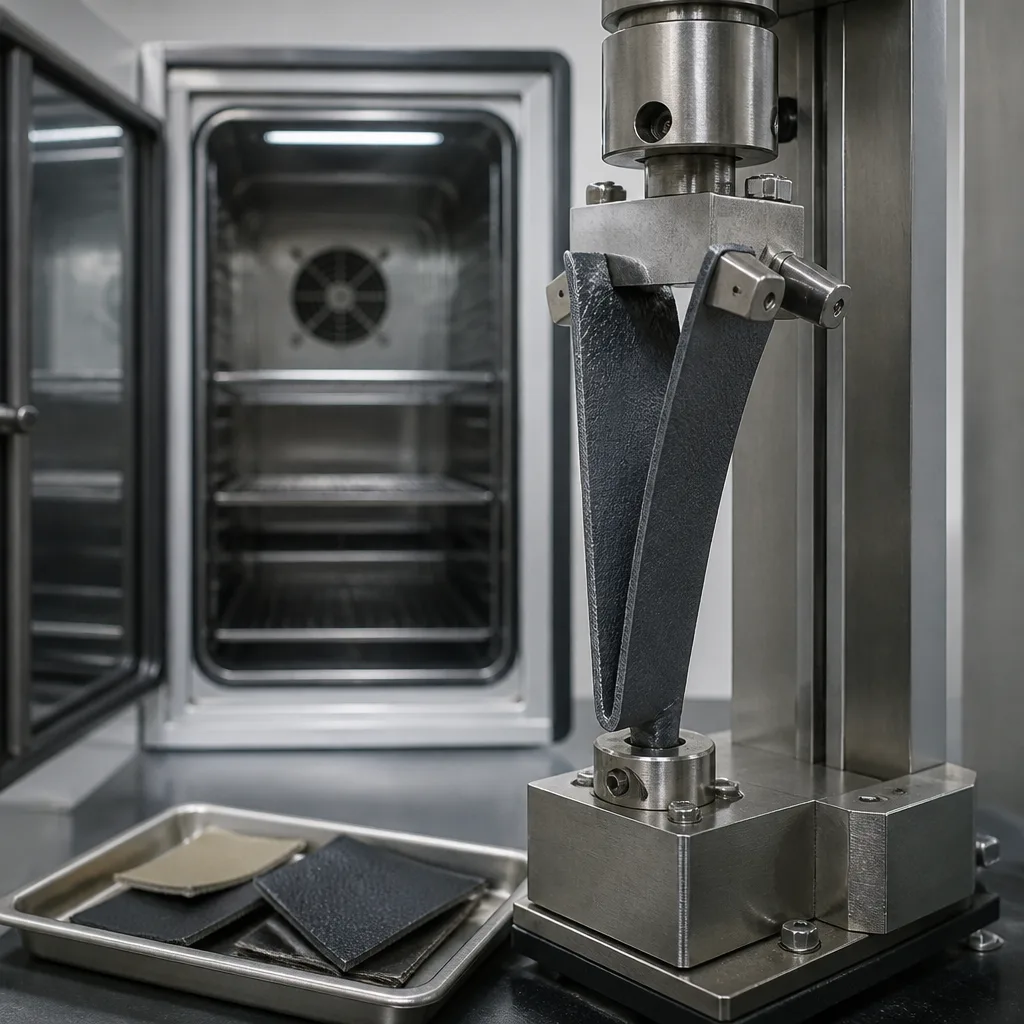
This standard applies specifically to automotive interior trim materials, including plastic films, plastic roll materials, coated textiles, leather, and similar flexible materials.
Automotive interior trim materials can become significantly less flexible at low temperatures. A material that performs well at room temperature may become brittle when exposed to winter conditions. When a cold material is folded, bent, stretched, or otherwise deformed, the following can occur on the surface or coating:
The GMW 14126 standard provides a standardized method for evaluating this low-temperature crack resistance. Therefore, the primary aim is to determine whether a flexible material can withstand low-temperature folding without unacceptable cracking.
This procedure is designed for flexible materials used in automotive interior applications. Examples include:
Test laboratories use the GMW 14126 standard, especially for leather, leather fiber boards, coated textiles, and plastic roll materials. This makes the standard particularly important for materials used in components such as:
The basic principle of the described test is relatively simple. A sample of the material is subjected to processing at a specified low temperature, then folded or otherwise deformed according to the procedure. The material is then examined for signs of cracking or other damage. This method essentially answers the question: can the material remain intact when folded while cold?
The precise dimensions of the sample, processing temperature, folding configuration, exposure time, and evaluation criteria should be taken from the relevant controlled edition of the GMW 14126 standard, rather than from general definitions. This distinction is important because when the GMW 14126 standard is required in General Motors material specifications, the test procedure itself is the contractual reference.
Vehicle interiors are subjected to large temperature variations throughout their lifespan. Interior components can be exposed to very cold conditions, especially in winter climates. At low temperatures, polymers and coatings can lose their flexibility. For example, a material that is sufficiently flexible at 23 degrees Celsius may become much more brittle at significantly lower temperatures. This can lead to problems in the following situations:
A surface that has cracked in the cold can later develop into a larger cosmetic or functional defect.
The GMW 14126 standard primarily evaluates the physical integrity of a material after low-temperature folding. Depending on the material, the evaluation may identify defects such as:
Acceptance requirements are typically determined not only by the GMW 14126 standard but also by the relevant General Motors material or component specification.
The GMW 14126 standard is particularly important because interior materials are highly visible to vehicle occupants. A material can develop an unacceptable cosmetic defect while remaining mechanically functional. For example, a vinyl-coated component may not completely break, but visible cracks in the surface coating could lead to rejection. Consequently, cold crack testing addresses two issues: functional durability and appearance quality. This is one reason why the GMW 14126 standard is used for materials such as leather, coated textiles, and plastic roll products in automotive interiors.
There is a significant difference between the GMW 14126 and GMW 14127 standards. Both standards address low-temperature damage, but they evaluate different forms of mechanical stress. The GMW 14126 standard focuses on cracking associated with folding, while the GMW 14127 standard addresses cracking caused by impact at low temperatures. Laboratories list the two standards separately for automotive material testing. This distinction is important when choosing a test method. A material might potentially perform well in a folding test but react differently to a sudden impact.
Several material properties can affect cold cracking performance:
The GMW 14126 standard is useful not only for final quality control but also during material selection and development. For example, a supplier can compare various formulations to determine which formulation provides the best balance:
A formulation that passes mechanical tests at room temperature but fails cold cracking tests may require modification before being deemed suitable for automotive applications.
The GMW 14126 standard is important because it helps ensure that flexible automotive interior materials do not suffer visible or structural damage when exposed to cold temperatures. Its main benefits include:
Consequently, low temperatures can significantly alter the behavior of polymers and coatings. A material that appears durable under normal laboratory conditions may become brittle and crack when folded in a cold environment. The GMW 14126 standard provides a standardized method for determining this sensitivity before the material is used in production.
For many years, our organization, with its competent and experienced staff, has been understanding the needs of its clients, providing the advanced testing services they require, and assisting them in the establishment, implementation, and improvement of management systems. Within this framework, we also provide testing services in accordance with the GMW 14126 standard.
To get an appointment, to get more detailed information or to request an evaluation, you can ask us to fill in our form and reach you.

