

The Ford FLTM BN 105 standard, developed by Ford Motor Company (Ford), defines test methods used to evaluate the dimensional stability, shrinkage behavior, and color-related properties of automotive textile and upholstery materials. This standard series primarily applies to fabrics, synthetic leathers, and interior trim materials used in vehicle seats, door panels, headliners, and other interior components.
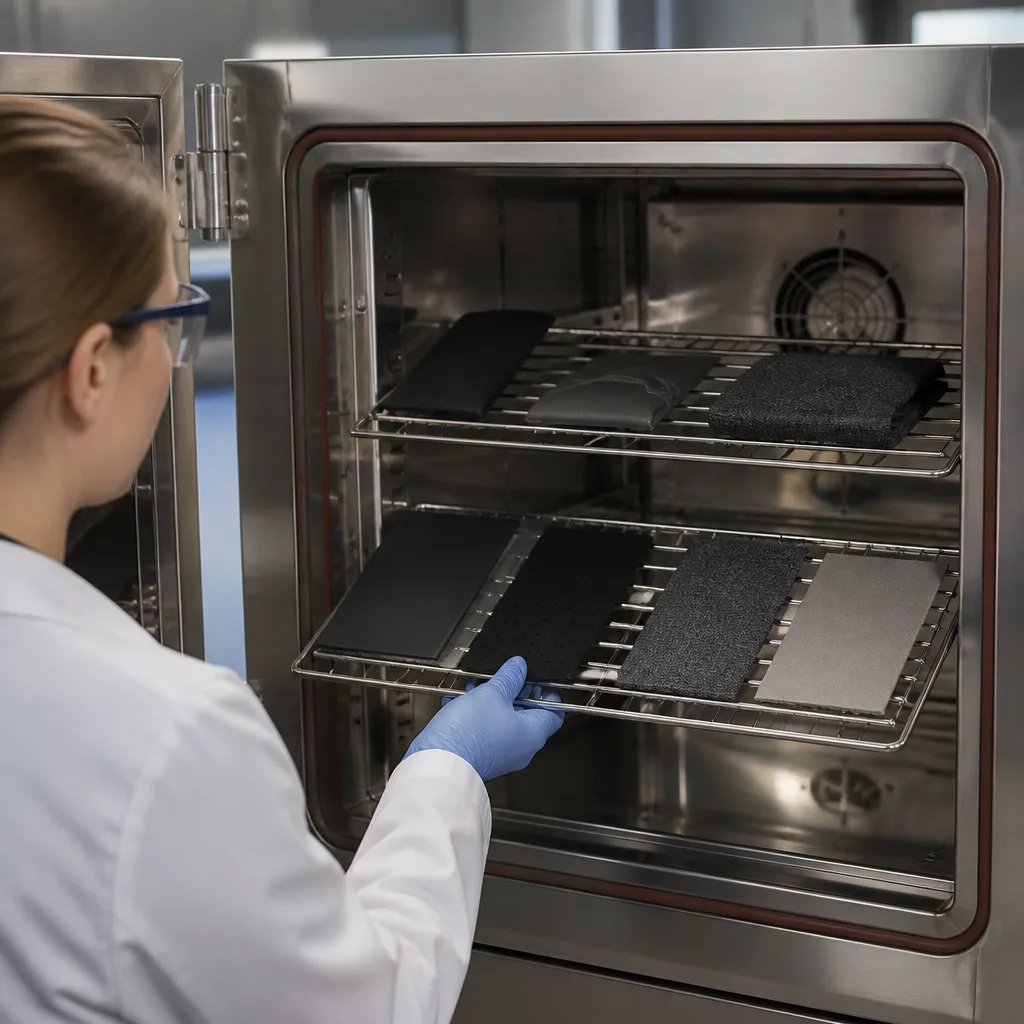
The Ford FLTM BN 105 standard series helps ensure that materials maintain their original dimensions, appearance, and performance after being exposed to manufacturing processes and service conditions such as heat, humidity, and aging. Automotive interior materials must maintain proper fit and appearance throughout the life of the vehicle, therefore dimensional stability testing is a critical quality requirement.
The Ford FLTM BN 105 standard family includes the following sub-sections:
This standard serves as a fundamental material identification and quality control test. By measuring weight-related properties, engineers can verify that a supplied material conforms to design specifications and will deliver the expected performance in terms of durability, appearance, comfort, and manufacturing consistency.
The purpose of this standard is:
Weight per unit area is one of the most important physical properties of automotive textiles because it affects many performance characteristics such as strength, thickness, abrasion resistance, and ease of use during assembly.
This standard generally applies to the following:
Woven fabrics
The method essentially follows these steps:
Results are typically reported as follows:
These measurements provide a quantitative description of the material structure and composition.
Accurate material characterization helps engineers optimize cutting, stitching, lamination, and assembly processes.
Weight-related characterization is important for:
In short, the benefits of the Ford FLTM BN 105 standard are as follows:
The primary objectives of this standard are:
This standard generally applies to the following materials:
During testing, a sample of known dimensions is conditioned and measured prior to the test. The sample is then exposed to specified temperature conditions for a defined period. After cooling and stabilization, the sample is measured again, and the percentage change in size is calculated. Results are typically reported as the percentage change in size in the direction of the machine and perpendicular to the machine.
This test provides information on the following topics:
Automotive interiors are routinely exposed to high temperatures, especially when vehicles are parked in direct sunlight. Interior surface temperatures can be significantly higher than ambient conditions. Materials that exhibit excessive shrinkage can cause the following:
The primary purpose of this standard is to determine whether textile-based interior upholstery materials do the following:
Dimensional instability in automotive upholstery can lead to visible defects, poor fit, and customer dissatisfaction, therefore this testing is crucial for quality assurance.
This test is typically applied to the following materials:
These materials are commonly used in automotive cabin applications where precise fit is critical.
This method measures how much a material changes in size after being exposed to controlled environmental conditions. This standard helps to evaluate the following:
Without sufficient dimensional stability, materials can cause the following:
In conclusion, the Ford FLTM BN 105 standard is a significant material qualification standard focusing on the dimensional stability and shrinkage performance of automotive textiles and synthetic leathers. This series of standards ensures that interior materials maintain their dimensions, appearance, and fit under real-world environmental conditions. These assessments directly contribute to vehicle quality, durability, and customer satisfaction. This series of standards is important because it defines how automotive interior textiles and upholstery materials are physically characterized in a consistent and controlled manner.
For many years, our organization, with its competent and experienced team, has been understanding the needs of its customers, providing the advanced testing services they require, and assisting them in the establishment, implementation, and improvement of management systems. Within this framework, we also provide testing services compliant with the Ford FLTM BN 105 standard.
To get an appointment, to get more detailed information or to request an evaluation, you can ask us to fill in our form and reach you.

