

The “Fiat LP-7M052 Determination of Staining of Plastics by Automotive Fluids” standard, developed by Fiat Chrysler Automobiles (FCA) (now Stellantis), an Italian-American automotive company, describes a procedure used to evaluate the chemical and liquid resistance of automotive components, focusing on plastic parts that are colored during molding.
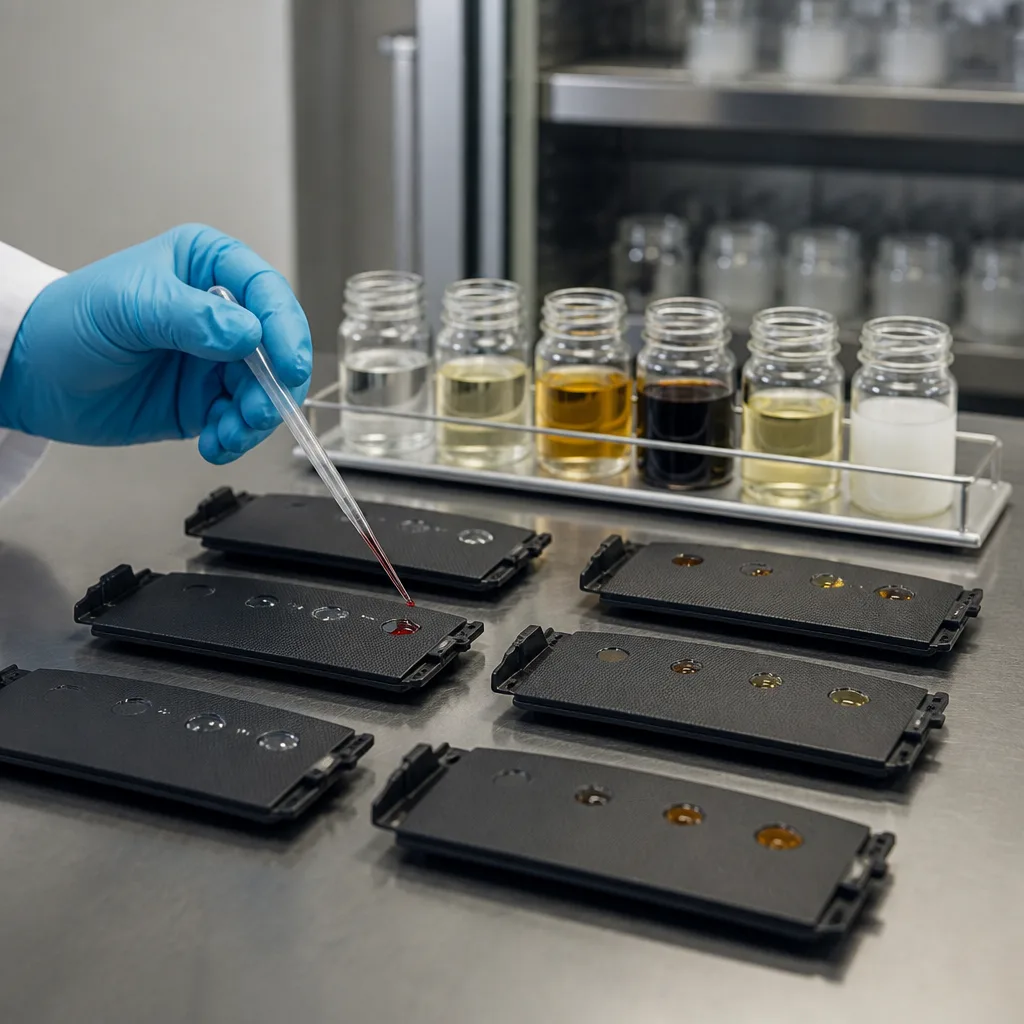
Components colored during molding are plastic parts (e.g., interior trim, exterior panels, grilles, or decorative elements) that are colored during the molding process rather than being painted afterwards. These parts must withstand exposure to a variety of automotive fluids without degradation in appearance, color, or structural integrity.
The test method described in the Fiat LP-7M052 standard evaluates how well materials resist damage from common fluids they might encounter during real-world vehicle use or maintenance. This standard is frequently referenced in broader performance specifications such as “Fiat PF-90062 Front panel and grille assembly performance”.
The main test categories are:
This standard typically covers exposure to a variety of automotive and household chemicals, including:
After exposure, the parts are evaluated for the following changes:
The Fiat LP-7M052 standard belongs to a series of standard test methods covering a wide range of material properties. It is often used in conjunction with other standards such as:
With the rise of unpainted plastic components in modern vehicle production, particularly due to cost, weight, and sustainability considerations, standards like the Fiat LP-7M052 help ensure durability and customer satisfaction. A component that fails this test may exhibit visible staining, swelling, cracking, or fading. These issues are unacceptable on visible parts of a vehicle.
This internal specification continues to influence test protocols across Stellantis brands and is recognized by testing organizations worldwide.
In short, the Fiat LP-7M052 standard focuses on identifying the staining and discoloration effects caused by automotive fluids on plastic materials used in vehicle interior and exterior trim components.
This specification is frequently referenced during the verification of polymers, coated plastics, interior trim surfaces, and decorative components that may come into contact with the following types of liquids:
Modern vehicles contain numerous visible plastic parts, including the following:
These materials must maintain their appearance throughout the vehicle's lifespan. Automotive fluids can cause permanent staining, discoloration, softening, or chemical corrosion in polymers. The Fiat LP-7M052 standard specifies a controlled method for assessing this risk before materials are approved for production. This standard helps manufacturers determine:
The method described in the Fiat LP-7M052 standard generally applies to the following:
The test involves exposing samples to automotive fluids under defined temperature and time conditions, followed by visual and instrumental evaluation.
The testing method generally follows these steps:
Manufacturers often use color measurement systems, such as Delta E ratings, to measure color distortion.
The Fiat LP-7M052 standard is important because cosmetic durability greatly affects the customer's perception of vehicle quality. Even minor blemishes on visible interior parts can lead to:
This standard supports the following:
This standard is particularly important for vehicles operating in challenging climates where high temperatures accelerate chemical interactions between liquids and plastics.
The Fiat LP-7M052 standard is part of a broader family of FCA material performance specifications used in conjunction with the following standards:
Many automotive manufacturers maintain similar internal specifications, as cosmetic and chemical resistance requirements vary depending on vehicle architecture, regional regulations, and brand quality expectations.
This standard applies to companies operating in the following areas:
In conclusion, the Fiat LP-7M052 standard is a specific FCA automotive material specification focused on evaluating the stain resistance of plastics exposed to automotive fluids. This standard plays a vital role in maintaining the interior and exterior appearance quality of automotive polymer components, ensuring chemical compatibility, and supporting long-term durability. By verifying resistance to color fading and surface degradation, this specification enables manufacturers to maintain the visual quality of vehicles throughout their lifespan.
For many years, our organization, with its competent and experienced staff, has been understanding the needs of its customers, providing the advanced testing services they require, and assisting them in the establishment, implementation, and improvement of management systems. Within this framework, we also provide testing services in accordance with the Fiat LP-7M052 standard.
To get an appointment, to get more detailed information or to request an evaluation, you can ask us to fill in our form and reach you.

