

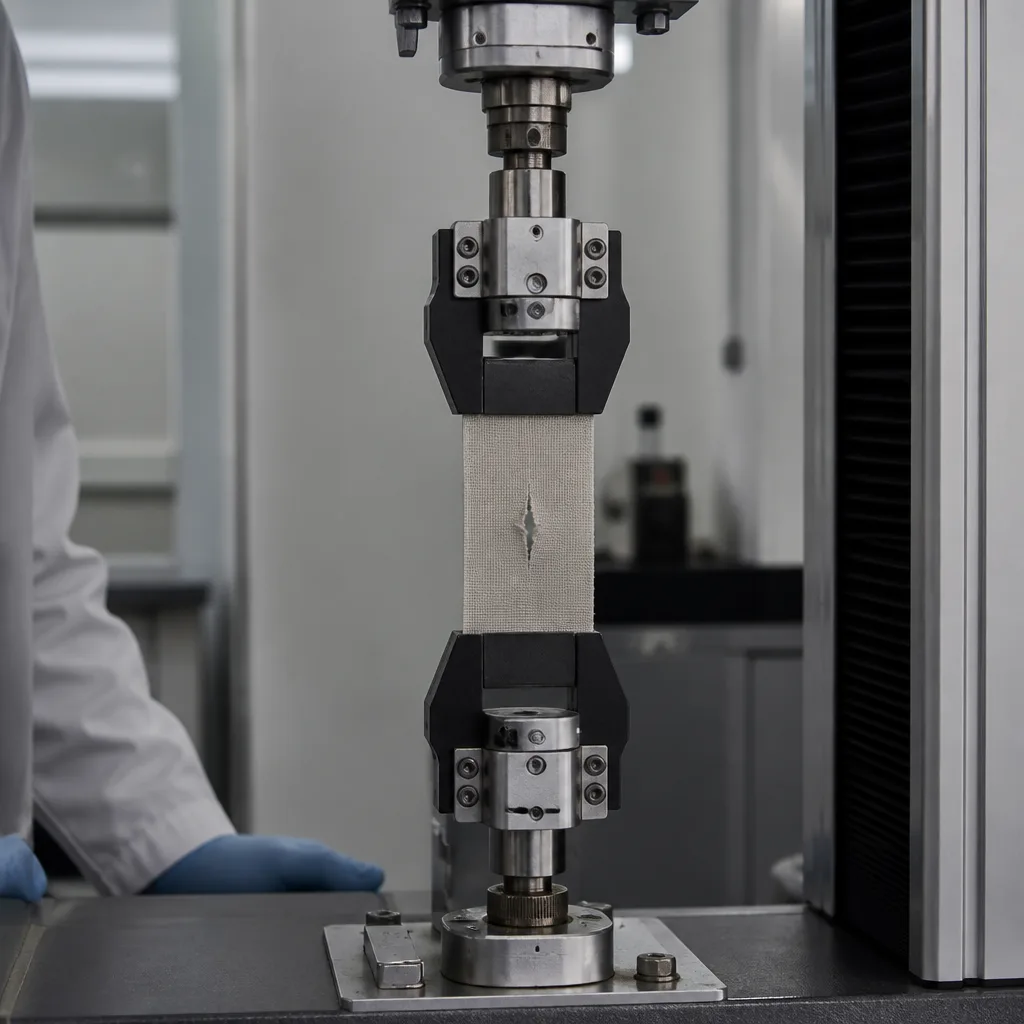
Developed by General Motors Europe (GME), the “GME 60334 Determination of tear strength of textiles and coated fabrics (single tear method)” standard is a test standard used to determine the tear strength (tear resistance) of textile materials and coated fabrics used in automotive applications. This standard defines the single tear method, in which a controlled tear is initiated in a test specimen and the force required to sustain the tear is measured. This standard is primarily applied to automotive interior trim materials such as:
The GME 60334 standard is part of the GME 603xx family of interior material testing methods standards, which covers the mechanical and physical properties of automotive upholstery materials.
The primary purpose of the GME 60334 standard is to evaluate whether an automotive interior material can withstand tear forces during vehicle use. During vehicle use, interior materials may be subjected to:
A material may possess sufficient tensile strength but still easily fracture when a small cut or defect occurs. Tear strength testing evaluates the material's ability to resist the propagation of such damage.
The GME 60334 standard uses a single tear test principle. The general procedure is as follows:
The result is typically reported as tear strength, expressed in units depending on the reporting method. This test evaluates the material's resistance to the growth of an existing tear.
The GME 60334 standard applies to many flexible automotive materials, including:
This method is especially effective for the following materials:
Key parameters derived from the GME 60334 standard include:
The GME 60334 standard is, in principle, comparable to the following international tear resistance methods:
For leather and synthetic leather materials, the ISO 3377-1 standard is generally used as a reference method. Some laboratories list the GME 60334 standard alongside ISO 3377-1 due to the similarity of the single-edge tear approach.
The GME 60334 standard is considered important for the following reasons:
This standard helps manufacturers select materials with sufficient mechanical strength.
Tests help prevent these problems.
Typical applications of the GME 60334 standard in the automotive industry include:
A common misconception is that high tensile strength automatically means high tear resistance. However, tensile strength measures resistance to uniform pulling, while tear resistance measures resistance to crack or cut growth. A material may have high tensile strength but low tear resistance if its structure allows damage to propagate easily. The GME 60334 standard specifically evaluates this tear propagation behavior.
In summary, the GME 60334 standard is an automotive material testing standard used to determine the tear strength of textiles and coated fabrics using a single tear method. This standard plays a significant role in evaluating the durability of seat fabrics, synthetic leather, and other flexible interior upholstery materials. By measuring resistance to tear propagation, it helps automotive manufacturers provide high-quality, durable, and reliable interior components.
For many years, our organization, with its competent and experienced staff, has been understanding the needs of its clients, providing the advanced testing services they require, and assisting them in the establishment, implementation, and improvement of management systems. Within this framework, we also provide testing services compliant with the GME 60334 standard.
To get an appointment, to get more detailed information or to request an evaluation, you can ask us to fill in our form and reach you.

