

The standard “VW TL 211 Coating of plastic exterior parts - Requirements” developed by the Volkswagen automobile company describes the requirements for polymer coatings (e.g. paint, metallized coatings with protective coatings, film applications, coextrusion) of vehicle exterior parts made of plastic, such as bumpers, wheel covers, rear spoilers, trunk lids and fenders.
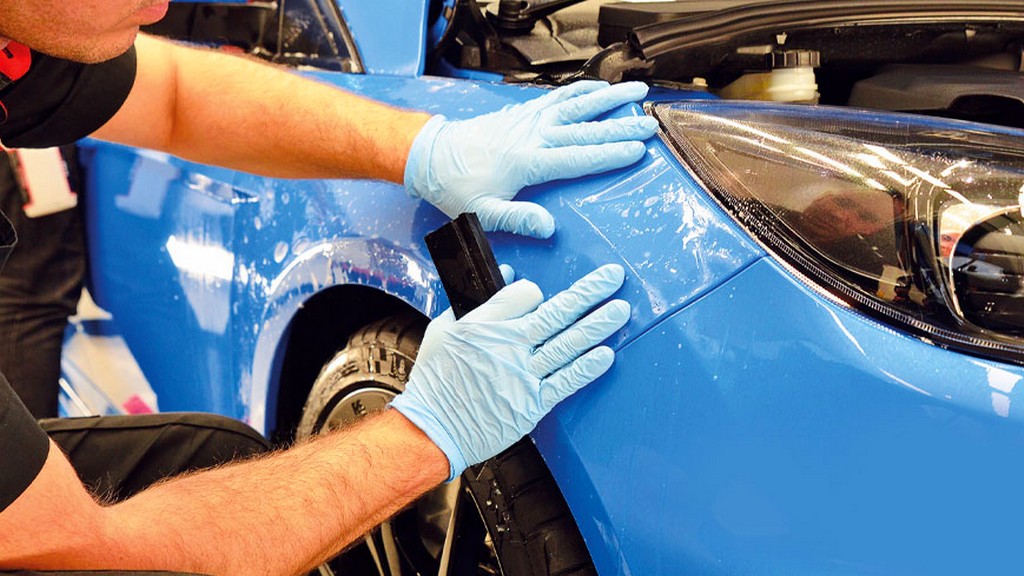
If the requirements given in the standard do not apply completely or at all to certain components or component parts, this should be agreed with the relevant departments and recorded on the part drawing.
This technical procurement standard covers the following requirements:
The parts must have a uniform appearance on all surfaces. They must comply with the drawing requirements and the published sample in terms of brightness and color. Pores, cracks, paint runs, inclusions, bright spots, voids, bubbles, flow lines, film wrinkles and other defects that adversely affect the intended appearance are not allowed. Evaluation is carried out according to the table given in the standard.
Outdoor abrasion must comply with VW 50185. The supplier must eliminate the cause of any complaints revealed during this test and improve the coating system.
The coating process must be coordinated between the coating company, the coating material manufacturer and the uncoated component manufacturer. Responsibility is divided as follows:
All substrates and uncoated components must be able to be coated with a reliable process.
The requirements specified in the table given in the standard must be met on the entire component. If individual tests are not possible due to the geometry of the component, these can be carried out on test panels instead. Whenever possible, the tests should be carried out on the component. Therefore, for example, for stone impact tests according to DIN EN ISO 20567-1 and steam jet tests according to DIN EN ISO 16925, smaller surfaces or shorter cuts than specified in the relevant standards may be accepted for testing. This applies to components such as headlight washer systems and covers for towing eyes. When test panels are used, these test panels must be identical to the components in terms of materials and manufacturing process. The test report must state which tests the test panels were used for. For sample examination, a sufficient number of test panels must be included in the delivery for cross-checking.
For technological tests, components or test panels must be at least one week old. Alternatively, they must be stored at 60 degrees for 24 hours and then conditioned for 50554 hours at room temperature according to standard VW 2-2. Components delivered for testing must be stored, conditioning is carried out by the test facility.
If more than one test result is available, the most critical individual value should be taken as the basis for evaluation (absolute value). To ensure that the specifications are met, compliance with this standard must be monitored.
The top coat layer (topmost coating layer) should be at least 20 µm. For smaller thicknesses, after consultation with the appropriate materials engineering department, it may be necessary to perform more extensive, application-specific tests (e.g., abrasion or burst tests) and specify the corresponding requirement in the performance specification.
To ensure the quality confirmed by testing, also for parts in continuous series production, the supplier must perform the relevant tests on coated components and document the results.
Among the numerous tests, measurements, analyses and evaluation studies carried out for businesses in various sectors, our organization also provides testing services defined in the “VW TL 211 Coating of plastic external parts - Requirements” standard with its trained and expert staff and advanced technological equipment.
To get an appointment, to get more detailed information or to request an evaluation, you can ask us to fill in our form and reach you.

