

The "GMW 17442 Performance Requirements for Interior Graphics Applied to Parts" standard, published by General Motors (GM), describes the performance requirements for interior graphics applied to parts. This procedure includes pad printing and screen printing of inks or paints. Material approval is only required when color development (i.e., trim transfer) is necessary.
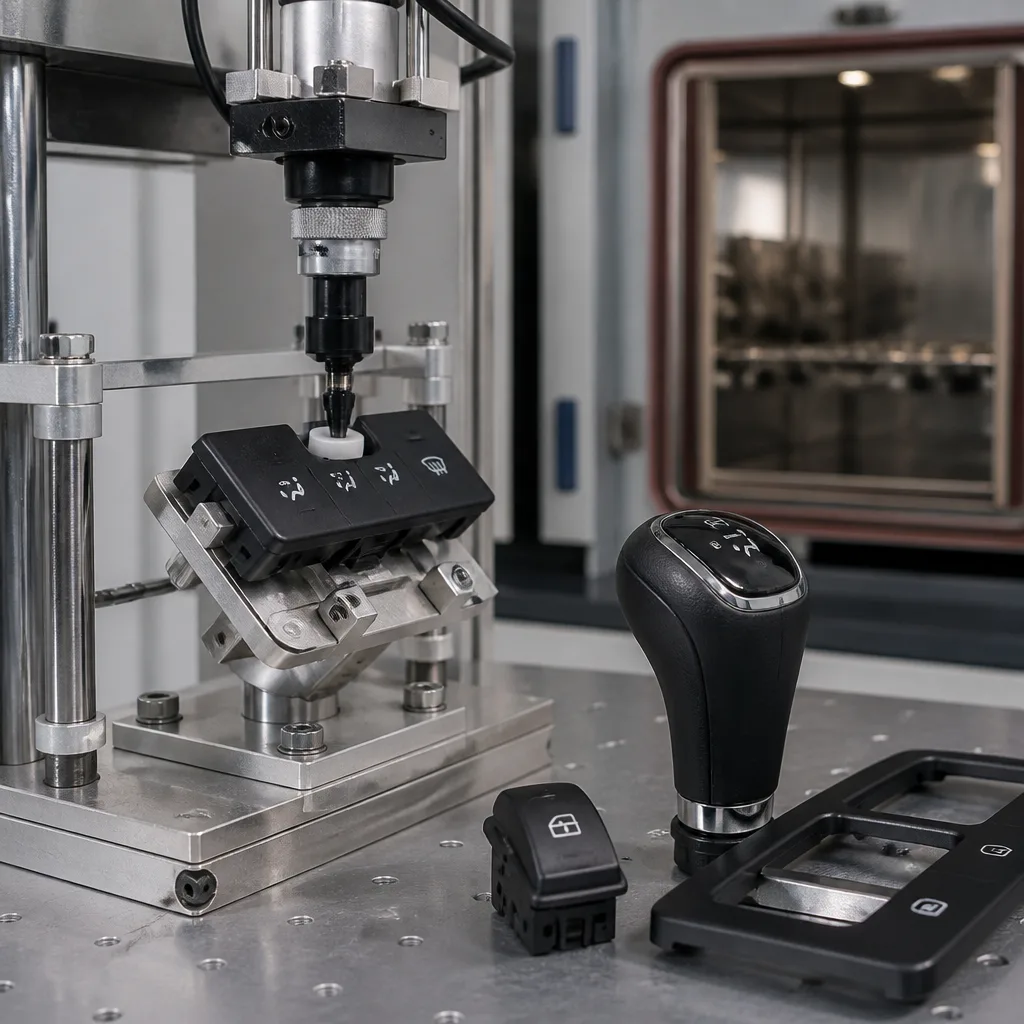
Examples of parts that must meet this specification include primary or secondary surface interior components such as instrument panels, control levers, switches, and mounting frames.
GMW 17442 is an engineering standard that defines performance requirements for graphics (such as printed icons, labels, or markings) applied to automotive interior parts. This standard primarily covers processes such as pad printing and screen printing, which use ink or dye.
This standard includes requirements for durability, adhesion, appearance, and environmental resistance for graphics applied to vehicle interior components. It ensures that printed or painted markings remain legible, robust, and aesthetically acceptable throughout the vehicle's lifespan under typical interior conditions.
The GMW 17442 standard classifies graphs according to their location and exposure status:
Applicable parts include instrument panels, control levers, switches, mounting frames, and other interior components with decorative or functional graphics.
For graphics under the hood, the performance requirements are governed by the GMW 16910 standard.
This standard typically tests the following:
These features ensure that the graphics don't fade, peel, crack, or become illegible over time.
This standard is part of a broader suite of material and performance specifications that General Motors uses to help ensure consistency, safety, and quality in its global vehicle manufacturing.
Unlike odor or emission standards, the GMW 17442 standard focuses on decorative and functional graphics used inside vehicles. For example...
These graphics should remain visually acceptable and functional throughout the vehicle's lifespan, despite continuous use and environmental impacts.
Interior graphics are critical because they serve both aesthetic and functional purposes. Drivers rely on signage to operate vehicle systems, while consumers expect a high-quality look throughout their ownership.
This standard was developed to ensure that the graphics implemented can withstand the following:
Wear and tear from repeated touching or cleaning.
Without proper testing, the graphics may fade, peel, crack, become blurry, or disappear prematurely.
GMW 17442 standard applies to graphics used in automotive interior parts such as those listed below:
This standard is typically used for components that include the following:
The GMW 17442 standard generally evaluates the following characteristics:
These tests ensure long-term stability.
GMW 17442 standard is considered important for the following reasons:
Although this standard is specific to GM, similar requirements are widely applicable in the following areas:
In conclusion, the GMW 17442 standard is a crucial automotive durability standard that ensures printed, coated, or decorative graphics on interior components remain legible, durable, chemically resistant, and visually acceptable throughout the vehicle's lifespan. By validating graphics against abrasion, chemicals, and environmental stress, the standard helps manufacturers deliver both reliable functionality and long-term interior quality.
For many years, our organization, with its competent and experienced staff, has been understanding the needs of its clients, providing the advanced testing services they require, and assisting them in the establishment, implementation, and improvement of management systems. Within this framework, we also provide testing services in accordance with the GMW 17442 standard.
To get an appointment, to get more detailed information or to request an evaluation, you can ask us to fill in our form and reach you.

