

Developed by General Motors Europe (GME), the “GME 60317 Determination of Yarn Count and Yarn Density of Woven Fabrics” standard is a material testing standard. This standard specifies a laboratory method for determining the yarn count in both the warp and weft directions of woven textile materials used in automotive interiors. It is widely applied during the qualification and quality control of upholstery fabrics, seat covers, door panel fabrics, headliners, and other woven textile components.
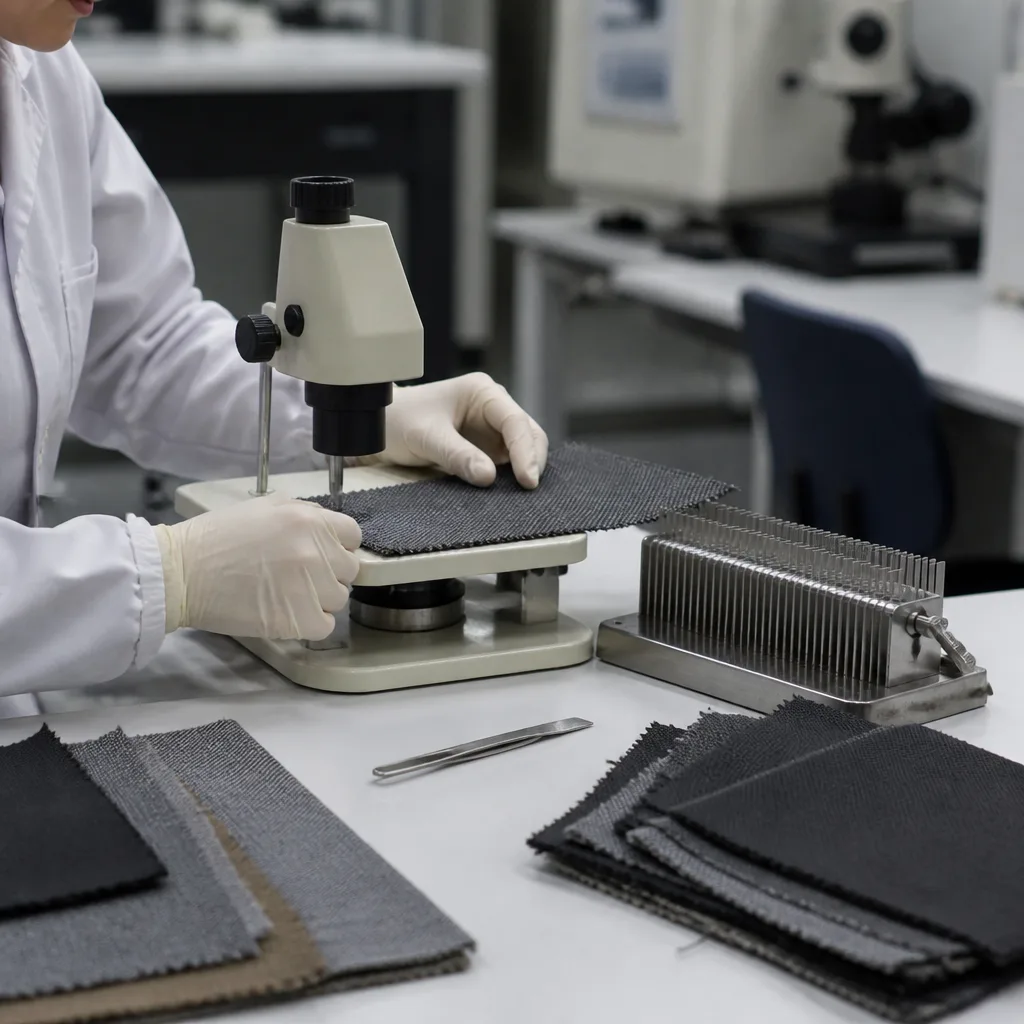
The primary goal of the GME 60317 standard is to establish a consistent procedure for the following measurements:
These measurements ensure that the automotive textile materials meet the design specifications defined by General Motors engineering.
The GME 60317 standard primarily applies to the following:
The test method is designed for woven fabrics rather than knitted fabrics. GM uses the GME 60323 standard, a separate standard, to determine the stitch or loop density of knitted fabrics.
In principle, the test determines the number of threads within a given length of fabric. The evaluation is performed separately for the following:
Measured values are generally expressed as follows:
This method may include the following:
The chosen method depends on the fabric structure and the required measurement accuracy.
Typical laboratory equipment used in these tests includes:
Essentially, the described testing process follows these steps:
This test method yields the following values:
This data is compared to the material's engineering specifications.
Yarn density significantly affects many fabric properties, including:
Even small deviations from the specified yarn count can alter the appearance and performance of automotive textiles.
The GME 60317 standard is widely used in the development and production of the following products:
The use of the GME 60317 standard enables manufacturers to:
The GME 60317 standard is frequently used in conjunction with other General Motors textile standards, including:
The GME 60317 standard methodology is comparable to internationally recognized textile standards, including:
These standards use comparable principles for determining yarn count, but sampling requirements and calculation methods may differ.
The advantages provided by the GME 60317 standard test method are as follows:
In conclusion, the GME 60317 standard is a significant textile testing standard that establishes a standardized method for measuring yarn count and yarn density in woven automotive fabrics. Accurate determination of warp and weft yarn density helps ensure that upholstery and trim materials meet General Motors' engineering specifications for strength, appearance, durability, and manufacturing consistency. By providing a uniform evaluation method, this standard supports supplier competence, quality assurance, and the reliable performance of woven textiles throughout the vehicle's service life.
For many years, our organization, with its competent and experienced staff, has been understanding the needs of its clients, providing the advanced testing services they require, and assisting them in the establishment, implementation, and improvement of management systems. Within this framework, we also provide testing services compliant with the GME 60317 standard.
To get an appointment, to get more detailed information or to request an evaluation, you can ask us to fill in our form and reach you.

