

The standard "SAE J1847 Abrasion resistance testing - Vehicle exterior graphics and pinstripes," developed by the American Society of Automotive Engineers (SAE), applies to abrasion resistance testing of decorative strips, graphics, and pinstripes. It may also be relevant to certain vehicle decals and plastic woodgrain films. Resistance to abrasion damage is assessed qualitatively based on its effect on the legibility, pattern, and color of the graphic markings. This recommended practice is intended as a guide to standard practice but is subject to frequent modification to keep pace with experience and technical advancements.
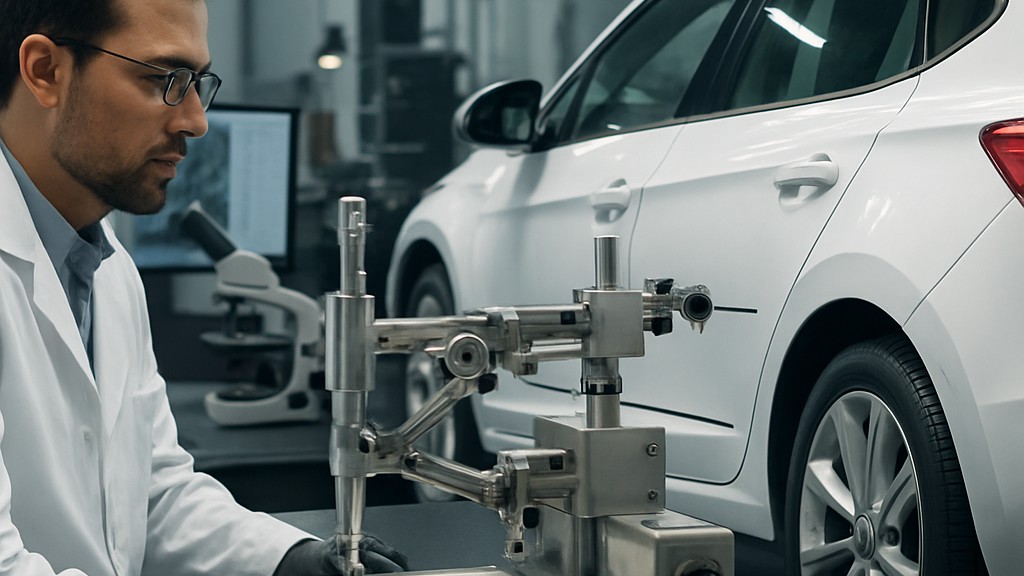
In automotive design, where aesthetics meet functionality, a vehicle's exterior isn't just about speed and safety; style is also important. Custom graphics, pinstripes, and decorative striping add personality, brand identity, and elegance to cars, trucks, and motorcycles. However, these eye-catching elements are constantly exposed to road debris, weather, and mechanical wear. This is where SAE J1847 comes in. This standard includes a test for the abrasion resistance of exterior vehicle graphics and pinstripes.
This standard ensures that decorative features on the vehicle won't fade, peel, or lose readability prematurely. As vehicles evolve with advanced materials like self-healing films and eco-friendly vinyls, this standard remains a critical benchmark for manufacturers, customizers, and aftermarket suppliers.
The SAE J1847 standard is a qualitative test method designed to evaluate the resistance of exterior decorative elements to abrasive forces. This method targets materials such as adhesive-backed tapes, vinyl graphics, and metallic pinstriping commonly applied to vehicle bodies.
The SAE J1847 standard utilizes a simple and repeatable abrasion test using the Taber abrasion tester, a rotating device that simulates multi-directional surface friction. This method prioritizes accessibility, provides reliable, comparative results, and requires minimal specialized equipment.
The basic steps of this method are as follows:
This standard emphasizes calibrating equipment every 1.000 cycles and documenting test conditions for repeatability. Given the potential for particulate generation from composite materials, safety protocols include eye protection and dust removal.
The scope of this standard extends beyond pure decoration, also applying to functional labels (e.g., warning stickers) and simulated wood-grain films on upholstery. Unlike quantitative tests that measure weight loss or thickness reduction, the SAE J1847 standard focuses on visual integrity, evaluating changes in readability, pattern clarity, and color vibrancy after simulated abrasion. This approach reflects real-world deterioration from wind-blown grit, car washes, or highway drifts and helps prevent costly aesthetic defects that can lead to customer dissatisfaction or warranty claims.
The SAE J1847 standard is a cornerstone of quality assurance for original equipment manufacturers, who use it to review supplier graphics for production vehicles. Commercial fleets rely on it to ensure logos remain vibrant even after thousands of miles and avoid rebranding costs.
This standard is versatile and has been adapted for marine graphics on boats and even aviation decals on aircraft exteriors, where saltwater corrosion is a significant factor.
In a market where visual appeal influences 70 percent of vehicle purchasing decisions, the SAE J1847 standard completely mitigates the risks that could damage a brand's image.
Ultimately, while the SAE J1847 standard may not be featured in headlines like aerodynamics or battery technology, it's the unsung hero that preserves the freshness of vehicle exteriors. By standardizing abrasion resistance for graphics and stripes, it empowers designers to push the boundaries of creativity without sacrificing longevity.
Our organization, which has been serving for many years and meticulously following global developments in science and technology, employs a team of experienced professionals and a broad infrastructure to conduct testing, measurement, and analysis in a wide range of areas for businesses across all sectors. In this context, we also provide testing services in accordance with the "SAE J1847 Abrasion resistance test - Vehicle exterior graphics and pinstriping" standard.
To get an appointment, to get more detailed information or to request an evaluation, you can ask us to fill in our form and reach you.

