

The “Daimler PAPP PWT 7329 Automotive Resistance of Interior Materials to Amines” standard, developed by the Daimler-Benz automotive company, is a proprietary automotive material testing specification used to evaluate color changes of vehicle interior materials when exposed to a specific amine atmosphere. This standard was initially developed within Daimler's materials engineering framework to ensure the long-term durability and appearance stability of interior components.
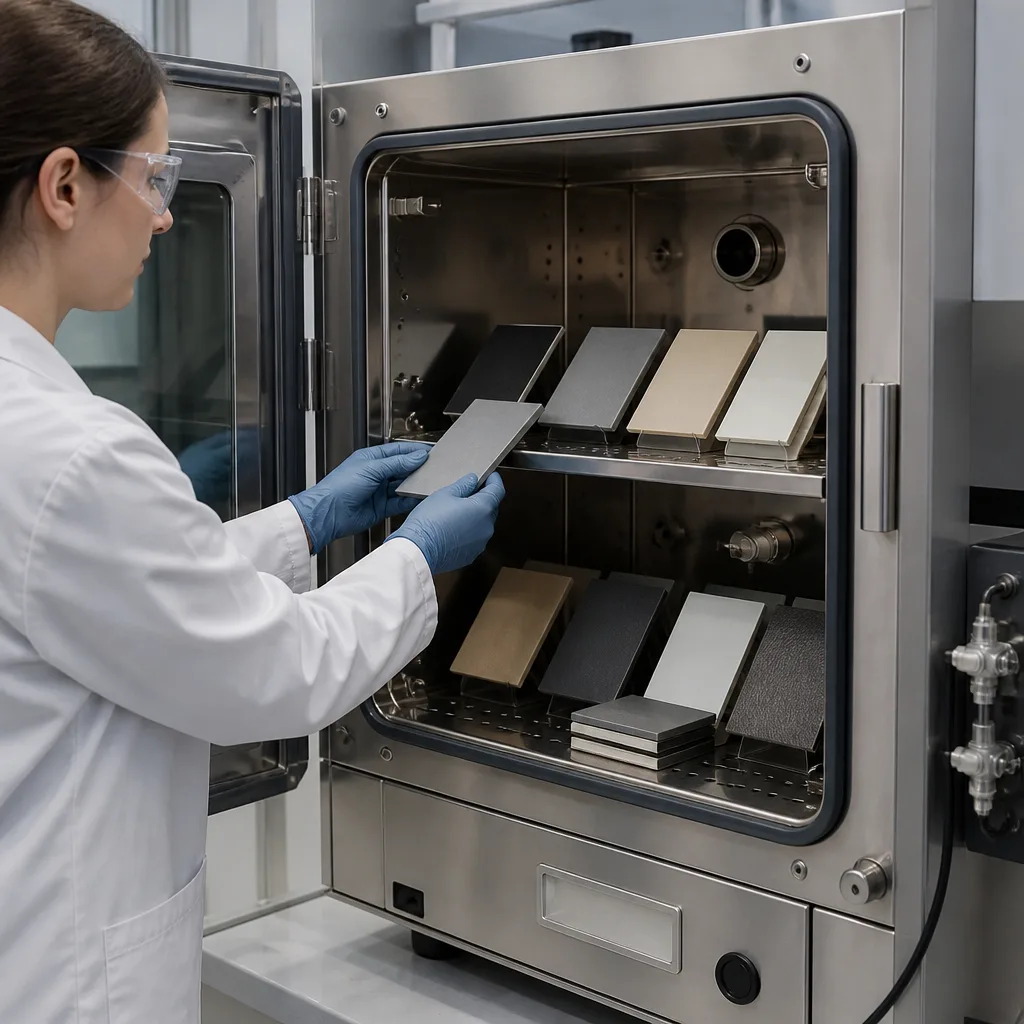
This specification is particularly important for automotive interiors because volatile amines released from foams, adhesives, plastics, cleaners, or environmental pollutants can react with paints and coatings, causing discoloration or staining over time. The test helps suppliers and manufacturers verify that materials maintain acceptable appearance standards throughout the vehicle's lifespan.
The primary purpose of the Daimler PAPP PWT 7329 standard is to define the following:
This procedure evaluates the determination of color changes in materials within the vehicle interior under a specific amine atmosphere. This specification applies to a wide range of automotive interior materials, including:
Amines are nitrogen-containing organic compounds commonly associated with:
When interior materials come into contact with amines, chemical reactions can form colored complexes or surface degradation products. This can lead to:
The PAPP PWT 7329 standard is closely linked to the broader Mercedes-Benz/Daimler material specification system.
Testing organizations state that this procedure corresponds to the standard “MBN 55555-7 “Non-metallic materials, material systems and semi-finished products - Resistance tests - Determination of color changes in a defined amine atmosphere”. Therefore, the specification is part of a broader original equipment manufacturer qualification framework for non-metallic automotive materials.
In general, this test procedure follows these steps:
The assessment typically uses grayscale or colorimetric comparison methods to measure the severity of color distortion.
The automotive industry uses PAPP PWT 7329 and similar standards because the quality of the interior appearance greatly influences the perceived value of a vehicle. High-end manufacturers, in particular, demand the following:
Decorative interior foils and coated surfaces are particularly sensitive. An automotive publication, citing this standard, has set a target amine resistance rating of at least 4,5 for decorative films used in vehicle interiors.
The Daimler PAPP PWT 7329 standard belongs to a broader family of automotive amine resistance standards, which includes:
Automotive suppliers frequently perform Daimler PAPP PWT 7329 standard testing in the following situations:
The Daimler PAPP PWT 7329 standard defines two different procedures:
Differences between the methods include:
Method A is generally used for the following:
Method B is generally used for the following:
Both methods evaluate the following after exposure to amine-containing environments:
Results are generally evaluated using the following methods:
In conclusion, the Daimler PAPP PWT 7329 standard is a key automotive interior durability specification focused on resistance to amine-induced color fading. It helps ensure that vehicle interior materials maintain their visual quality despite prolonged exposure to chemical emissions commonly found in automotive cabin environments. This specification plays a crucial role in:
For manufacturers of plastics, foam, coatings, textiles, and decorative surfaces, compliance with this standard remains a crucial part of meeting indoor quality expectations.
For many years, our organization, with its competent and experienced team, has been understanding the needs of its clients, providing the advanced testing services they require, and assisting them in the establishment, implementation, and improvement of management systems. Within this framework, we also provide testing services compliant with the Daimler PAPP PWT 7329 standard.
To get an appointment, to get more detailed information or to request an evaluation, you can ask us to fill in our form and reach you.

