

The “Ford SH-0103 Coefficient of Friction - Modified Mat Slip Test (Static Friction)” standard, developed by Ford Motor Company (Ford), describes an engineering test method used to evaluate the coefficient of static friction between an automotive mat and the vehicle carpet or floor material. This standard is designed to ensure that removable mats remain securely in place during normal vehicle use and to reduce the risk of unwanted movement that could interfere with pedal operation or compromise passenger safety.
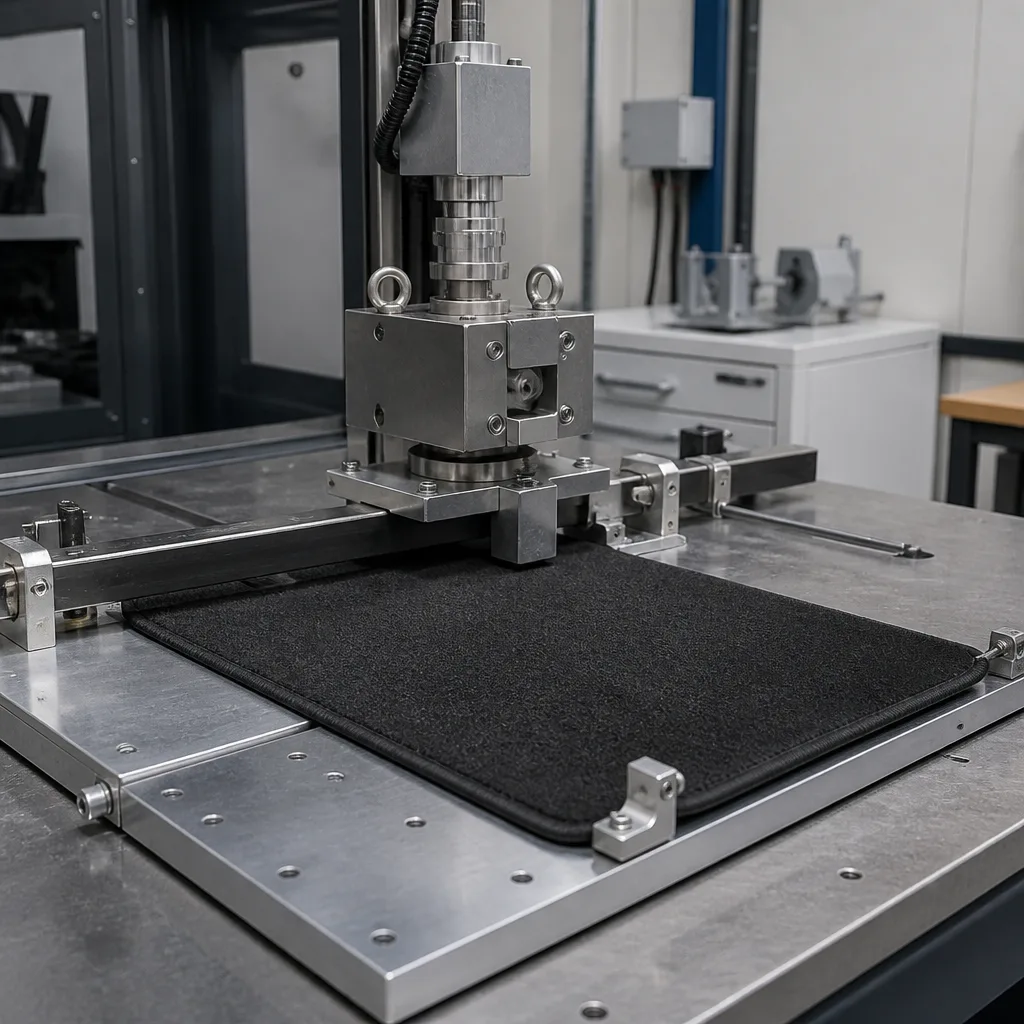
The primary purpose of the Ford SH-0103 standard is to determine how effectively a mat resists sliding when subjected to a horizontal force. This test measures the coefficient of static friction (COF), which represents the force required to initiate movement between two contacting surfaces.
A higher coefficient of static friction indicates the following:
Conversely, a low coefficient of friction means the mat could slide during vehicle use, potentially creating a dangerous situation.
In principle, this test is based on measuring static friction, which is the resistance to the initiation of sliding motion. Generally, this method follows these steps:
This approach follows the same engineering principle used in inclined plane and fracture friction test methods found in international tribology standards.
The equipment typically used in these tests includes:
The equipment used must provide repeatable loading conditions and a consistent towing rate.
Essentially, friction tests check for variables such as the following:
These controlled conditions minimize variability and ensure comparable results across different materials.
The test method described in the Ford SH-0103 standard is generally used on the following materials:
This test can also be used in the material development phase to compare different support designs or surface treatments.
Mat movement has been identified as a significant safety issue because an unsecured mat can interfere with the operation of the gas, brake, or clutch pedals. The Ford SH-0103 standard helps manufacturers mitigate this risk by verifying that sufficient static friction exists between the mat and the vehicle floor.
This standard supports the following:
The Ford SH-0103 standard is commonly used in the following areas:
Automotive floor component suppliers typically perform this test before submitting their products for Ford approval.
The key benefits of the Ford SH-0103 standard are as follows:
The Ford SH-0103 standard is an original equipment manufacturer (OEM) specific procedure adapted to Ford vehicle requirements. It is essentially based on the same tribological principles used in standards such as “ASTM G219 Standard Guidelines for Determining the Coefficient of Static Friction of Test Pairs Using an Inclined Plane Testing Apparatus”. This standard measures the static (fracture) coefficient of friction using the inclined plane method.
Ford SH-0103 and Ford SH-0089 standards are closely related. In practice, they involve the same engineering test method or different definitions of the same Ford test to evaluate the coefficient of static friction between a removable mat and the vehicle carpet. Many independent testing laboratories and original equipment manufacturer specification catalogs list them together as “Ford SH-0089 / Ford SH-0103 Coefficient of Friction - Modified mat slip test (static friction)” standards, indicating that they are interchangeable.
The relationship between these standards is as follows:
Both standards are designed for the following purposes:
Both standards consider the following aspects:
If a Ford engineering drawing or material specification refers to the Ford SH-0089 or Ford SH-0103 standard, the supplier is generally expected to demonstrate that the mat meets Ford's minimum static friction requirements using the specified modified mat slip test. Laboratories often offer testing services for both standards as a single service because the basic procedure is the same or substantially equivalent.
In conclusion, the Ford SH-0103 standard is a crucial engineering standard for evaluating the static friction performance of automotive floor mats. By measuring the force required to initiate sliding between a mat and the vehicle floor, it helps ensure that the mats remain securely in place throughout the vehicle's lifespan. This test directly contributes to passenger safety, product quality, and compliance with Ford's interior performance requirements. Therefore, it is a critical part of mat design, supplier validation, and quality assurance.
For many years, our organization, with its competent and experienced staff, has been understanding the needs of its customers, providing the advanced testing services they require, and assisting them in the establishment, implementation, and improvement of management systems. Within this framework, we also provide testing services in accordance with the Ford SH-0103 standard.
To get an appointment, to get more detailed information or to request an evaluation, you can ask us to fill in our form and reach you.

