

The “FCA 7-G2090 Vehicle Interior Components - Formaldehyde Emission Test - Acetylacetone Method” standard, developed by Fiat Chrysler Automobiles (FCA) (now Stellantis), an Italian-American automotive company, describes the procedures for measuring formaldehyde emissions from vehicle interior components using the acetylacetone method.
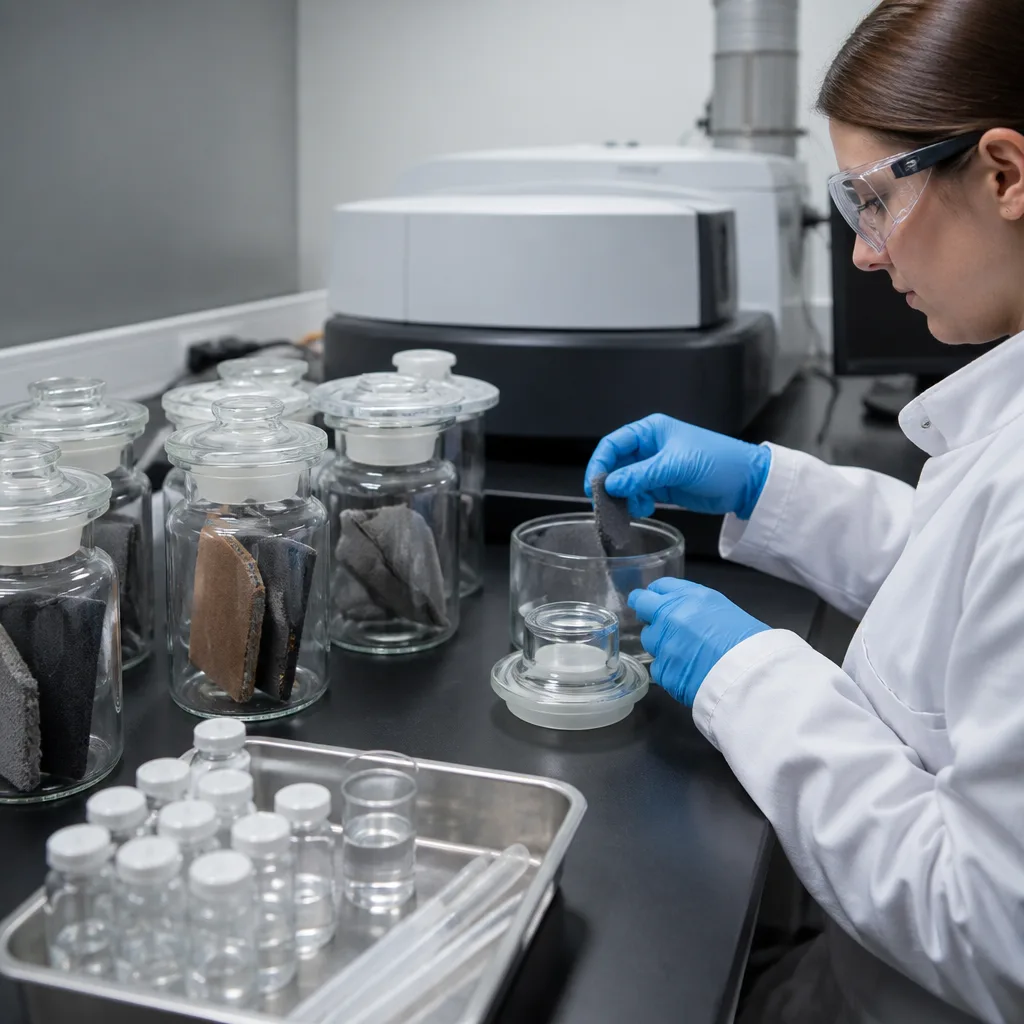
This standard classifies and tests different types of materials to ensure safe levels of volatile organic compounds (VOCs) for vehicle cabins.
The specific test procedure depends on the classification of the material:
The resulting extracts are analyzed with an acetylacetone reagent using a UV-visible spectrophotometer to determine the exact amount of formaldehyde released.
Independent facilities and testing houses offer certification for this standard.
In short, the FCA 7-G2090 standard is an internal automotive materials testing specification developed to evaluate formaldehyde emissions from vehicle interior materials. This standard primarily applies to components used in passenger compartments where volatile chemical emissions can affect passenger health, odor quality, and legal compliance.
The described procedure is used throughout the automotive supply chain for the qualification of textiles, sound absorbers, leather, fiberboard materials, and other upholstery components.
The FCA 7-G2090 standard was created to control cabin air pollution caused by formaldehyde emissions from polymeric and fiber-based interior materials. Formaldehyde can originate from the following sources:
In enclosed passenger compartments, these emissions can contribute to:
Therefore, modern vehicle manufacturers impose strict volatile organic compound (VOC) and aldehyde emission requirements on suppliers.
The FCA 7-G2090 standard primarily applies to the following:
This standard categorizes materials into the following categories:
This method measures the formaldehyde released from a material sample under controlled thermal conditions. The released formaldehyde chemically reacts with the acetylacetone reagent to produce a colored compound that can be measured using spectrophotometry. The absorbance value is then converted to formaldehyde concentration using a calibration curve.
Typical laboratory equipment includes:
The test setup must allow for repeatable temperature exposure and avoid direct radiation heating of the samples. Generally, these tests follow these steps:
This standard is considered important for the following reasons:
The FCA 7-G2090 standard belongs to a broader family of automotive emissions standards that includes:
Compared to broader methods for volatile organic compounds, the FCA 7-G2090 standard specifically targets formaldehyde determination using the acetylacetone chemistry approach.
Materials that often struggle to meet formaldehyde limits include:
To improve compatibility, manufacturers typically do the following:
The test may be necessary for the following:
In conclusion, the FCA 7-G2090 standard is a significant automotive interior emissions specification focusing on the amount of formaldehyde released from vehicle interior materials. Using the acetyl acetone analytical method, it helps suppliers and original equipment manufacturers assess whether interior components meet modern air quality and passenger comfort expectations.
This standard plays a critical role in the following areas:
For many years, our organization, with its competent and experienced staff, has been understanding the needs of its clients, providing the advanced testing services they require, and assisting them in the establishment, implementation, and improvement of management systems. Within this framework, we also provide testing services compliant with the FCA 7-G2090 standard.
To get an appointment, to get more detailed information or to request an evaluation, you can ask us to fill in our form and reach you.

