

The standard “VW 01135 Engine-mounted parts conveying media - Cleaning requirements for intake air, charge air and vacuum pressure conveying areas”, developed by the Volkswagen automotive company, describes the cleaning requirements for engine-mounted parts that convey air intake, charge air and vacuum pressure and carry media.
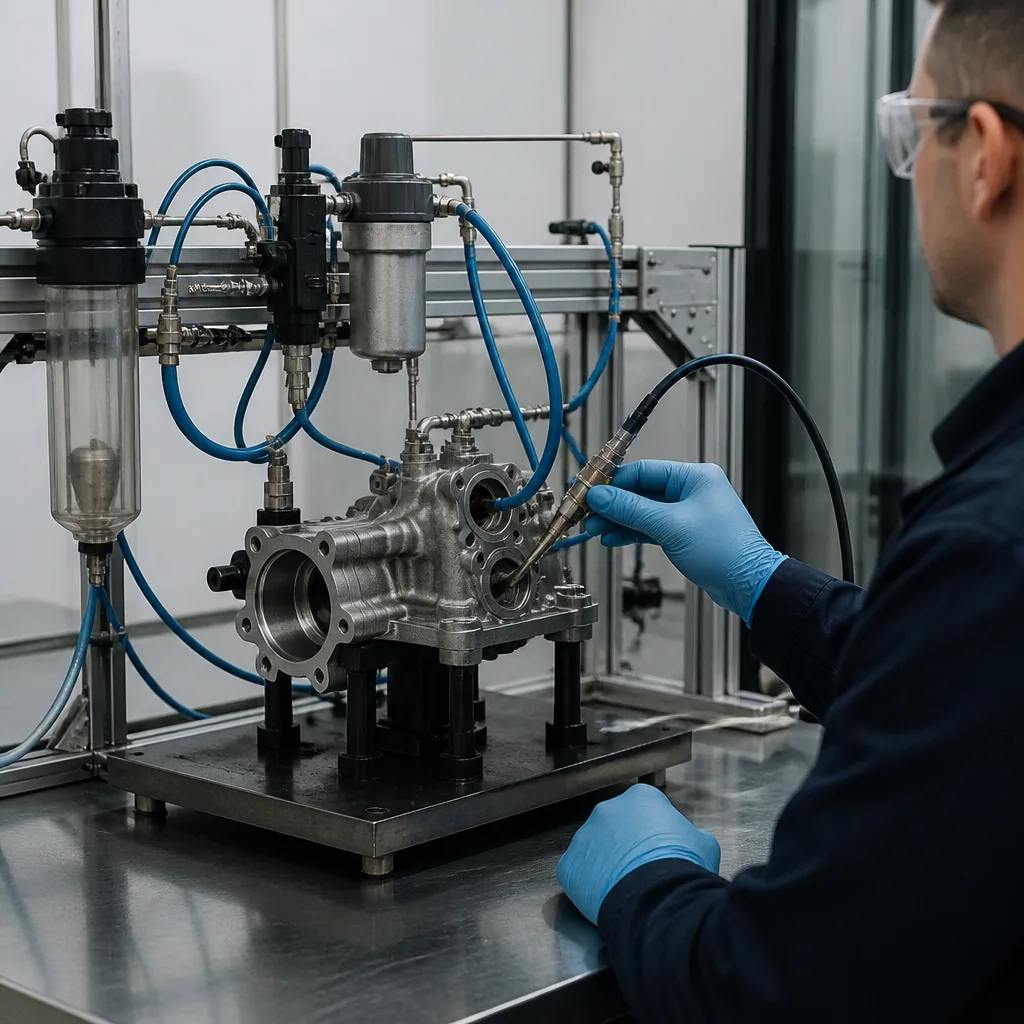
Cleaning requirements for parts used in engine manufacturing have become significantly stricter due to increased part loads and certain material modifications required (e.g., lead-free connecting rod bearing shells). Therefore, relevant specifications need to be modified or redefined to further improve quality and customer satisfaction. This standard regulates the protection of sensitive engine components and engine-mounted parts from particulate contamination.
Consequently, to ensure that an economically viable product quality is achieved, the application of this standard must be checked on a part-by-part basis. The target values for the cleanliness requirements specified in this standard constitute a product specification.
The VW 01135 standard is a critical technical standard regulating the technical cleanliness of engine-mounted parts that carry air or create a vacuum. As modern engines move towards tighter tolerances and higher component loads, even the presence of microscopic particles can lead to premature wear or catastrophic failures in sensitive systems.
The VW 01135 standard specifically addresses components used in applications involving media such as intake, boost pressure, and vacuum. These include:
While general engine parts are usually covered under the VW 01134 standard, the VW 01135 standard is a specific sub-standard for these particular air handling and pressure-sensitive areas.
The VW 01134 standard regulates particulate pollution using two basic analytical methods:
To ensure economically viable product quality, the VW 01135 standard imposes various procedural restrictions on manufacturers:
The VW 01135 standard does not exist in isolation; it is part of a hierarchy of cleaning specifications.
In short, the VW 01135 standard defines cleanliness requirements for engine-mounted components carrying liquids or gases (medium), especially in systems operating under vacuum, suction, or pressure conditions. This standard is part of Volkswagen's broader quality framework for suppliers and internal production processes.
The VW 01135 standard applies to engine-mounted components exposed to the following:
This standard also applies to components that carry media such as air, fuel vapors, and oil vapors.
Typical parts include:
The primary purpose of this standard is to control contamination within these systems. This standard is considered important for the following reasons:
The VW 01135 standard defines acceptable levels of cleanliness to prevent these problems.
Pollution can disrupt airflow or pressure regulation, leading to decreased performance, increased emissions, and component failure.
The VW 01135 standard typically covers the following:
Tests under VW 01135 typically include the following:
The results are compared to the target cleanliness limits defined by VW.
In conclusion, the VW 01135 standard is a critical automotive cleaning standard that ensures the removal of harmful contaminants from engine-mounted components operating under pressure or vacuum conditions. In modern automotive engineering, compliance with the VW 01135 standard is essential for durability, efficiency, and regulatory compliance.
For many years, our organization, with its competent and experienced staff, has been understanding the needs of its customers, providing the advanced testing services they require, and assisting them in the establishment, implementation, and improvement of management systems. Within this framework, we also provide testing services in accordance with the VW 01135 standard.
To get an appointment, to get more detailed information or to request an evaluation, you can ask us to fill in our form and reach you.

